Edible when cooked
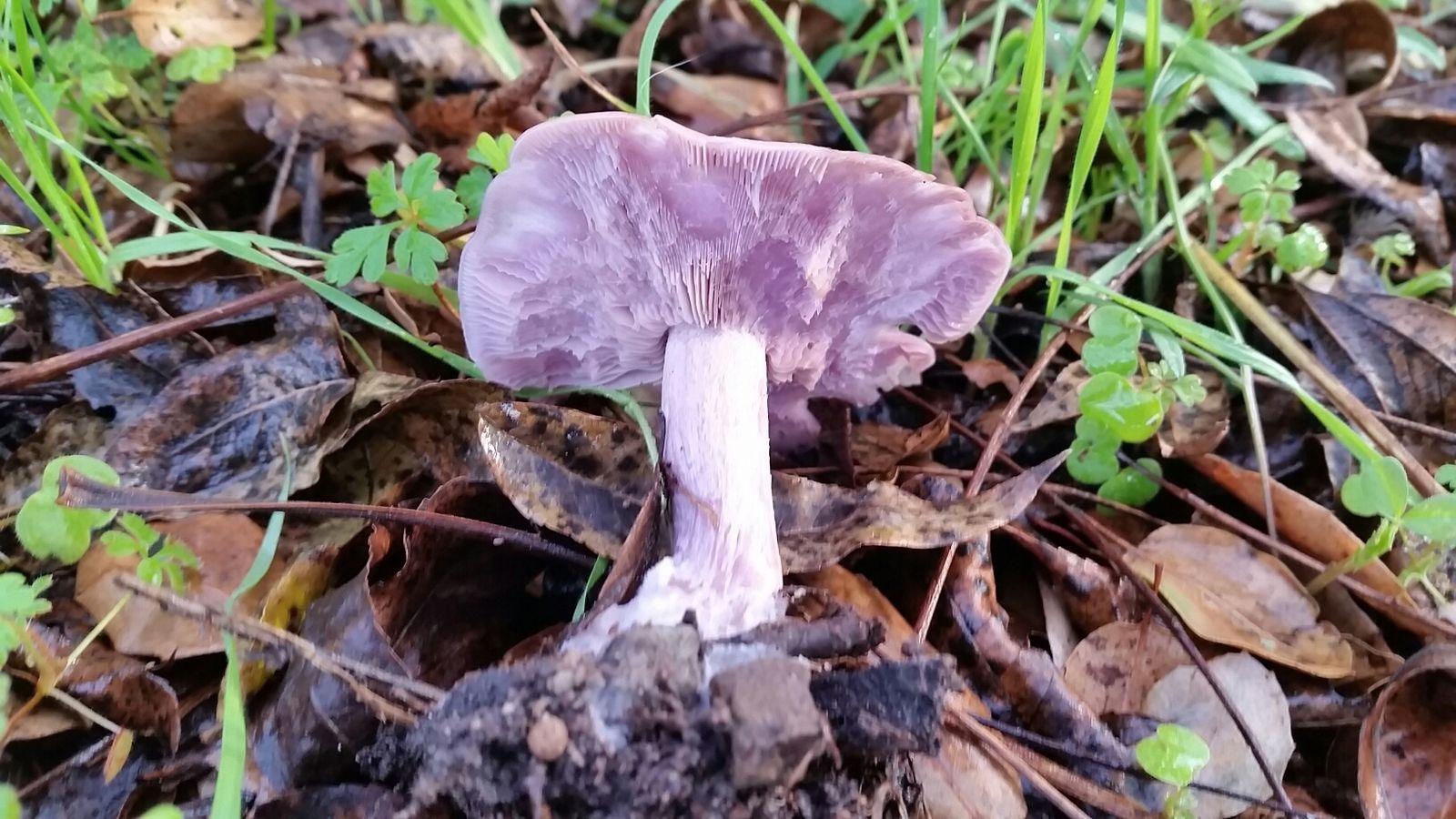
Blewit
Lepista nuda
The blewit is paler lilac with a smooth cap, has no cobweb veil, and leaves a pale pinkish-buff spore print. It grows in leaf litter, compost and gardens as well as forests.
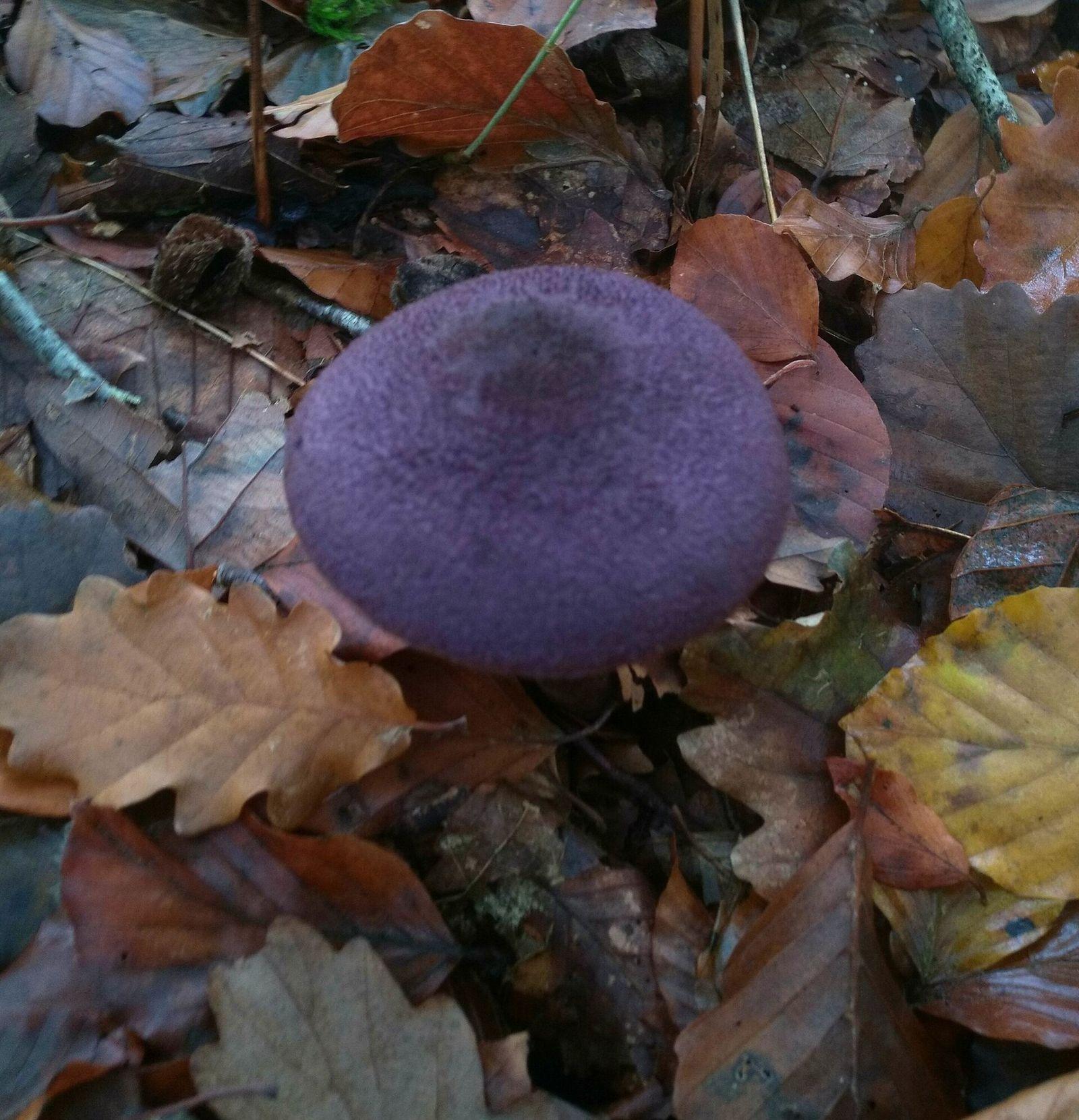
Cortinarius violaceus
Also called violet cort, violet cortinarius.
The violet webcap is a dark purple mushroom of old, mossy forests, one of the few Cortinarius species that is easy to name on sight. It gets mistaken for a blewit, and it belongs to a genus that includes deadly species.
The tell
Dark violet all over, with a finely scaly cap, a cobweb veil when young and a rusty brown spore print.
Field marks
Cap, underside and stem show in a photo. The spore print does not, and it is often the deciding check.
Where and when
Lookalikes
Each card says how to tell the two apart.
Many Cortinarius species are lilac to violet, but most have a smooth or slimy cap rather than the violet webcap's fine scales. All share the cobweb veil and rusty brown spore print. Several species in the genus contain orellanine, a slow-acting kidney toxin.
Lepista nuda
The blewit is paler lilac with a smooth cap, has no cobweb veil, and leaves a pale pinkish-buff spore print. It grows in leaf litter, compost and gardens as well as forests.
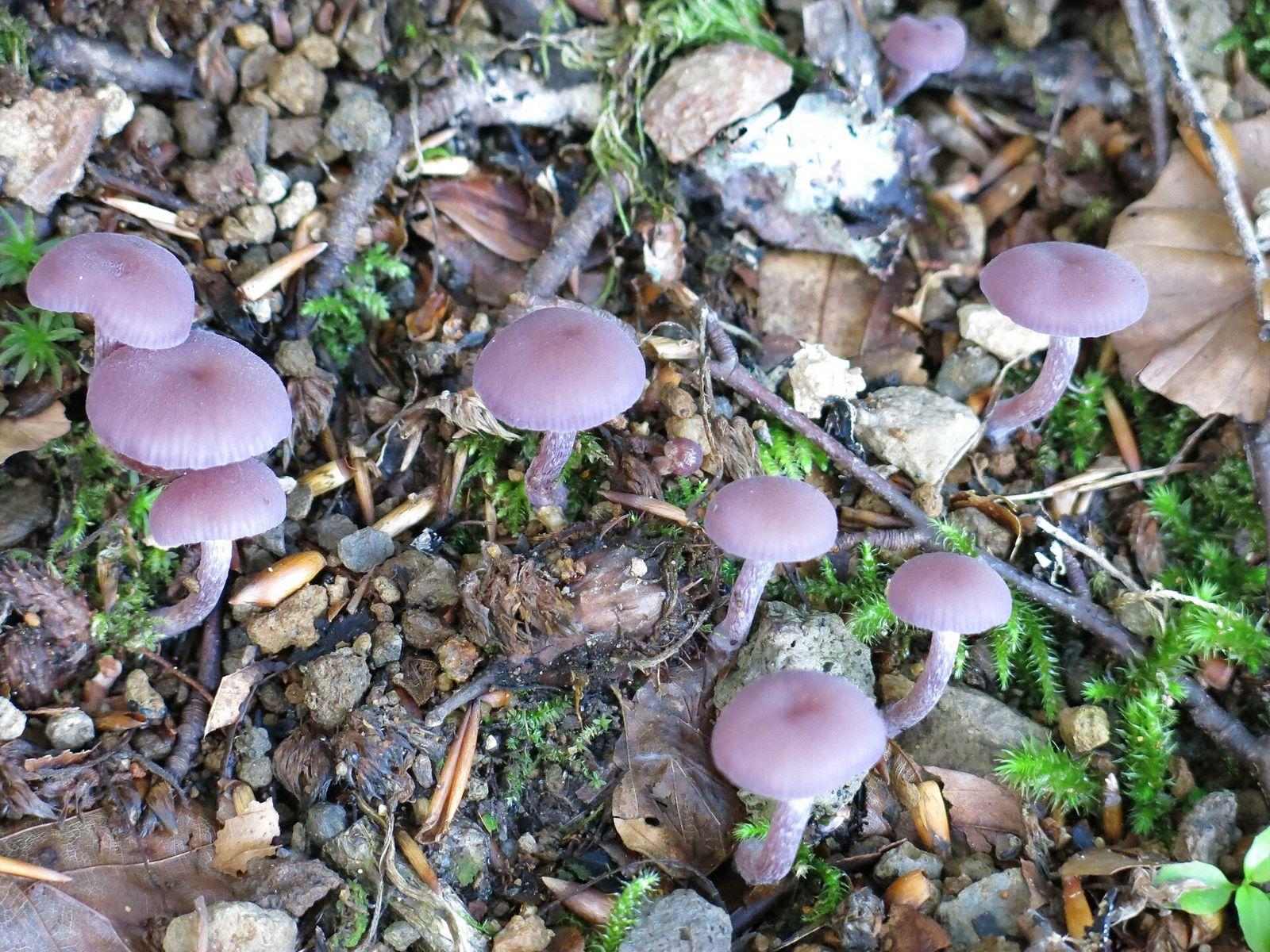
Laccaria amethystina
Much smaller and more slender, with thick, widely spaced gills, no cobweb veil, and a white spore print.
Edibility
Field guides do not agree on the violet webcap. Some list it as edible, while most do not recommend any Cortinarius because the genus includes species that contain orellanine, a toxin that destroys the kidneys with symptoms delayed by days or weeks. Its own chemistry is not well documented in North American guides.
This page states what field guides record. It is not advice to eat, taste or handle anything, and a photo cannot settle edibility. If someone has eaten a wild mushroom that may be toxic, call poison control (1-800-222-1222 in the US) right away, before symptoms start: the deadliest species act hours later.
FAQ
It is not known as a cause of serious poisoning, and some field guides list it as edible. Most guides do not recommend Cortinarius species at all, because the genus includes species with orellanine, a slow-acting kidney toxin.
The violet webcap is darker violet with a finely scaly cap, has a cobweb veil when young, and leaves a rusty brown spore print. The blewit is paler, smooth-capped, has no veil, and prints pale pinkish buff.
On the ground in moist, mossy forests under conifers and hardwoods across northern North America. It is most common in old forests of the Pacific Northwest.
Sources
MushroomExpert.com
Beaty Biodiversity Museum, University of British Columbia
MykoWeb, California Fungi
Index Fungorum
Also on Mushrooms.id
Lactarius indigo
Photo coming
Lactarius indigo
Blue all over, and cut flesh bleeds blue milk that slowly turns green.
Cortinarius rubellus
Photo coming
Cortinarius rubellus
Orange-brown, pointed cap, rusty brown gills, and yellowish bands of veil on the stem, in mossy conifer woods.
Waitlist
We will send one email when Mushrooms.id opens, and nothing else.
This opens your email app with the request written for you. Send it and we add you to the list. No email app? Write to hello@mushrooms.id with the subject “Add me to the Mushrooms.id waitlist”.