Toxic
White Fibercap
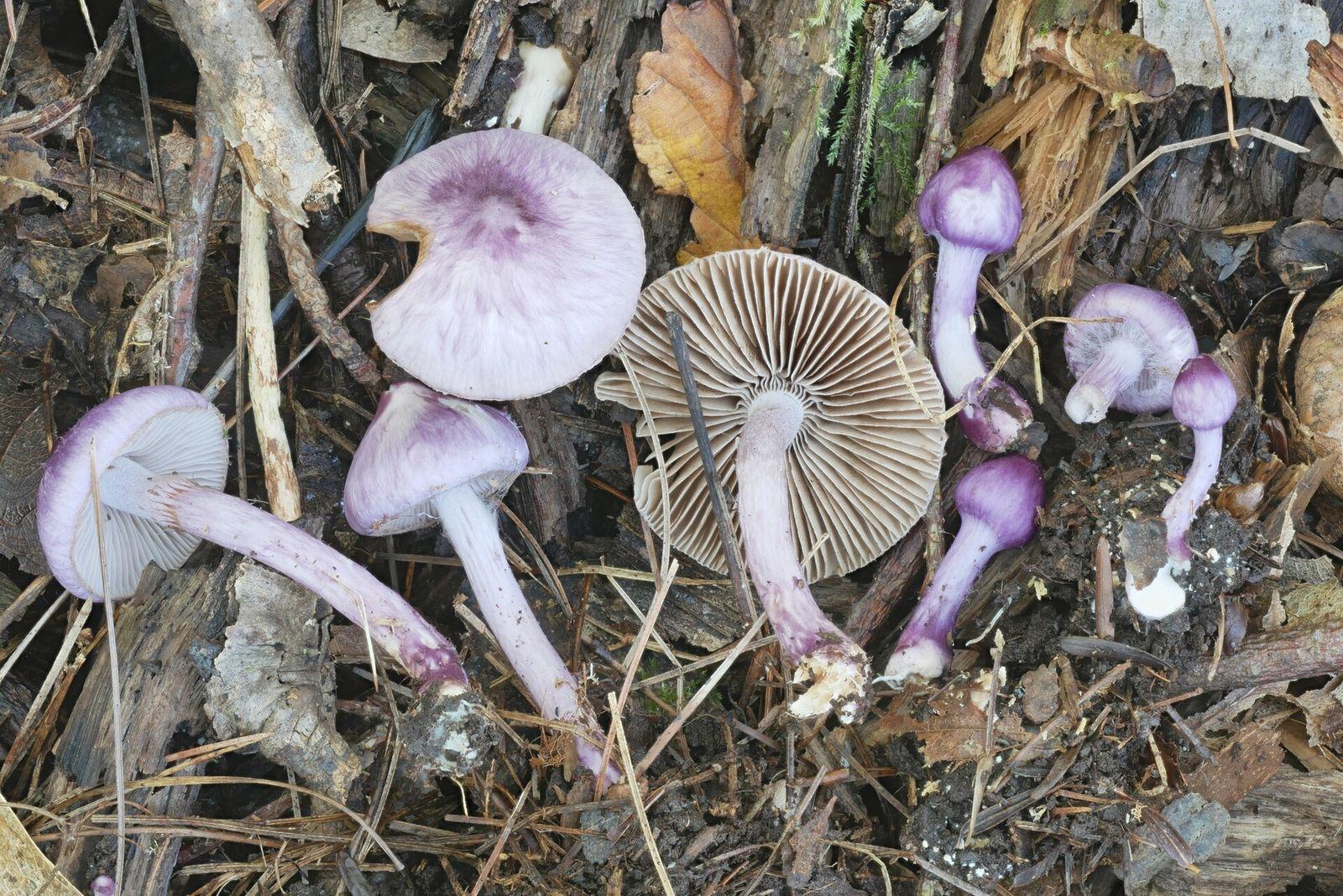
Inocybe geophylla
The lilac form of this Inocybe has a silky, conical cap with a pointed center, crowded gills that turn grayish brown, and a brown spore print. It contains muscarine.
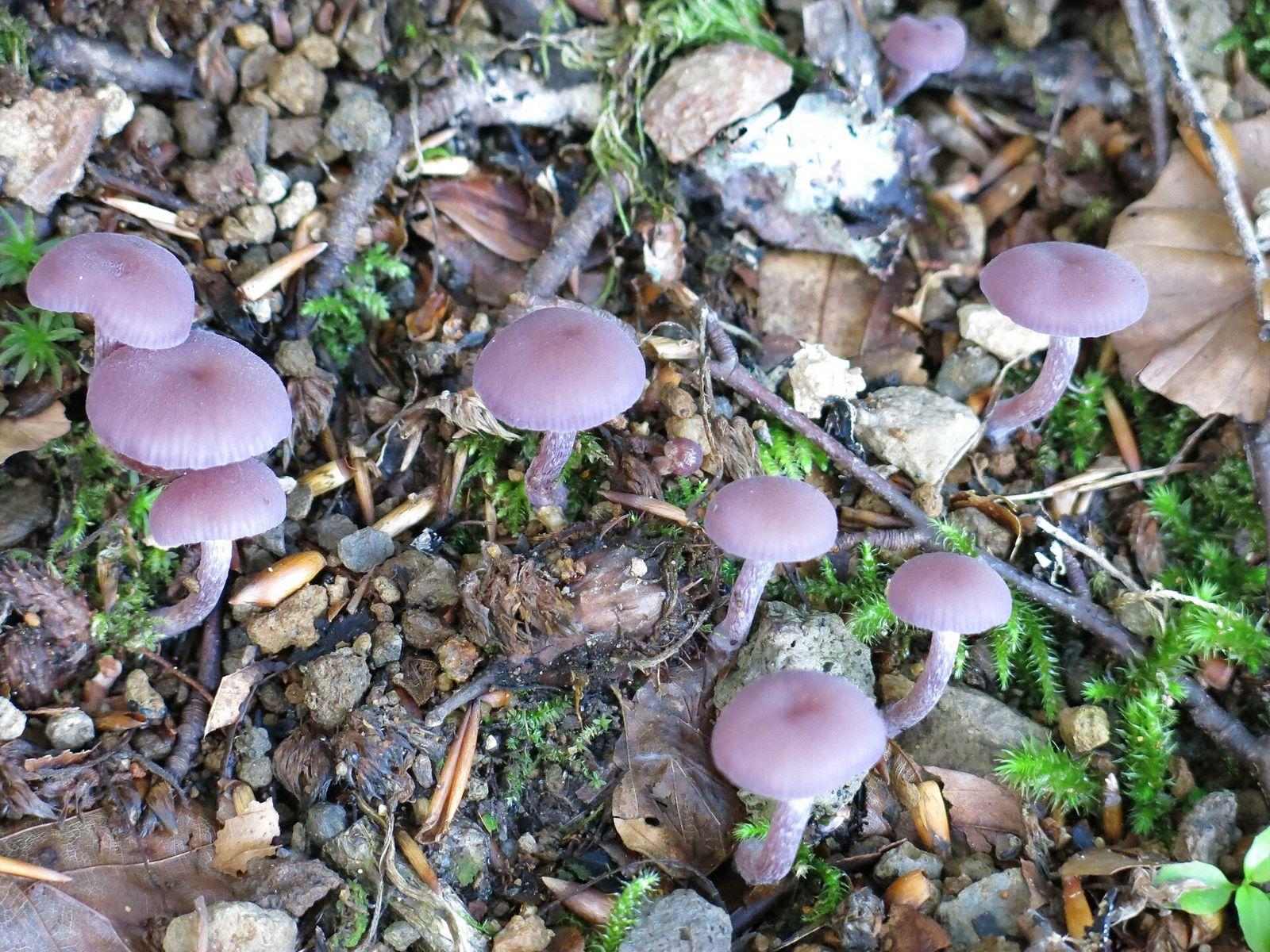
Laccaria amethystina
Also called amethyst laccaria.
The amethyst deceiver is a small, deep purple mushroom of forest floors. It gets its name from how much it fades: dry specimens turn buff or pale lilac and look like a different species. Its small purple lookalikes include toxic fibercaps and bonnets.
The tell
A small, entirely purple mushroom with thick, widely spaced gills and a white spore print.
Field marks
Cap, underside and stem show in a photo. The spore print does not, and it is often the deciding check.
Where and when
Lookalikes
Each card says how to tell the two apart.
Inocybe geophylla
The lilac form of this Inocybe has a silky, conical cap with a pointed center, crowded gills that turn grayish brown, and a brown spore print. It contains muscarine.
The lilac bonnet has a brittle stem, crowded gills, and a distinct radish smell. It contains muscarine.
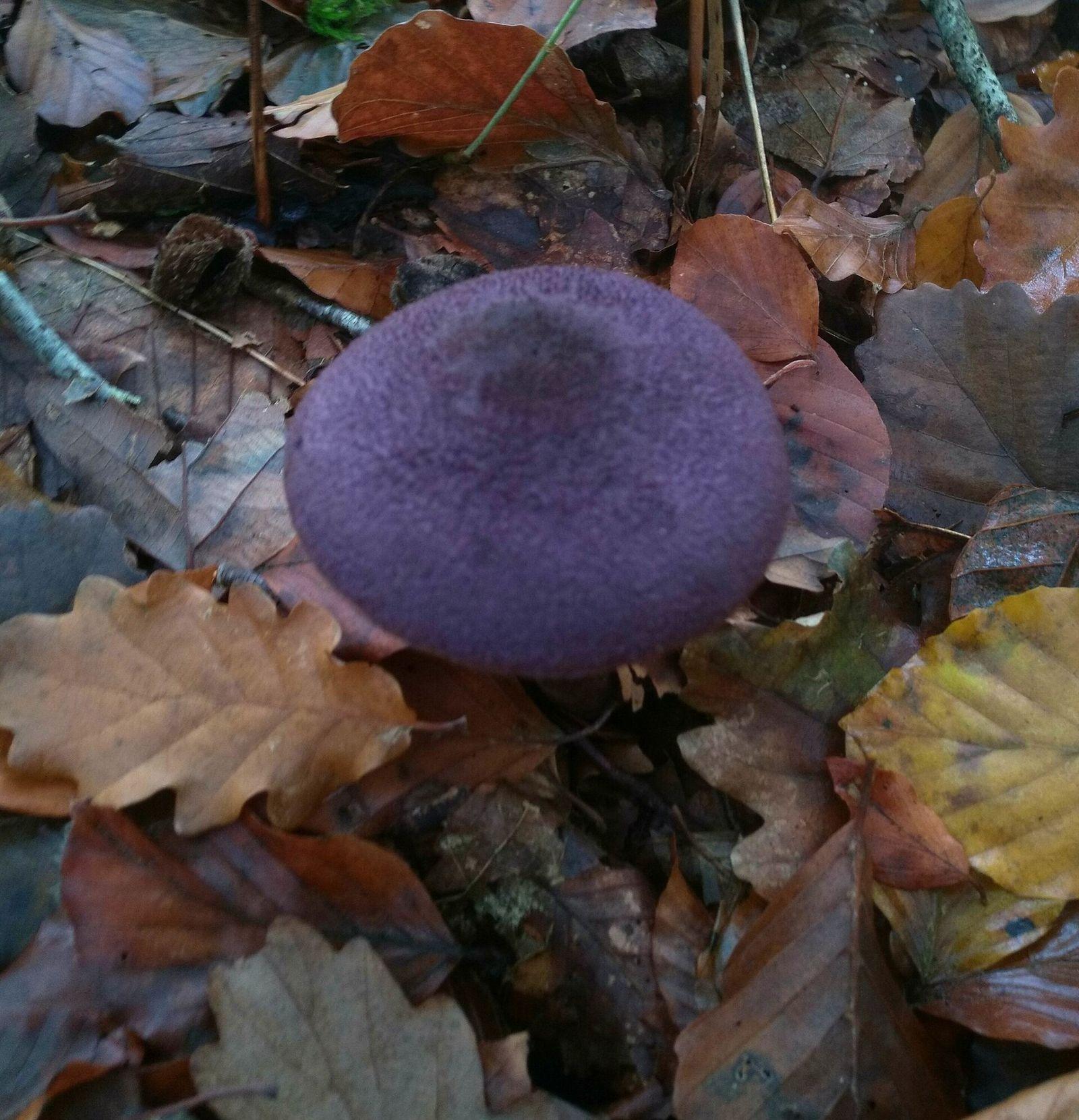
Cortinarius violaceus
Much larger and darker, with a finely scaly cap, a cobweb veil when young, and a rusty brown spore print.
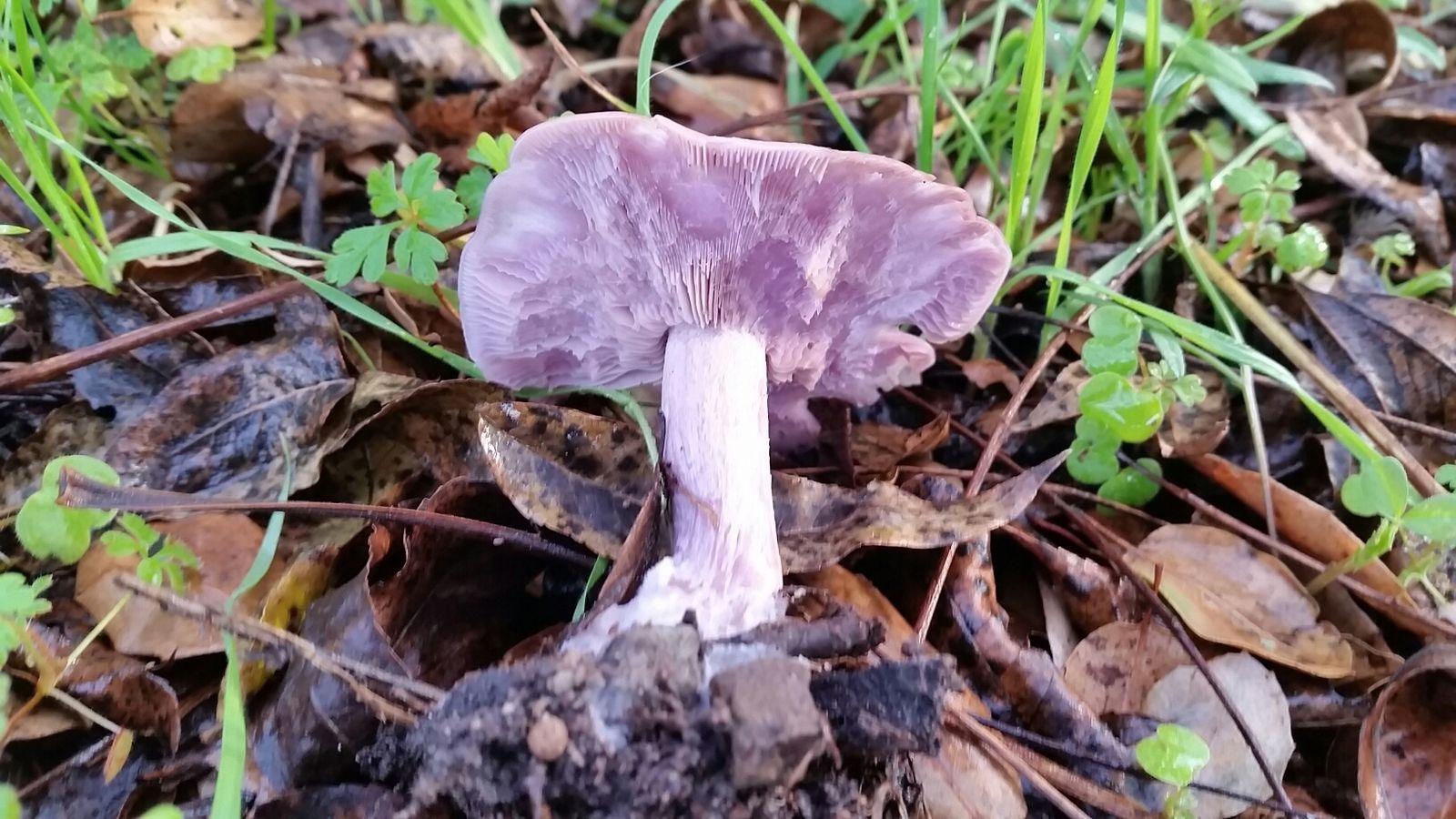
Lepista nuda
Larger and stockier, with crowded gills and a pale pinkish-buff spore print.
Edibility
Field guides list the amethyst deceiver as edible. Its small size and its resemblance to purple Inocybe and Mycena species, which contain muscarine, are why guides stress the thick, widely spaced gills and white spore print.
This page states what field guides record. It is not advice to eat, taste or handle anything, and a photo cannot settle edibility. If someone has eaten a wild mushroom that may be toxic, call poison control (1-800-222-1222 in the US) right away, before symptoms start: the deadliest species act hours later.
FAQ
Because it changes color as it dries. A fresh, moist specimen is deep amethyst purple, but the cap fades to buff or pale lilac in dry weather, making it look like a different mushroom.
Field guides list it as edible. It resembles some small purple mushrooms that contain muscarine, including the lilac form of the white fibercap and the lilac bonnet.
On the ground in hardwood and mixed forests of eastern North America, often in moss or leaf litter under beech and oak, from summer through fall.
Sources
MushroomExpert.com
Index Fungorum
Waitlist
We will send one email when Mushrooms.id opens, and nothing else.
This opens your email app with the request written for you. Send it and we add you to the list. No email app? Write to hello@mushrooms.id with the subject “Add me to the Mushrooms.id waitlist”.