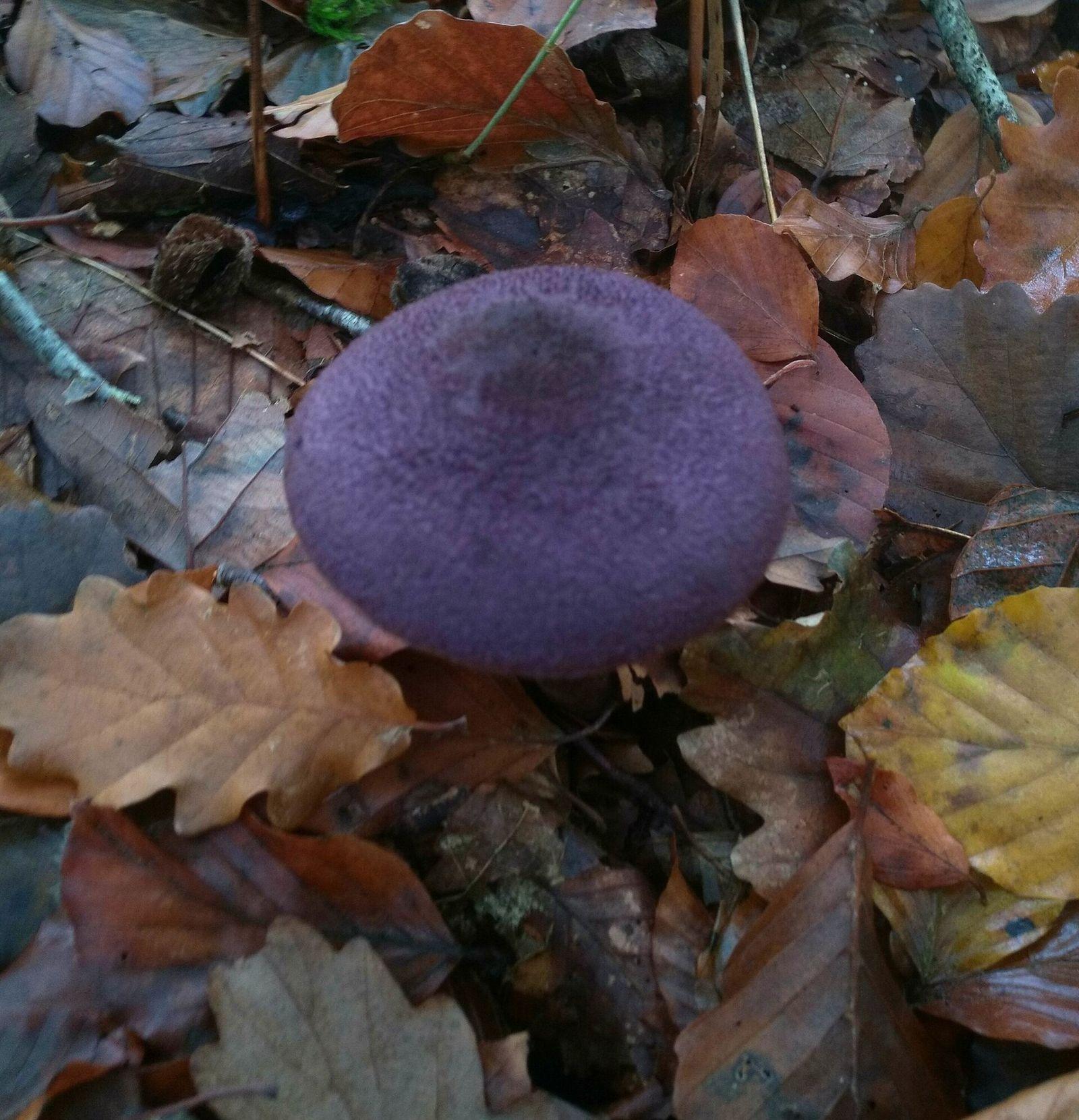
Lookalike
Violet Webcap
Cortinarius violaceus
Dark violet throughout with a finely scaly cap, a cobweb veil when young, and a rusty brown spore print. The blewit has a smooth cap and a pinkish-buff print.
Lepista nuda
Also called wood blewit, clitocybe nuda, collybia nuda.
The blewit is a lilac to purple-tinged mushroom of leaf litter, compost and mulch that fruits late in the fall. It is easiest to confuse with purple Cortinarius species, which have a cobweb veil and a rusty brown spore print.
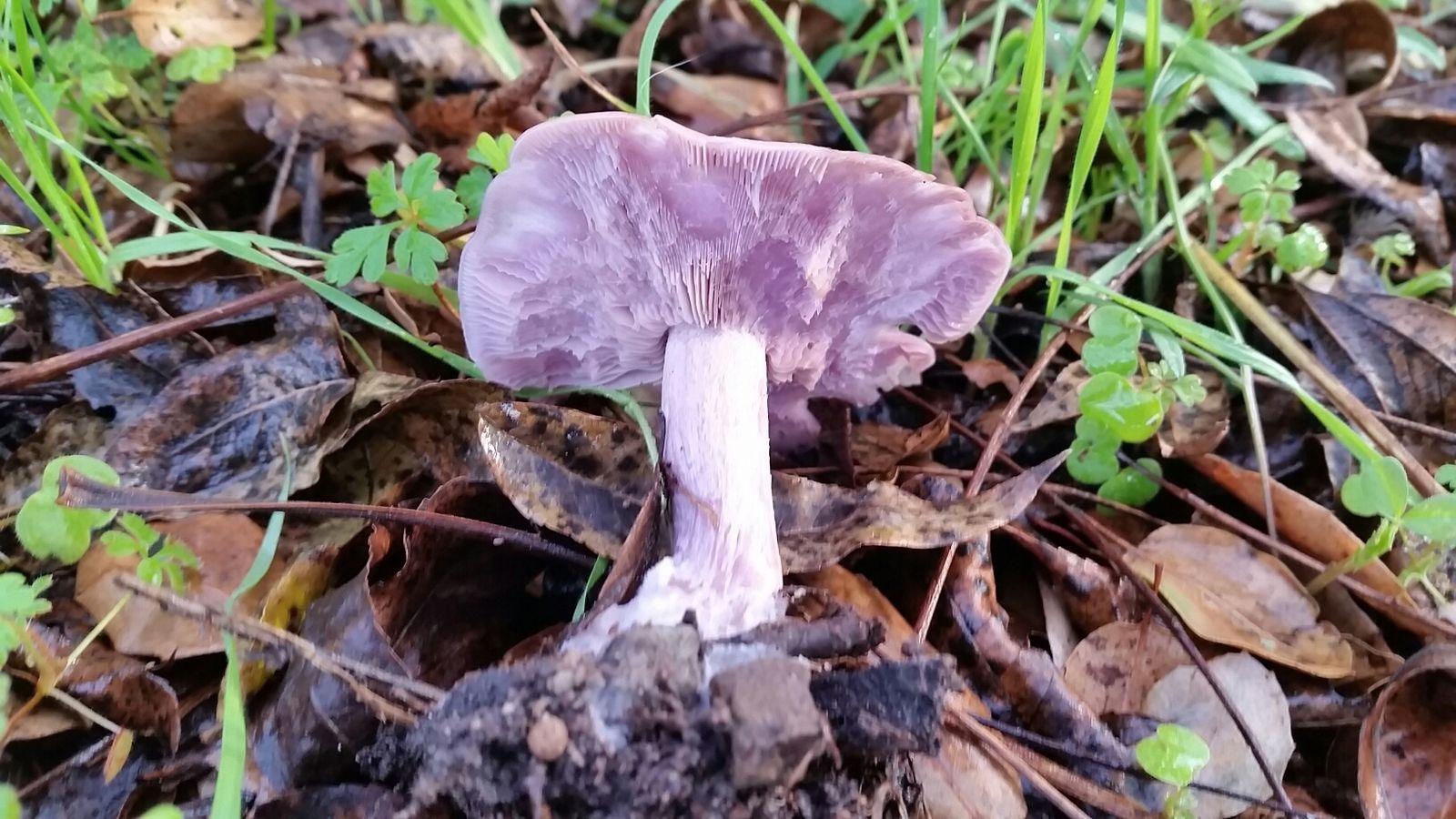
The tell
Lilac to purple gills and stem, no cobweb veil, and a pale pinkish-buff spore print.
Field marks
Cap, underside and stem show in a photo. The spore print does not, and it is often the deciding check.
Where and when
Lookalikes
Each card says how to tell the two apart.
Many Cortinarius species are lilac to violet. Young ones have a cobweb-like veil between the cap edge and stem, which leaves rusty fibers on the stem, and their spore print is rusty brown. Some contain orellanine, a kidney toxin.
Cortinarius violaceus
Dark violet throughout with a finely scaly cap, a cobweb veil when young, and a rusty brown spore print. The blewit has a smooth cap and a pinkish-buff print.
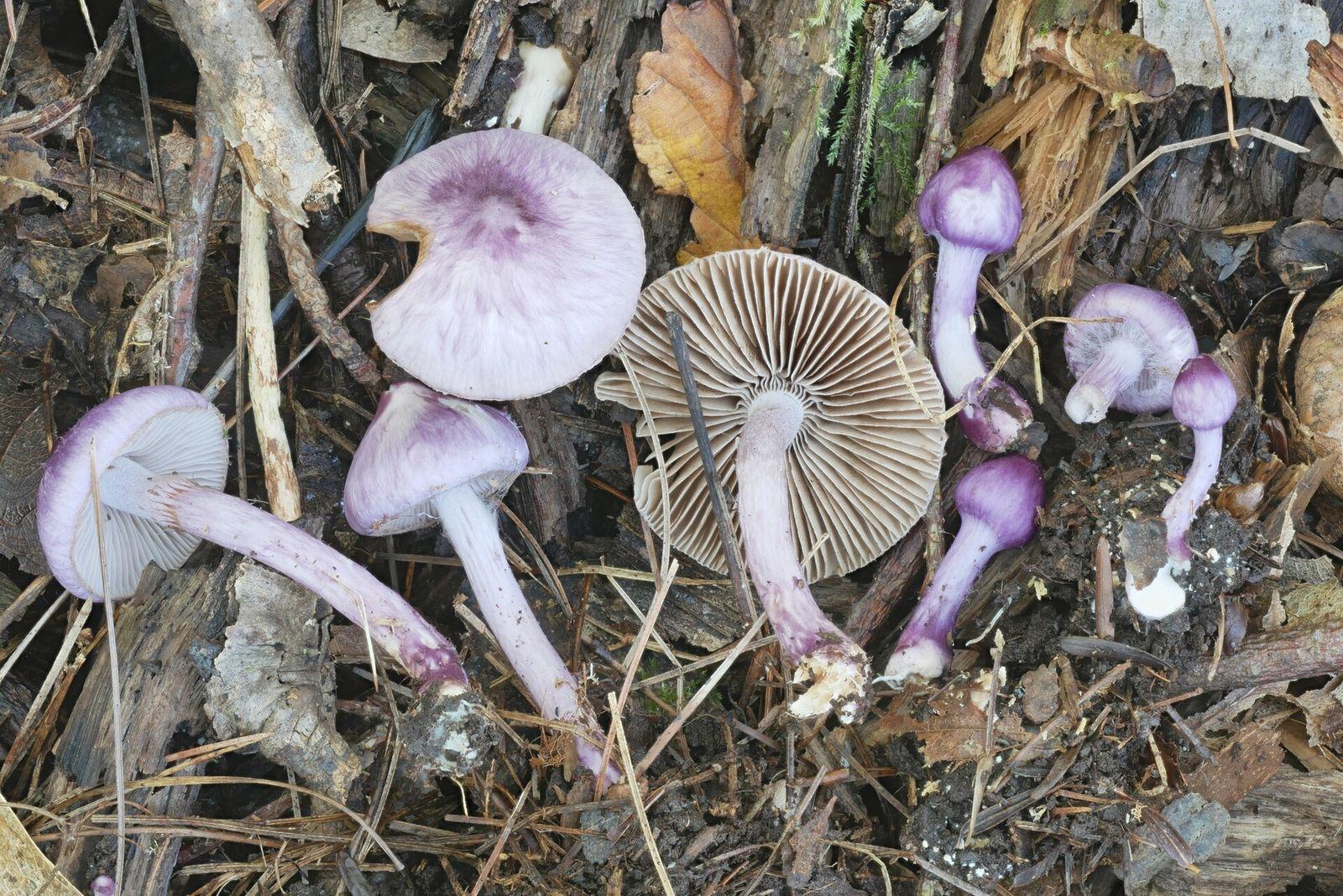
Inocybe geophylla
The lilac form of this Inocybe is much smaller, with a silky, conical cap and a brown spore print. It contains muscarine.
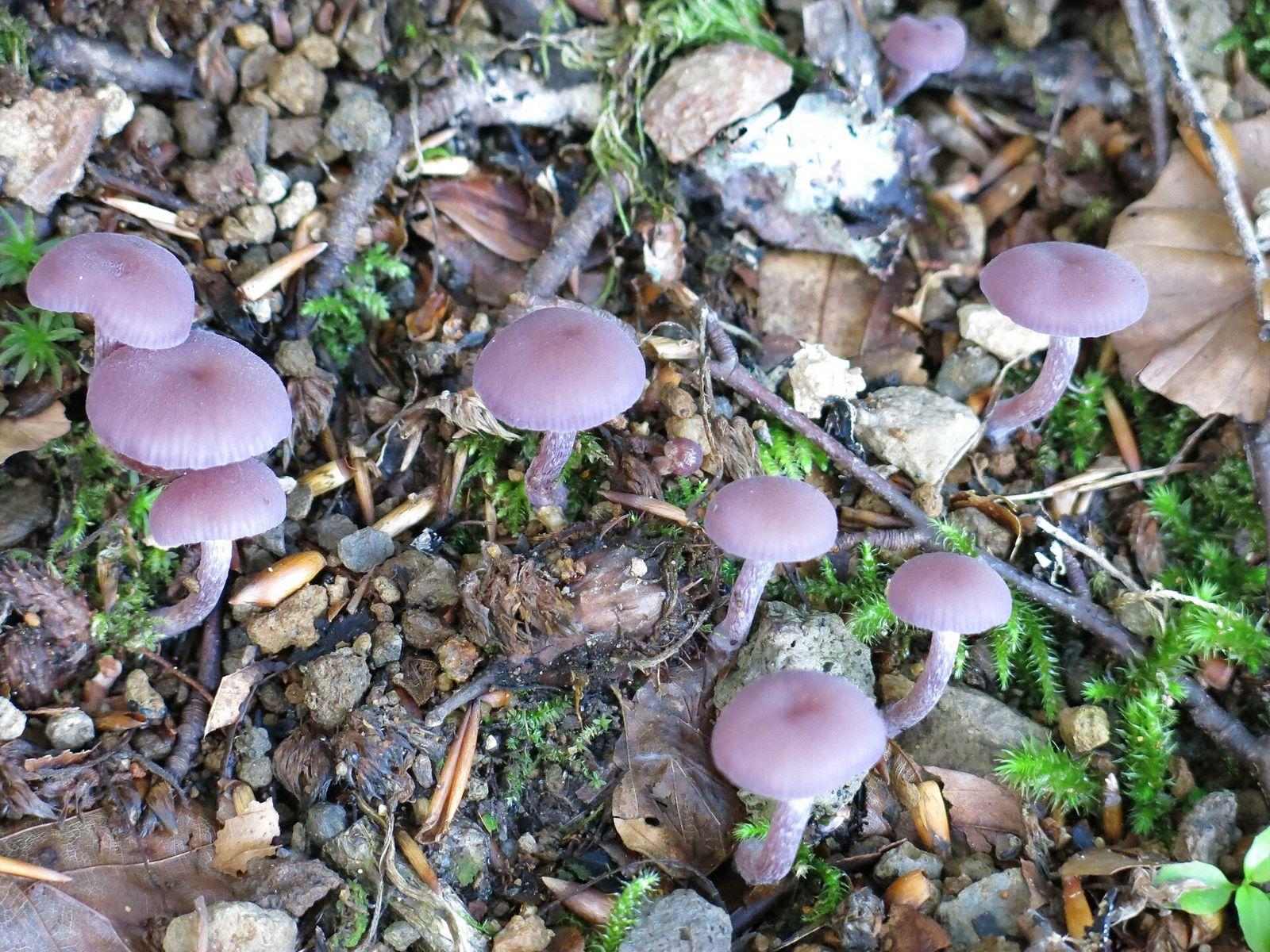
Laccaria amethystina
Smaller and more slender, with thick, widely spaced purple gills and a white spore print.
Edibility
Field guides list the blewit as edible when cooked and record stomach upset when it is eaten raw. Guides use the spore print to separate it from purple Cortinarius species, which print rusty brown and include species with the kidney toxin orellanine.
This page states what field guides record. It is not advice to eat, taste or handle anything, and a photo cannot settle edibility. If someone has eaten a wild mushroom that may be toxic, call poison control (1-800-222-1222 in the US) right away, before symptoms start: the deadliest species act hours later.
FAQ
By spore print and veil. Blewits leave a pale pinkish-buff spore print and never have a cobweb veil. Cortinarius species leave a rusty brown print, and young ones have a cobweb-like veil that leaves rusty fibers on the stem.
Field guides list them as edible when cooked. They record stomach upset when blewits are eaten raw, and the main risk is confusion with purple Cortinarius species.
Late in the fall and into early winter, in leaf litter, needle duff, compost piles, mulch and gardens. They often grow in rings or arcs and keep fruiting after the first frosts.
Sources
MushroomExpert.com
Missouri Department of Conservation
Beaty Biodiversity Museum, University of British Columbia
Index Fungorum
Waitlist
We will send one email when Mushrooms.id opens, and nothing else.
This opens your email app with the request written for you. Send it and we add you to the list. No email app? Write to hello@mushrooms.id with the subject “Add me to the Mushrooms.id waitlist”.