Deadly
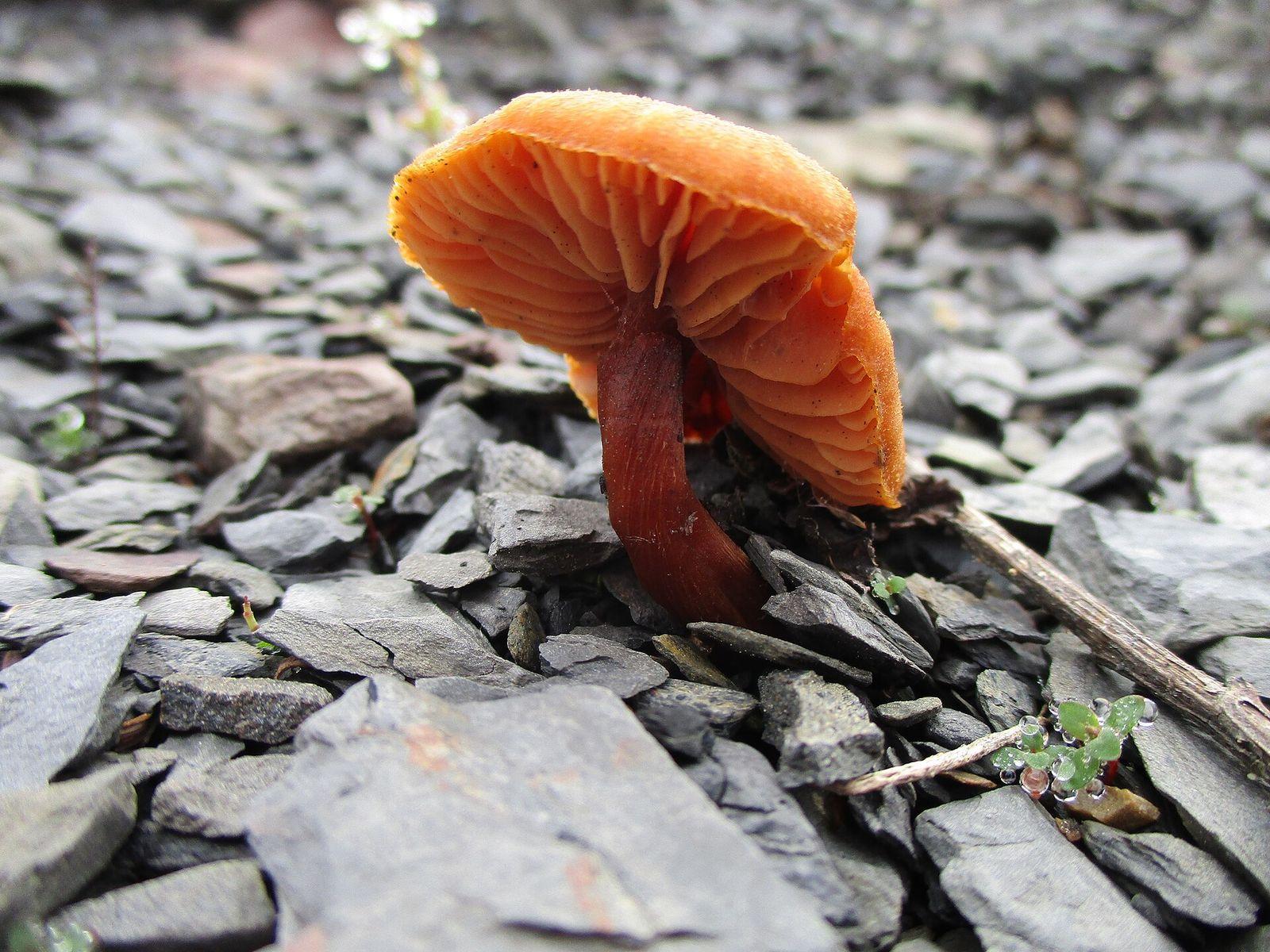
Deadly Galerina
Galerina marginata
Galerina is much smaller, with a smooth brown cap, a thin ring on the stem, and a rusty brown spore print. It contains amatoxins, the same liver toxins as the death cap.
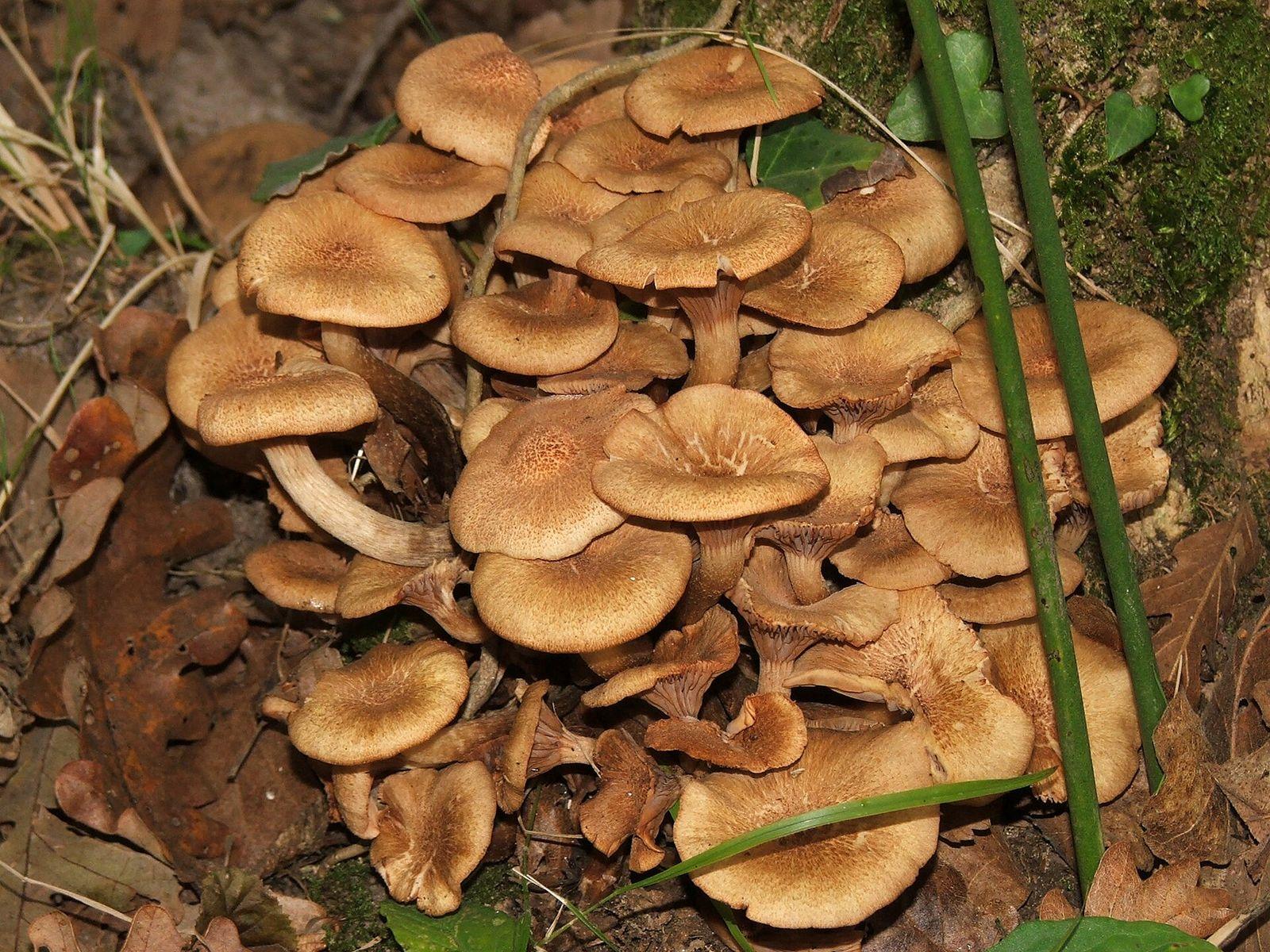
Desarmillaria caespitosa
Also called ringless honey fungus, armillaria tabescens, desarmillaria tabescens.
The ringless honey mushroom grows in big clusters at the base of oaks and on stumps and buried roots, often in lawns. Long called Armillaria tabescens, it looks like the honey mushroom without a ring and is regularly confused with the jack-o'-lantern, which fruits in the same places.
The tell
Large clusters of dry, honey-brown caps at the base of hardwoods, with no ring on the stem and a white spore print.
Field marks
Cap, underside and stem show in a photo. The spore print does not, and it is often the deciding check.
Where and when
Lookalikes
Each card says how to tell the two apart.
Galerina marginata
Galerina is much smaller, with a smooth brown cap, a thin ring on the stem, and a rusty brown spore print. It contains amatoxins, the same liver toxins as the death cap.
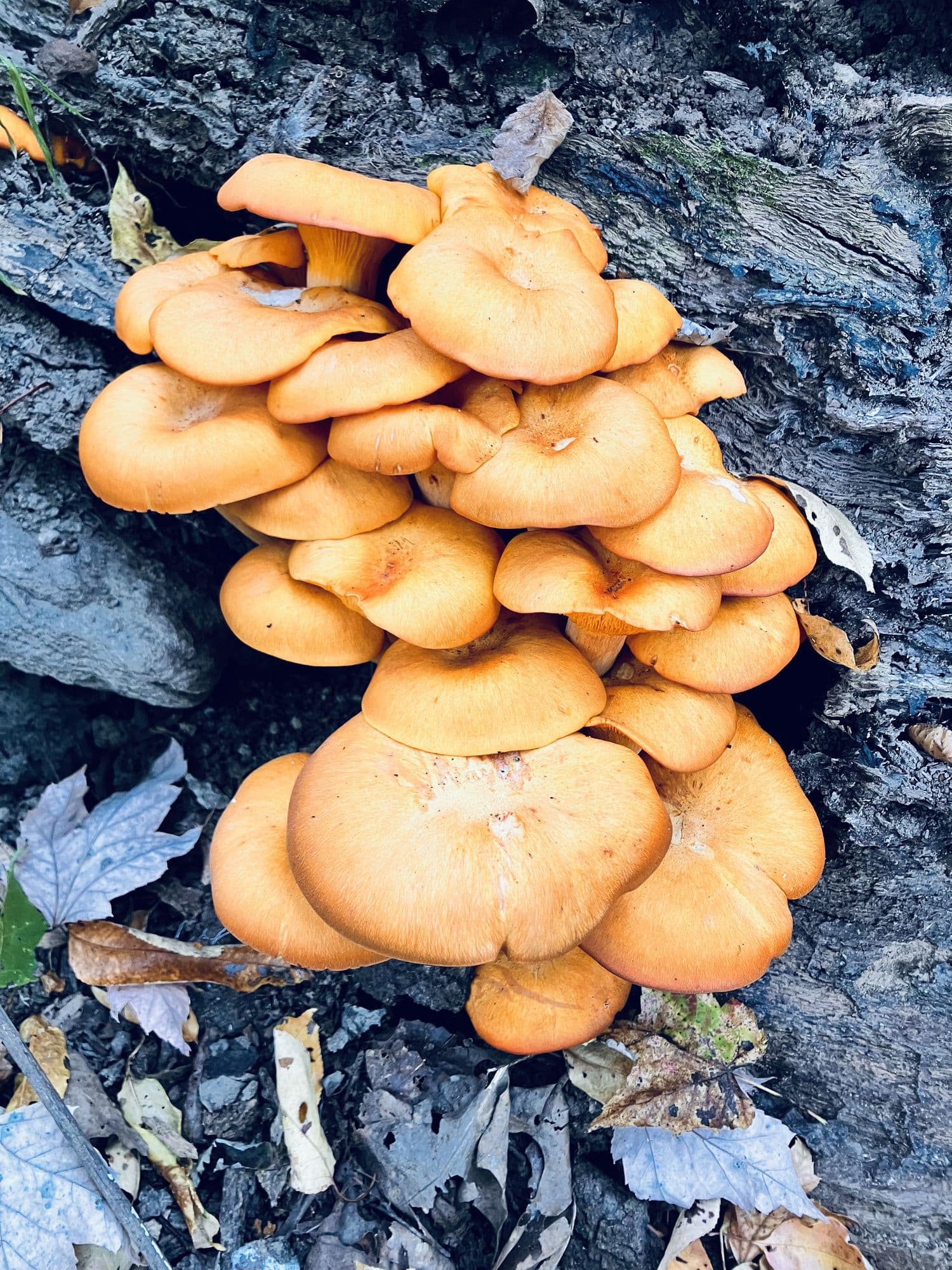
Omphalotus illudens
Also ringless and clustered at the base of trees, but bright orange throughout, with orange flesh and sharp-edged orange gills that run down the stem. It causes severe vomiting and diarrhea.
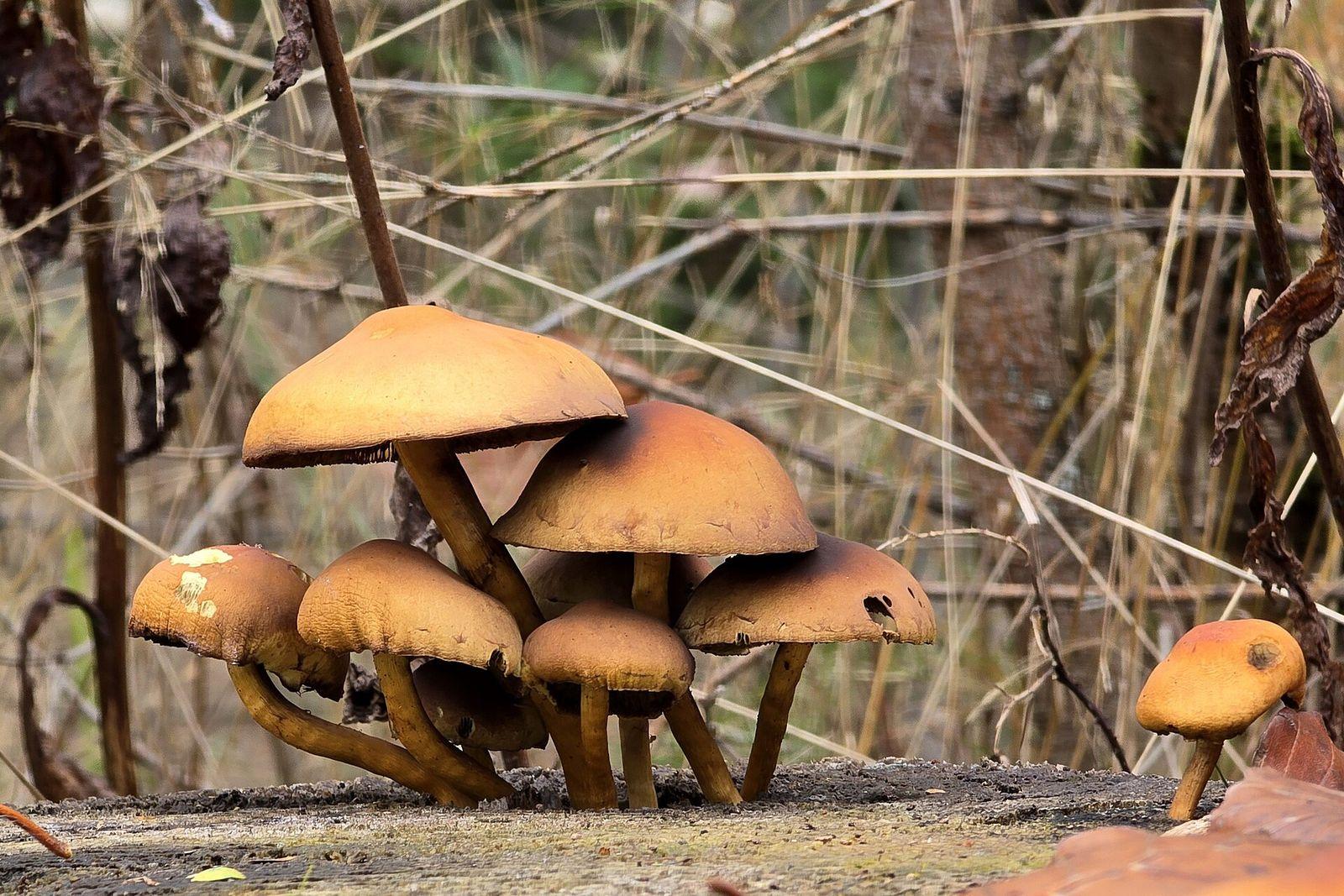
Hypholoma fasciculare
Sulphur tuft has bright sulfur-yellow caps, greenish-yellow gills that turn purple-brown, a purple-brown spore print, and bitter flesh.
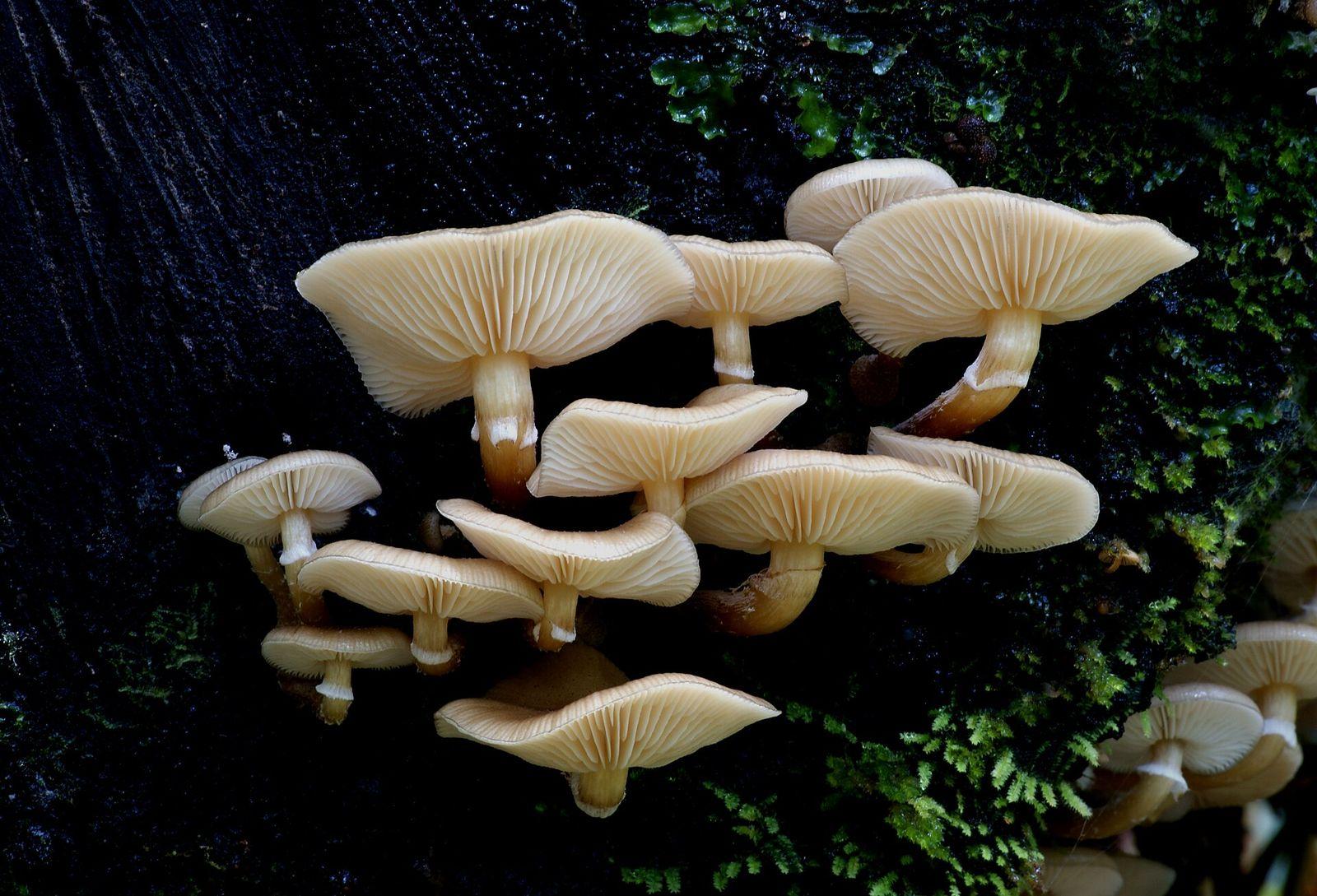
Armillaria mellea
The honey mushroom has the same white spore print but carries a ring near the top of the stem, and its cap is often slightly sticky rather than dry.
Edibility
Field guides list the ringless honey mushroom as edible when thoroughly cooked. As with the honey mushroom, guides record gastrointestinal upset when it is eaten raw or undercooked, and in some people even after cooking. The jack-o'-lantern, a frequent confusion, causes severe gastrointestinal poisoning.
This page states what field guides record. It is not advice to eat, taste or handle anything, and a photo cannot settle edibility. If someone has eaten a wild mushroom that may be toxic, call poison control (1-800-222-1222 in the US) right away, before symptoms start: the deadliest species act hours later.
FAQ
Field guides list it as edible when thoroughly cooked. Raw or undercooked specimens cause stomach upset, and some people react even when it is well cooked.
The ringless honey mushroom never has a ring on its stem, while the honey mushroom has a ring near the top. The ringless species also has a drier cap and grows from about the Great Lakes south, often at the base of oaks.
Both are ringless and grow in clusters at tree bases. The jack-o'-lantern is bright orange throughout, including the flesh and gills, while the ringless honey mushroom has a honey-brown cap, whitish to pinkish gills and pale flesh.
Sources
MushroomExpert.com
Fungi Growing on Wood, Gary Emberger (MushroomExpert.com)
Missouri Department of Conservation
Index Fungorum
Waitlist
We will send one email when Mushrooms.id opens, and nothing else.
This opens your email app with the request written for you. Send it and we add you to the list. No email app? Write to hello@mushrooms.id with the subject “Add me to the Mushrooms.id waitlist”.