Chicken of the woods vs jack-o'-lantern
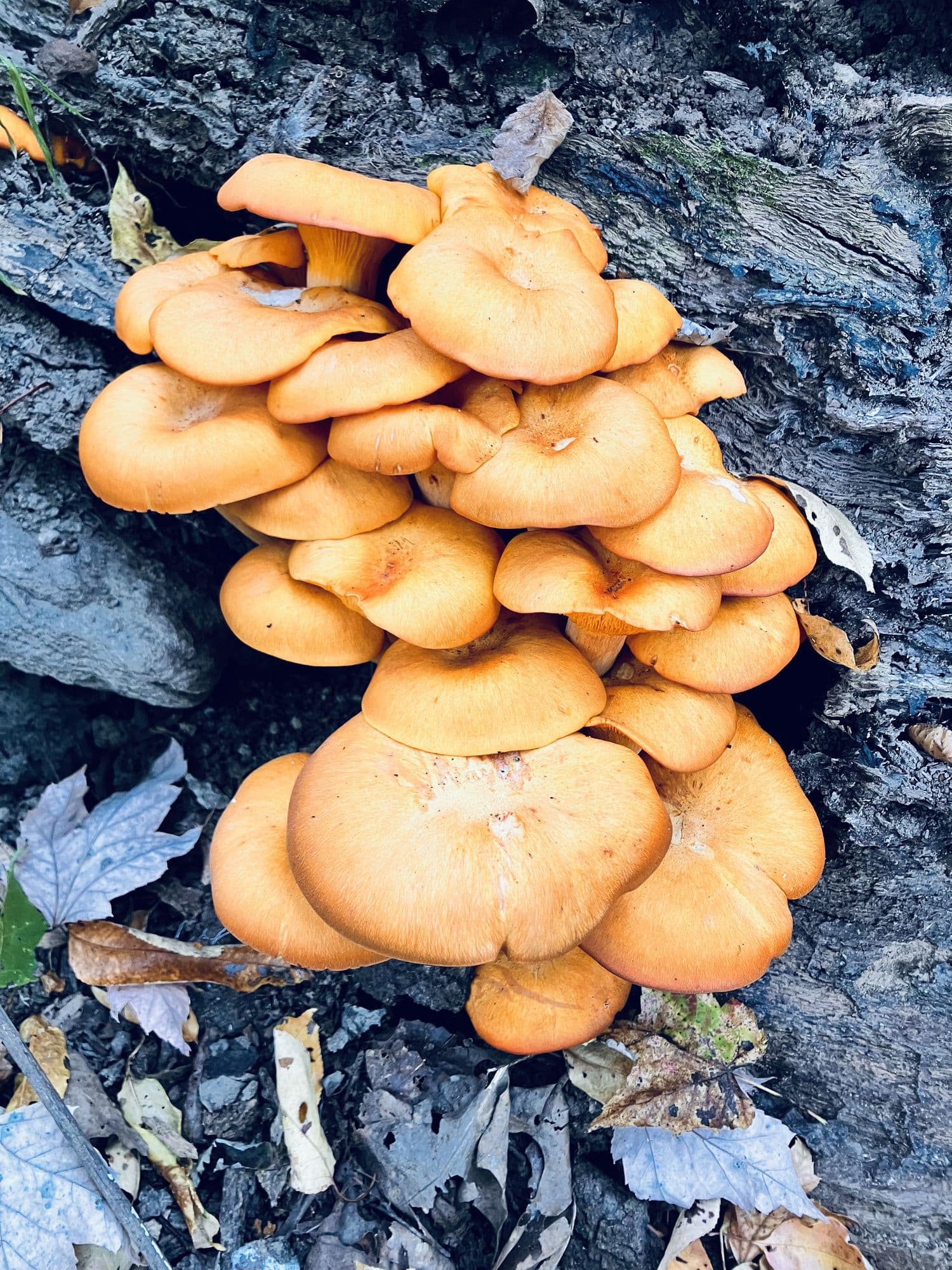
- Toxic: Jack-o'-Lantern
Look under the orange: chicken of the woods has yellow pores and no stems. A jack-o'-lantern has sharp orange gills on separate stems.
Quick answer
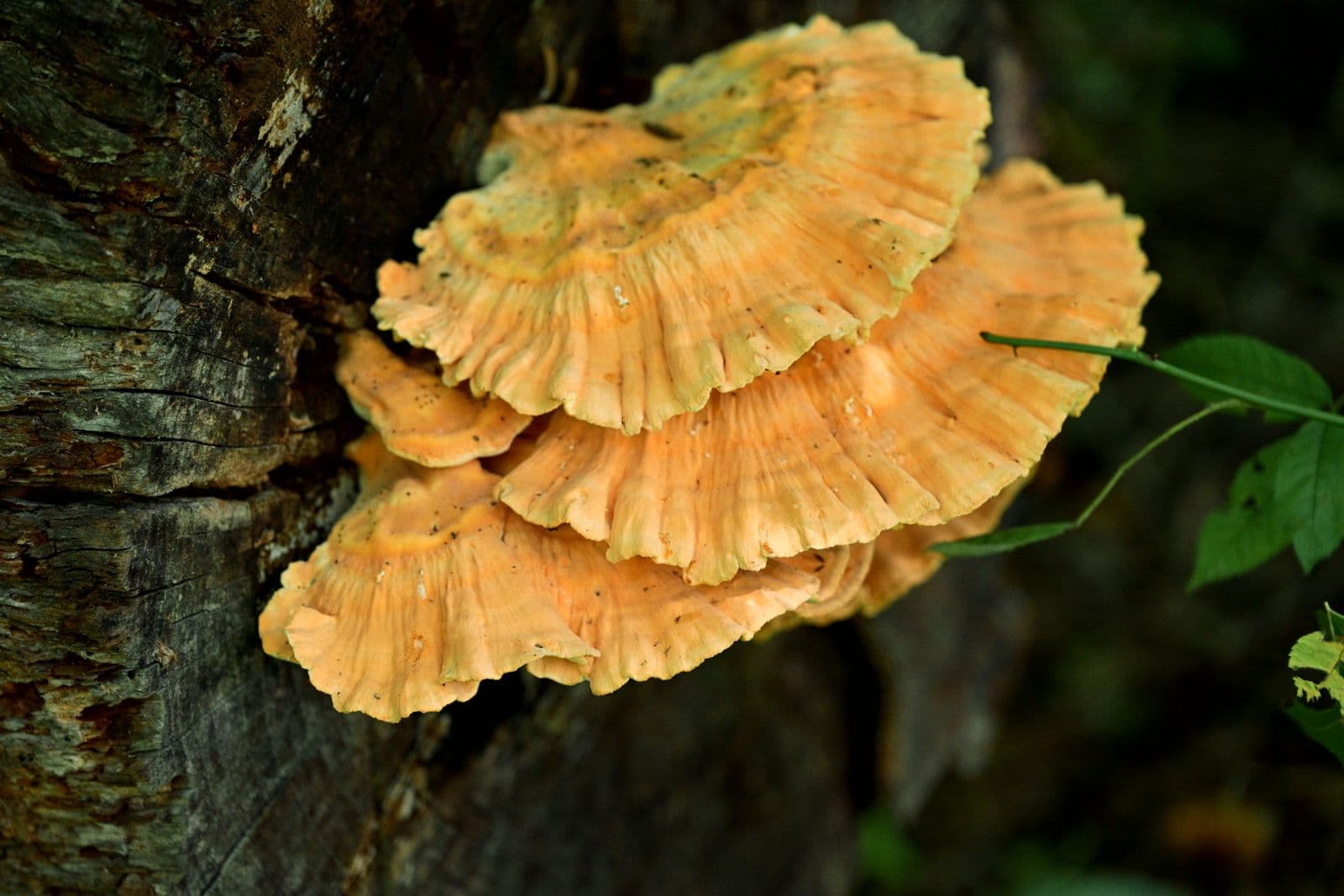
Chicken of the woods forms overlapping orange shelves on trunks, stumps and logs, with a sulfur-yellow pore surface underneath; a lobster mushroom is a single misshapen mushroom on the ground, covered in a finely pimpled orange-red crust, with blunt ridges underneath and firm white flesh inside. The lobster mushroom is a parasite that has taken over another mushroom.
Side by side
The tellOverlapping orange shelves on wood with a bright sulfur-yellow pore surface underneath.
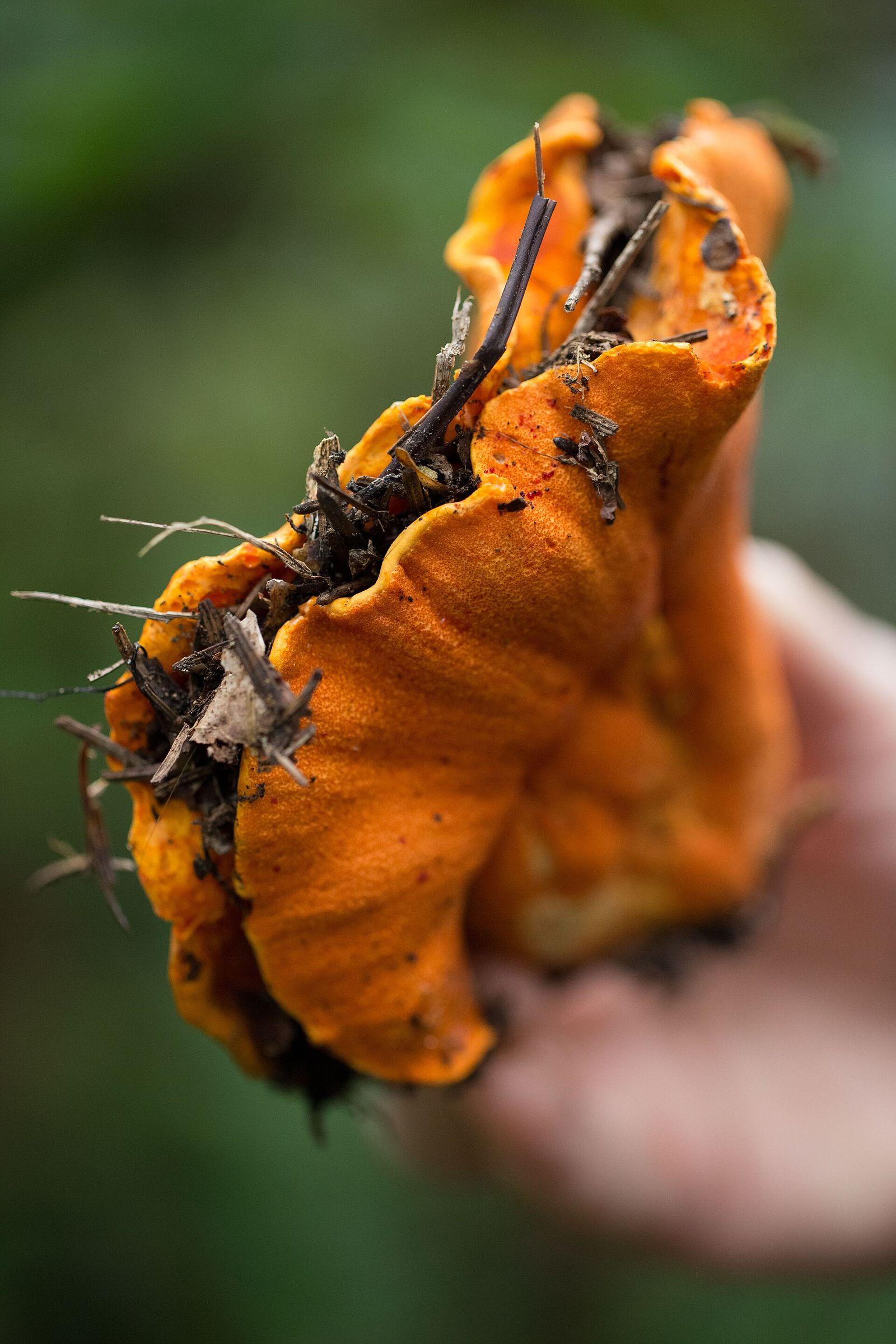
The tellA misshapen mushroom covered in a bright orange-red crust, with the gills reduced to blunt ridges and firm white flesh inside.
| Feature | Chicken of the Woods | Lobster Mushroom |
|---|---|---|
| Where it grows | Chicken of the WoodsOn wood: trunks, stumps and logs. | Lobster MushroomOn the ground, on host mushrooms (Russula and Lactifluus). |
| Form | Chicken of the WoodsOverlapping flat shelves with no stem. | Lobster MushroomA single funnel- or vase-shaped mushroom with a short, thick stem. |
| Underside | Chicken of the WoodsSulfur-yellow surface of tiny pores. | Lobster MushroomBlunt, rounded ridges under the same orange crust. |
| Surface | Chicken of the WoodsOrange to salmon on top, often with a yellow edge. | Lobster MushroomA finely pimpled orange to orange-red crust, aging purplish red. |
| Flesh | Chicken of the WoodsSoft and pale yellow to whitish when young, chalky with age. | Lobster MushroomFirm, dense and white. |
| Season | Chicken of the WoodsLate spring to fall. | Lobster MushroomSummer through fall. |
FAQ
It is a parasitic fungus, Hypomyces lactifluorum, growing over another mushroom, usually Russula brevipes or Lactifluus piperatus. The parasite turns the host orange-red and reduces its gills to blunt ridges.
It grows on wood, sometimes on buried roots at the base of a tree, so it can look as if it is on the ground. Its shelves and yellow pores separate it from the lobster mushroom.
Sources
MushroomExpert.com
MushroomExpert.com
Beaty Biodiversity Museum, University of British Columbia
Keep checking
This page states what field guides record. It is not advice to eat, taste or handle anything, and a photo cannot settle edibility. If someone has eaten a wild mushroom that may be toxic, call poison control (1-800-222-1222 in the US) right away, before symptoms start: the deadliest species act hours later.
Waitlist
We will send one email when Mushrooms.id opens, and nothing else.
This opens your email app with the request written for you. Send it and we add you to the list. No email app? Write to hello@mushrooms.id with the subject “Add me to the Mushrooms.id waitlist”.