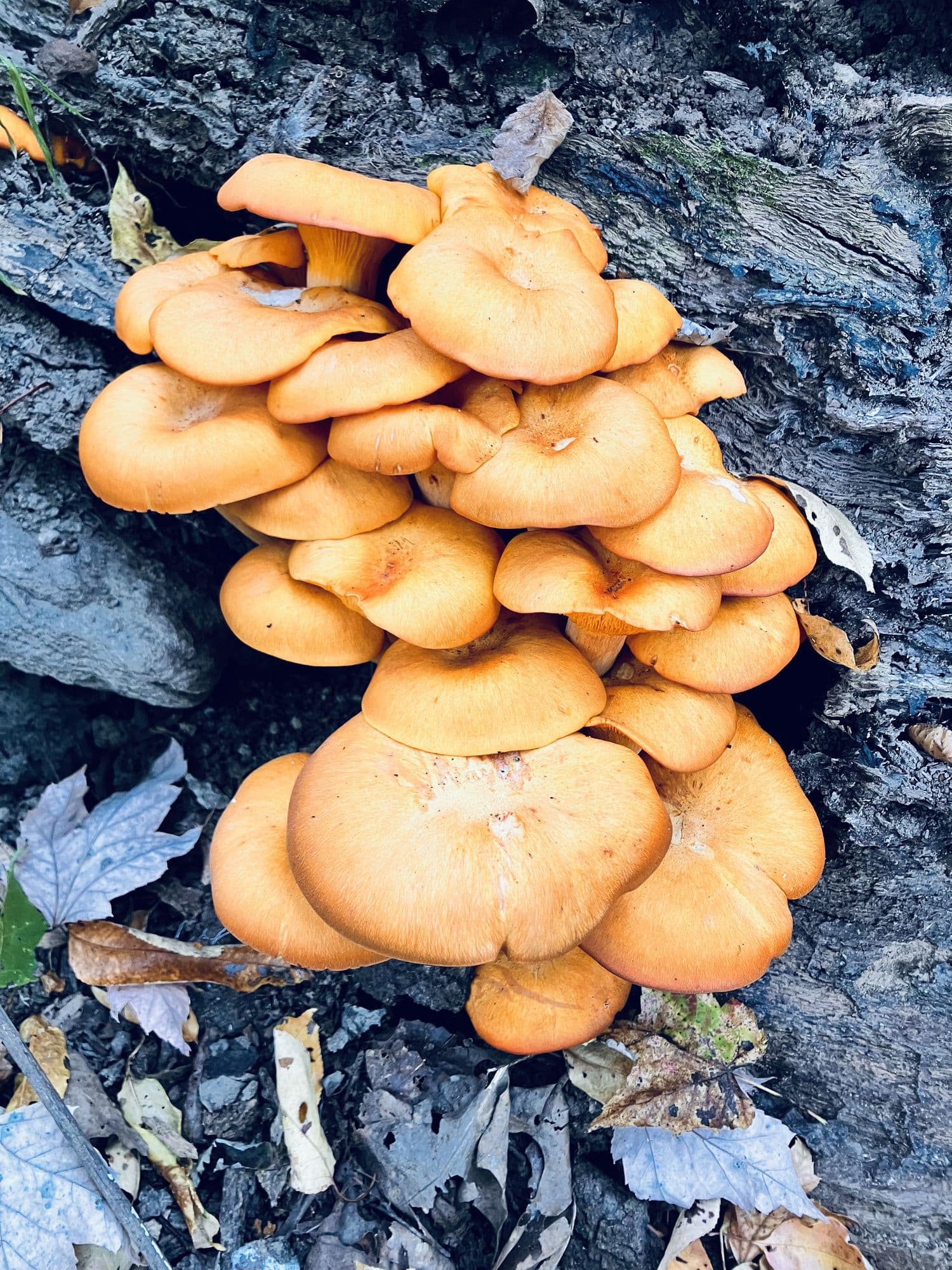
Toxic lookalike
Jack-o'-Lantern
Omphalotus illudens
The jack-o'-lantern is orange but has sharp, true gills, grows in clusters on wood or buried roots, and has orange flesh. It causes severe vomiting and diarrhea.
Hypomyces lactifluorum
Also called lobster fungus.
The lobster mushroom is a Russula or Lactifluus mushroom coated and reshaped by an orange-red parasitic mold. The result looks like a cooked lobster shell. It grows in forests across North America in summer and fall.
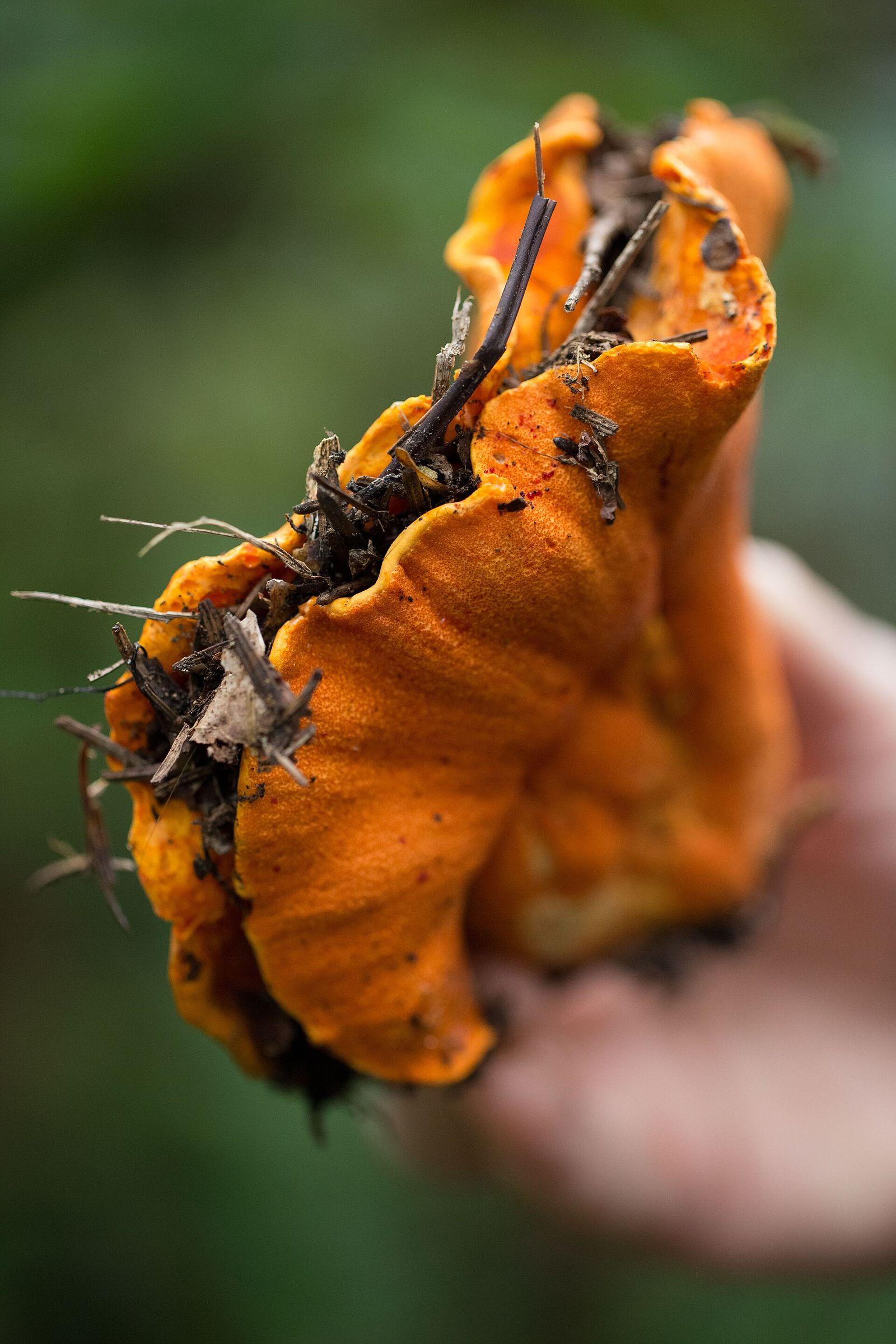
The tell
A misshapen mushroom covered in a bright orange-red crust, with the gills reduced to blunt ridges and firm white flesh inside.
Field marks
Cap, underside and stem show in a photo. The spore print does not, and it is often the deciding check.
Where and when
Lookalikes
Each card says how to tell the two apart.
Omphalotus illudens
The jack-o'-lantern is orange but has sharp, true gills, grows in clusters on wood or buried roots, and has orange flesh. It causes severe vomiting and diarrhea.
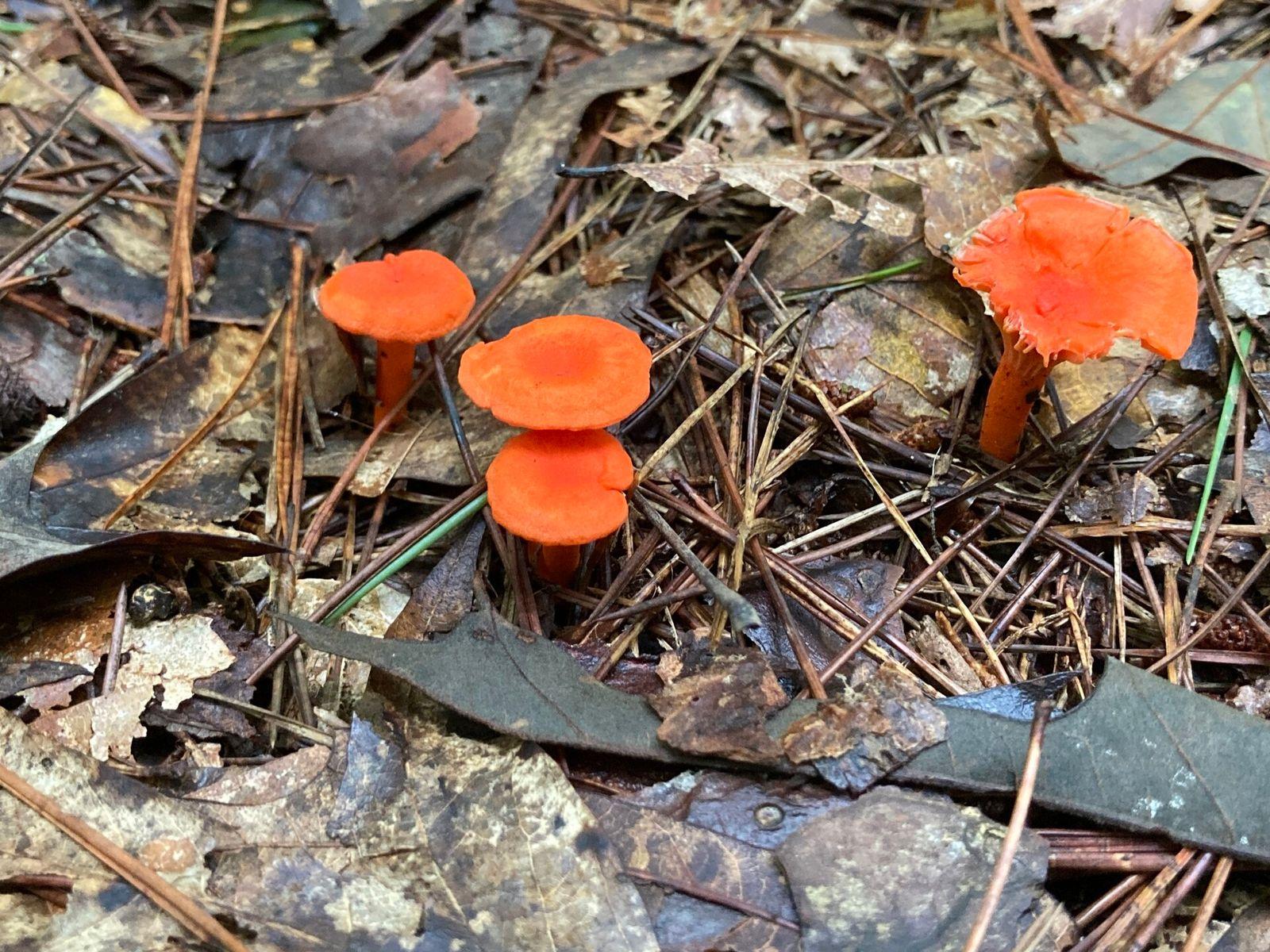
Cantharellus cinnabarinus
The cinnabar chanterelle is much smaller and thinner, with a smooth reddish-pink cap and forked false gills, and no pimpled crust.
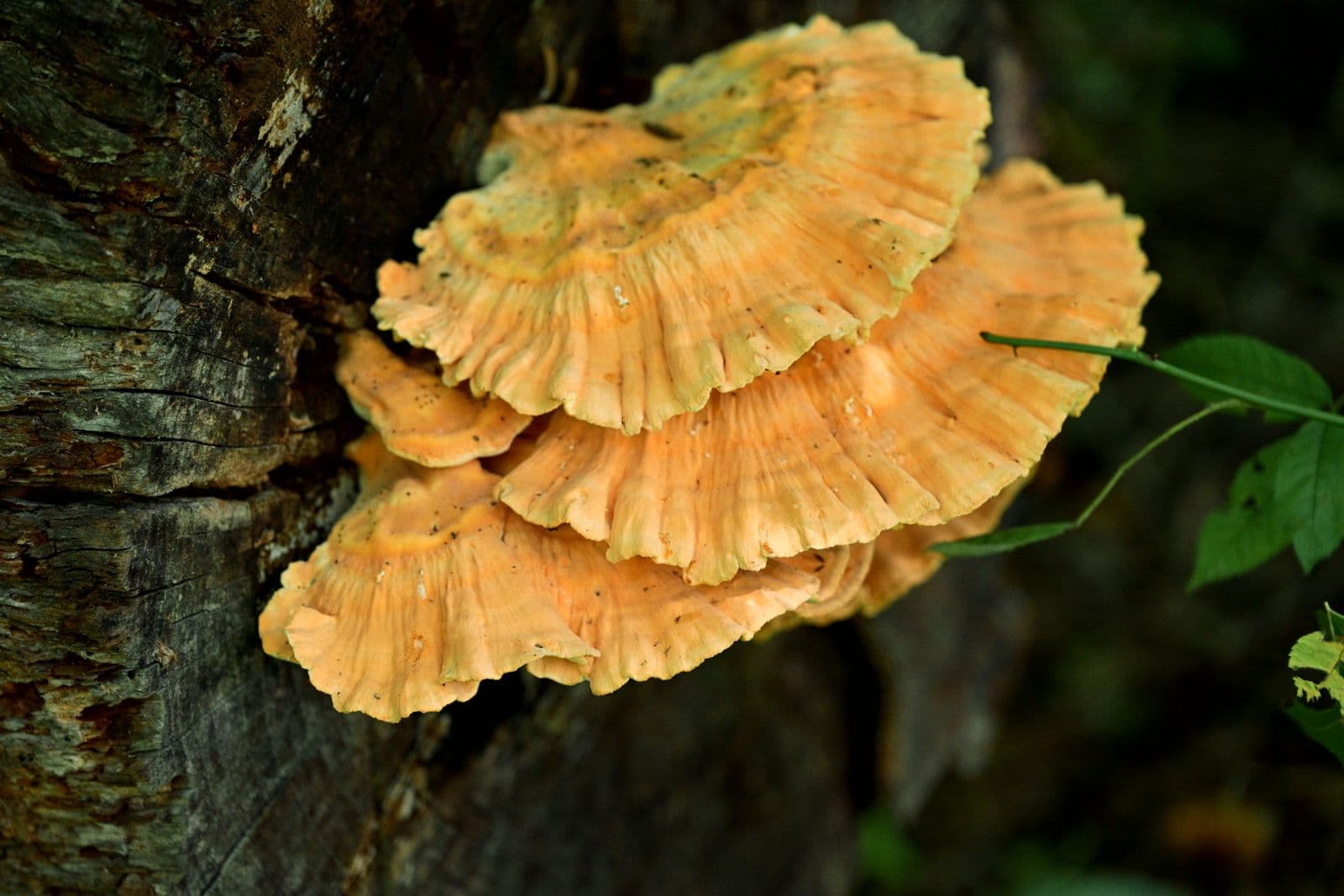
Laetiporus sulphureus
Chicken of the woods grows as orange shelves on wood, with a yellow pore surface underneath.
Edibility
Field guides list the lobster mushroom as edible when its interior is firm and white. Older specimens that have turned soft or purplish are decaying. Because the parasite hides the host, guides note the host cannot be confirmed by sight, though no North American poisonings have been tied to that.
This page states what field guides record. It is not advice to eat, taste or handle anything, and a photo cannot settle edibility. If someone has eaten a wild mushroom that may be toxic, call poison control (1-800-222-1222 in the US) right away, before symptoms start: the deadliest species act hours later.
FAQ
It is a Russula or Lactifluus mushroom that has been taken over by a parasitic fungus, Hypomyces lactifluorum. The parasite covers the host in an orange-red crust, flattens its gills into ridges, and makes its flesh denser.
Field guides list it as edible when the inside is firm and white. Specimens that are soft, purplish or moldy are decaying.
On the ground in conifer and hardwood forests across North America, wherever their hosts, mainly Russula brevipes and Lactifluus piperatus, grow. They appear in summer and fall.
Sources
MushroomExpert.com
Missouri Department of Conservation
Beaty Biodiversity Museum, University of British Columbia
Index Fungorum
Waitlist
We will send one email when Mushrooms.id opens, and nothing else.
This opens your email app with the request written for you. Send it and we add you to the list. No email app? Write to hello@mushrooms.id with the subject “Add me to the Mushrooms.id waitlist”.