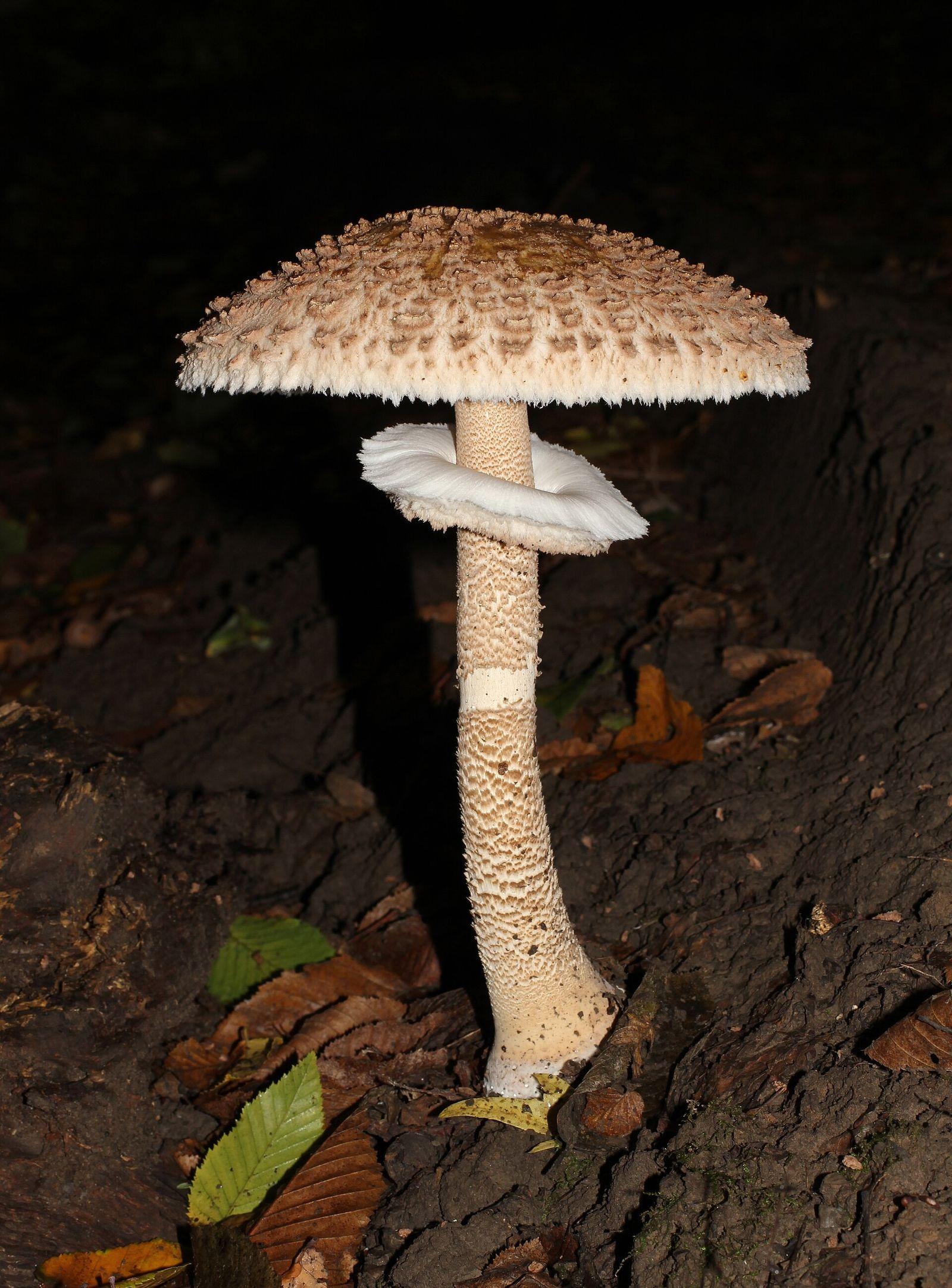
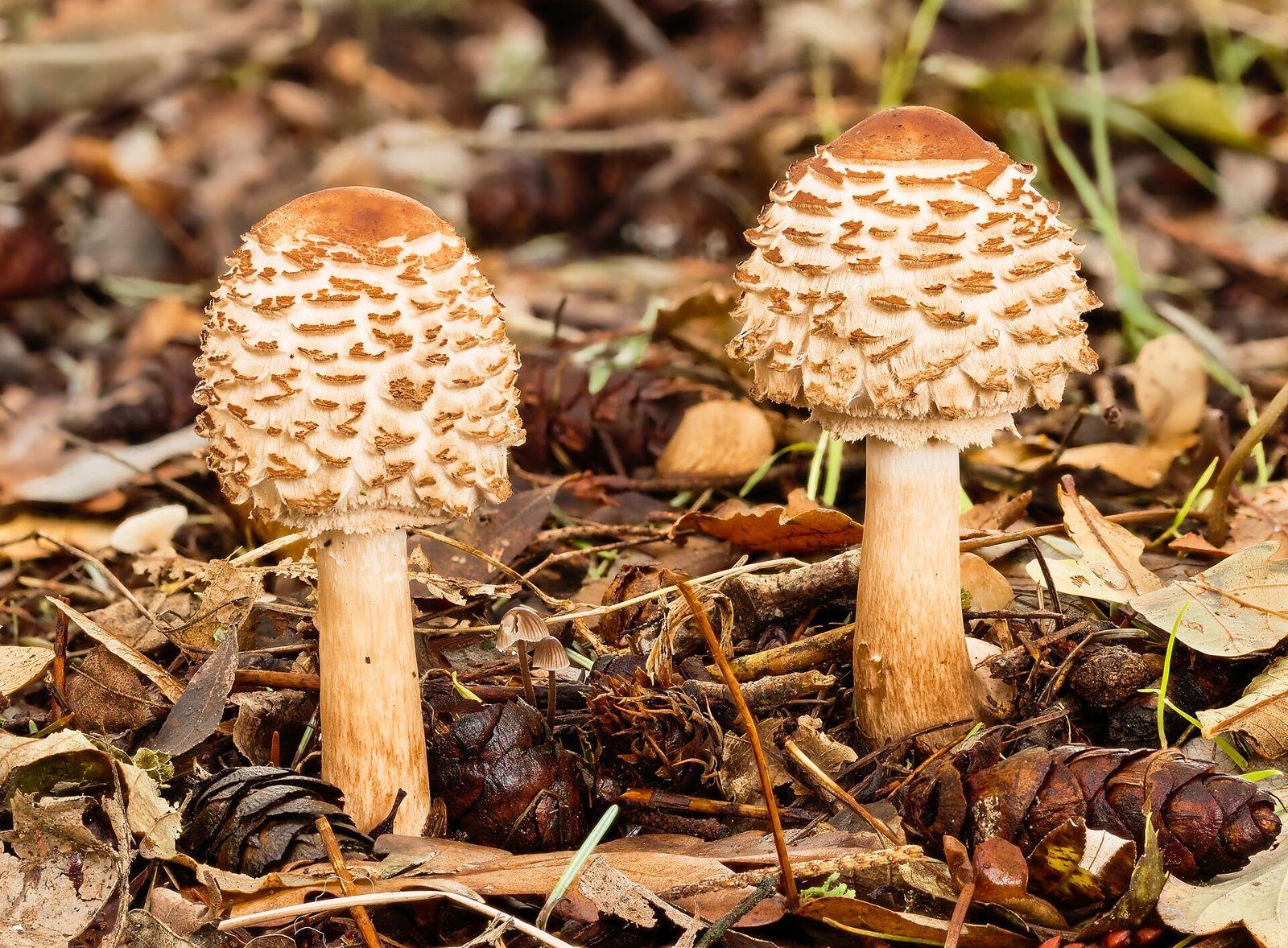
Parasol mushroom vs shaggy parasol
The parasol has a tall snakeskin-patterned stem and flesh that stays white. The shaggy parasol has a smooth stem and flesh that turns orange-red.
Quick answer
The green-spored parasol drops a green to grayish olive spore print and its gills turn gray-green as they mature; the shaggy parasol drops a white print and its gills stay white. Young green-spored parasols still have white gills, and both can redden at the stem base, so a young specimen or a photo may not separate them.
Toxic lookalike
The green-spored parasol (Chlorophyllum molybdites) causes more poisonings in North America than any other mushroom, according to MykoWeb. Tom Volk, quoting Dennis Benjamin, records a gastrointestinal syndrome about 1 to 3 hours after the meal with colicky abdominal pain, nausea, vomiting and diarrhea that can become bloody. The Missouri Department of Conservation notes it is not deadly but can make people very sick.
If someone has eaten a wild mushroom and feels unwell, or may have eaten one of these, call poison control now: 1-800-222-1222 in the US. Do not wait for symptoms.
Side by side
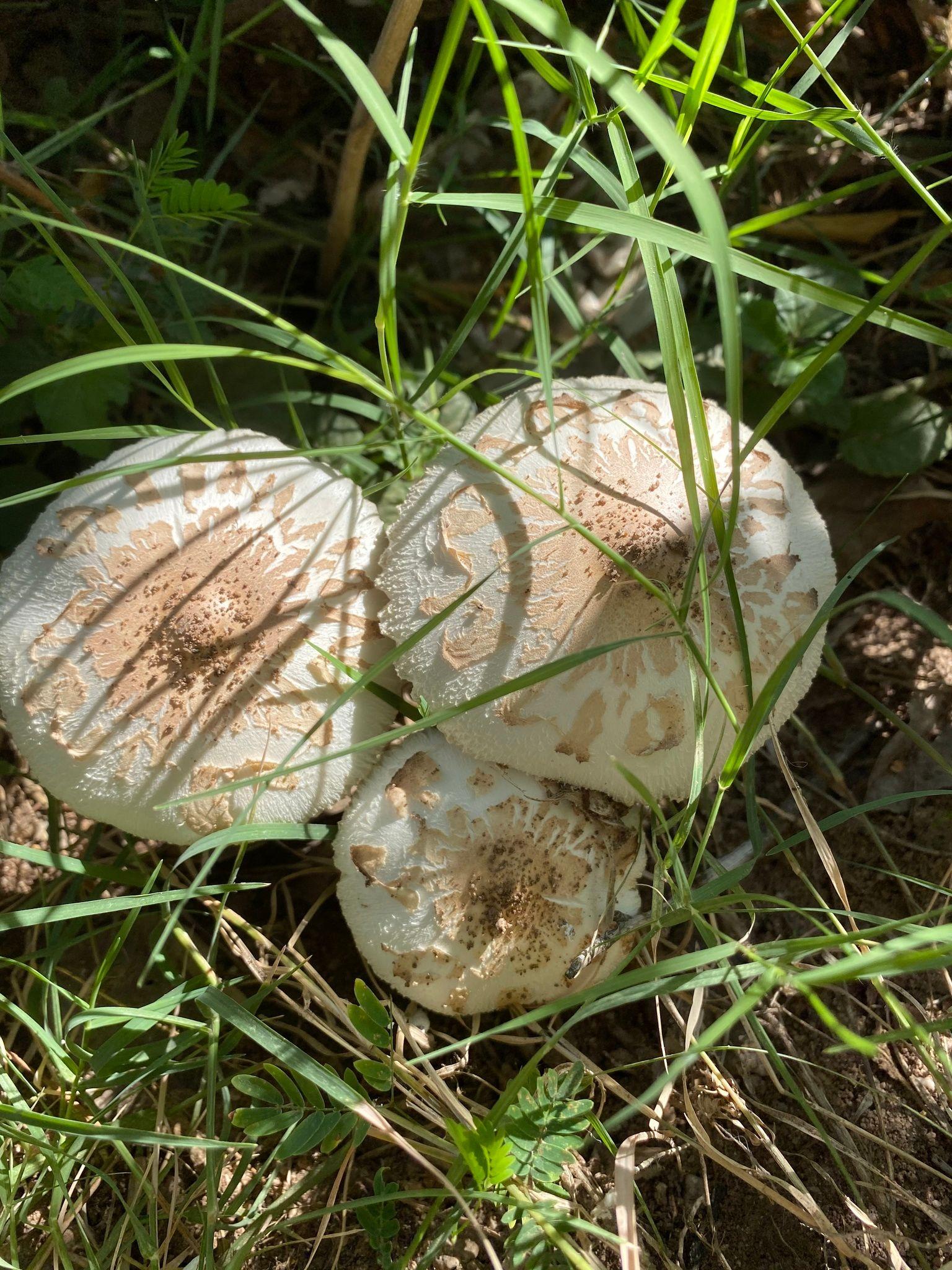
The tellLarge white cap with brown scales on lawns, gills that turn gray-green with age, and a green spore print.
The tellCoarse, shaggy brown scales on a pale cap, a smooth stem with an abrupt bulb, and flesh that turns orange to red when cut.
| Feature | Green-Spored Parasol | Shaggy Parasol |
|---|---|---|
| Spore print | Green-Spored ParasolGreen to grayish olive. | Shaggy ParasolWhite. |
| Mature gills | Green-Spored ParasolGrayish green to olive. | Shaggy ParasolWhite, bruising reddish brown with handling. |
| Cut flesh | Green-Spored ParasolWhite, sometimes staining reddish brown to pinkish red in the stem base. | Shaggy ParasolTurns orange to red, especially in the stem, then brown. |
| Cap scales | Green-Spored ParasolA brown central patch that breaks into brown scales toward the edge. | Shaggy ParasolCoarse, shaggy, upturned brown scales on a whitish background. |
| Stem base | Green-Spored ParasolSlightly enlarged, bruising brownish. | Shaggy ParasolAn abrupt, rimmed bulb. |
| Habitat | Green-Spored ParasolLawns, pastures, parks and golf courses, often in rings after summer rain. | Shaggy ParasolGardens, compost, disturbed ground and conifer or cypress litter. |
FAQ
The spore print: green for the green-spored parasol, white for the shaggy parasol. Mature green-spored parasols also have gray-green gills.
Yes. Young specimens have white gills, and without a mature specimen a confident identification is hard. Tom Volk describes a poisoning in which a mycologist searched the whole mushroom and found only one green spore.
It is not recorded as deadly to adults, though Tom Volk notes one recorded fatality involving a child. It causes severe vomiting, diarrhea and abdominal pain starting about 1 to 3 hours after eating.
Sources
MushroomExpert.com
MushroomExpert.com
Tom Volk, University of Wisconsin
Missouri Department of Conservation
Keep checking
This page states what field guides record. It is not advice to eat, taste or handle anything, and a photo cannot settle edibility. If someone has eaten a wild mushroom that may be toxic, call poison control (1-800-222-1222 in the US) right away, before symptoms start: the deadliest species act hours later.
More comparisons
The parasol has a tall snakeskin-patterned stem and flesh that stays white. The shaggy parasol has a smooth stem and flesh that turns orange-red.
Lepiota subincarnata
Photo coming
The deadly dapperling is under 2 inches with only a cottony ring zone. The shaggy parasol is large, with a thick movable ring and reddening flesh.
Waitlist
We will send one email when Mushrooms.id opens, and nothing else.
This opens your email app with the request written for you. Send it and we add you to the list. No email app? Write to hello@mushrooms.id with the subject “Add me to the Mushrooms.id waitlist”.