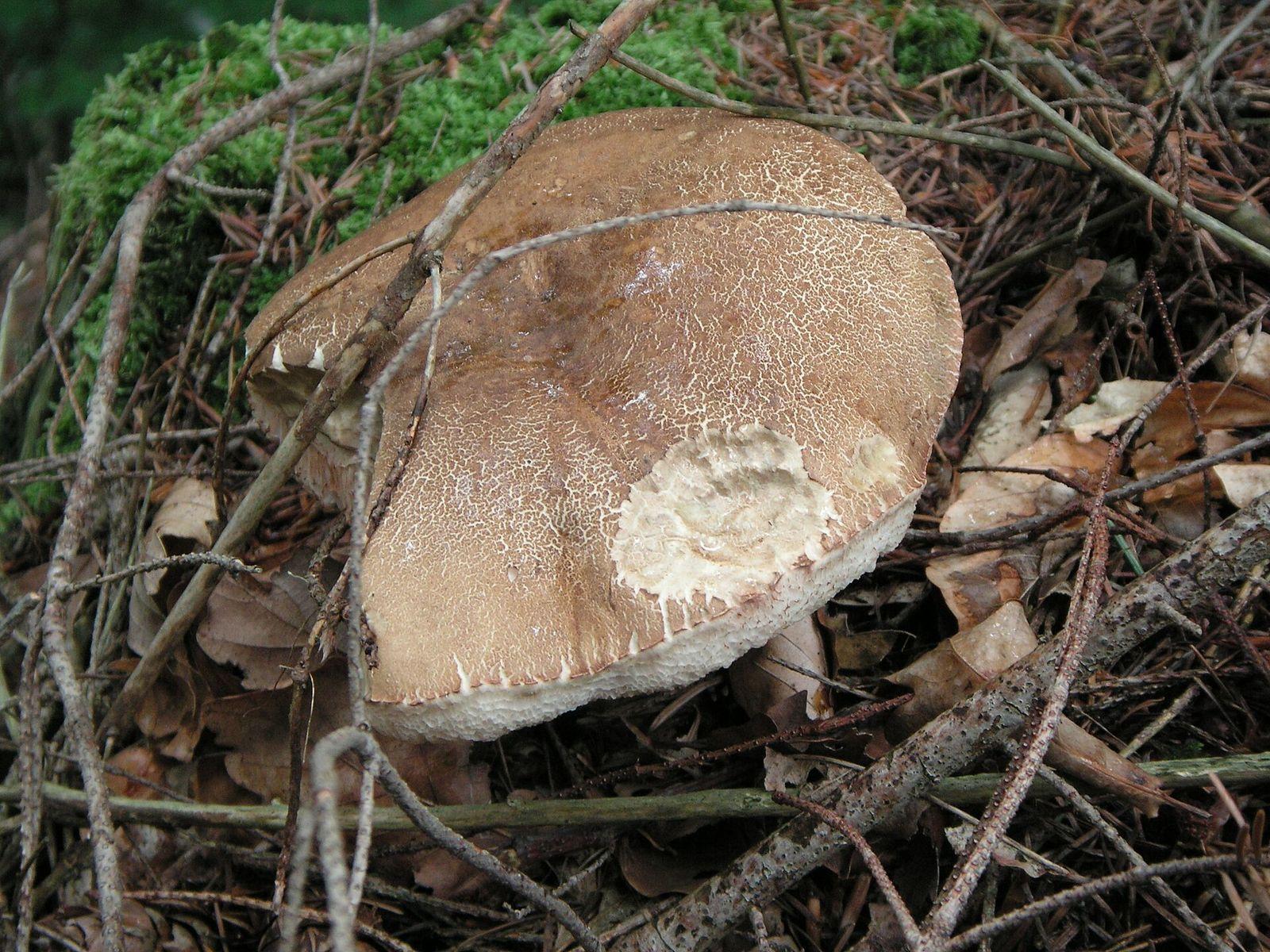
Inedible lookalike
Bitter Bolete
Tylopilus felleus
The bitter bolete is larger, with a solid stem covered in a coarse brown net, pores that turn pinkish, and intensely bitter flesh.
Gyroporus castaneus
Also called chestnut gyroporus.
The chestnut bolete is a small, rusty orange-brown bolete of oak woods. Its brittle stem, which hollows out with age, and its pale yellow spore print set it apart from most other boletes.
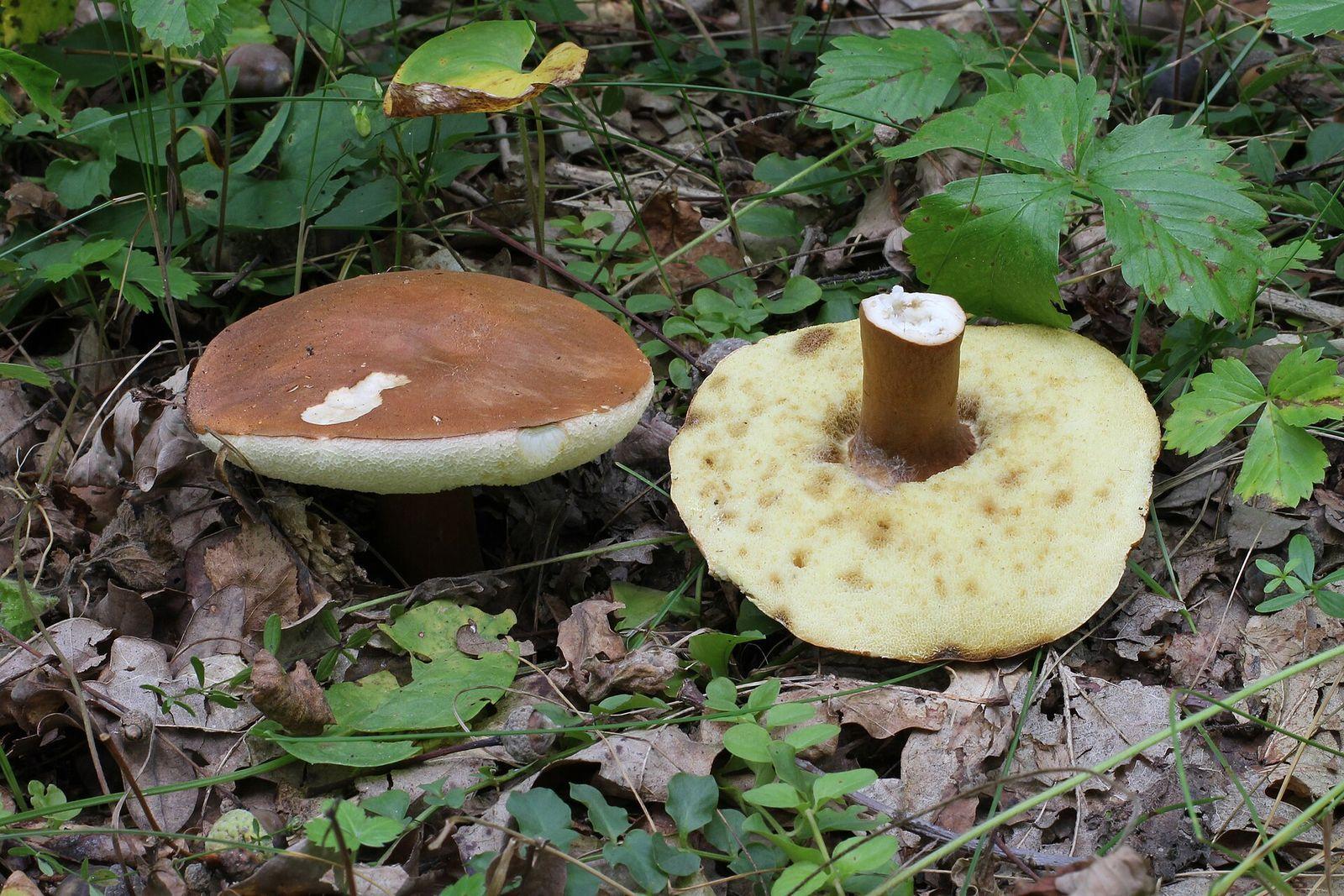
The tell
A small, rusty-brown bolete with a brittle stem that becomes hollow and a pale yellow spore print.
Field marks
Cap, underside and stem show in a photo. The spore print does not, and it is often the deciding check.
Where and when
Lookalikes
Each card says how to tell the two apart.
Tylopilus felleus
The bitter bolete is larger, with a solid stem covered in a coarse brown net, pores that turn pinkish, and intensely bitter flesh.
A close relative with a straw-yellow, coarsely fibrous cap. Its flesh and pores turn deep blue within seconds of being cut or bruised.
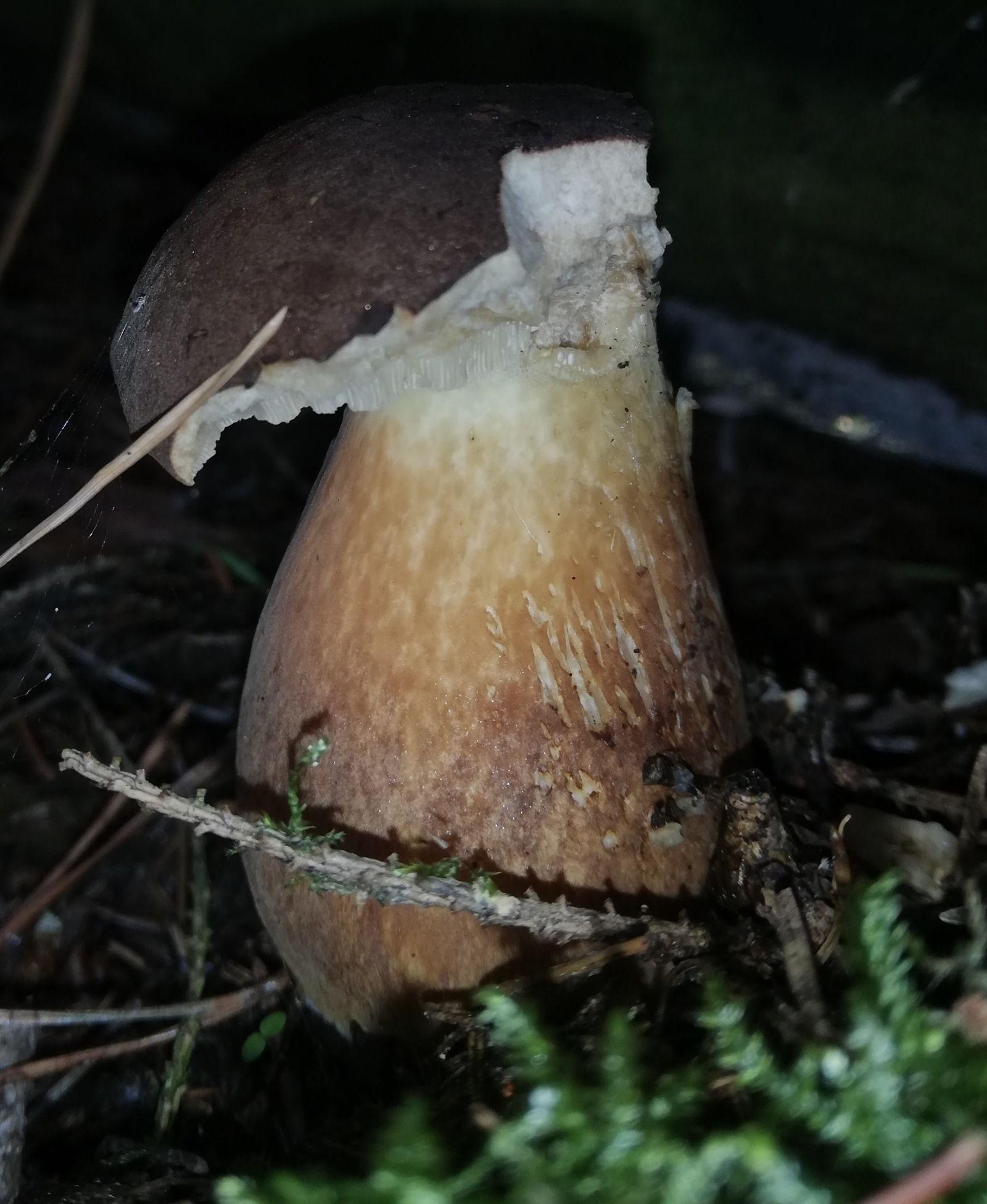
Imleria badia
The bay bolete has a solid stem, yellow pores that bruise blue-green, and an olive-brown spore print.
Edibility
Field guides list the chestnut bolete as edible. It is small and often scattered, and guides use the hollow stem and pale yellow spore print to separate it from other brown boletes.
This page states what field guides record. It is not advice to eat, taste or handle anything, and a photo cannot settle edibility. If someone has eaten a wild mushroom that may be toxic, call poison control (1-800-222-1222 in the US) right away, before symptoms start: the deadliest species act hours later.
FAQ
Field guides list it as edible. It is easiest to recognize by its rusty brown color, brittle stem that hollows with age, and pale yellow spore print.
Look for a small, dry, rusty brown cap, white to pale yellow pores that do not bruise blue, and a brittle stem the same color as the cap, hollow or chambered inside on older specimens.
On the ground under oaks and other hardwoods in eastern North America, often along trails and on banks, from summer through fall.
Sources
MushroomExpert.com
Index Fungorum
Waitlist
We will send one email when Mushrooms.id opens, and nothing else.
This opens your email app with the request written for you. Send it and we add you to the list. No email app? Write to hello@mushrooms.id with the subject “Add me to the Mushrooms.id waitlist”.