Edible
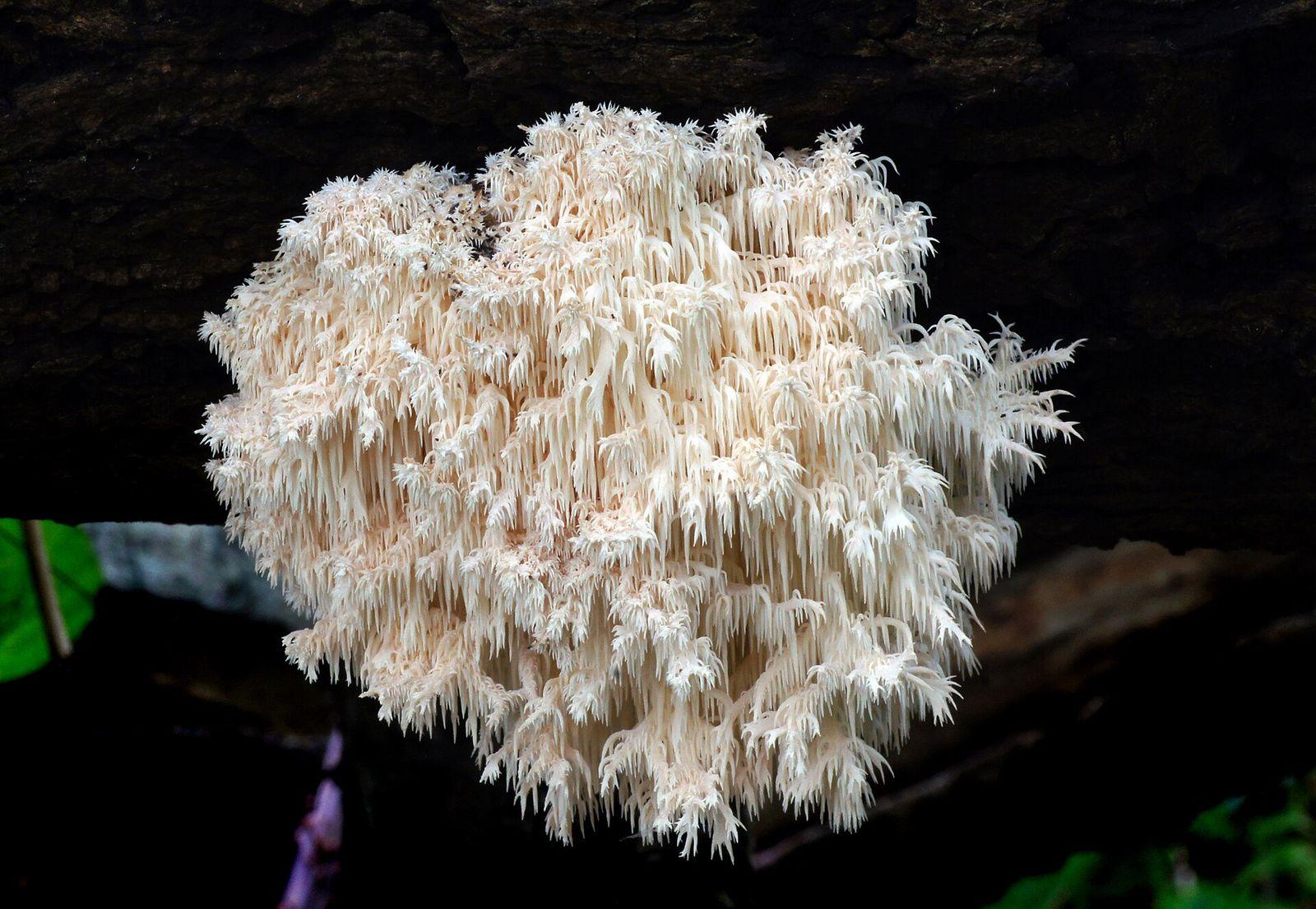
Coral Tooth
Hericium coralloides
Also white and branched on hardwood logs, but its spines hang downward and it has no upward-pointing crowned tips.
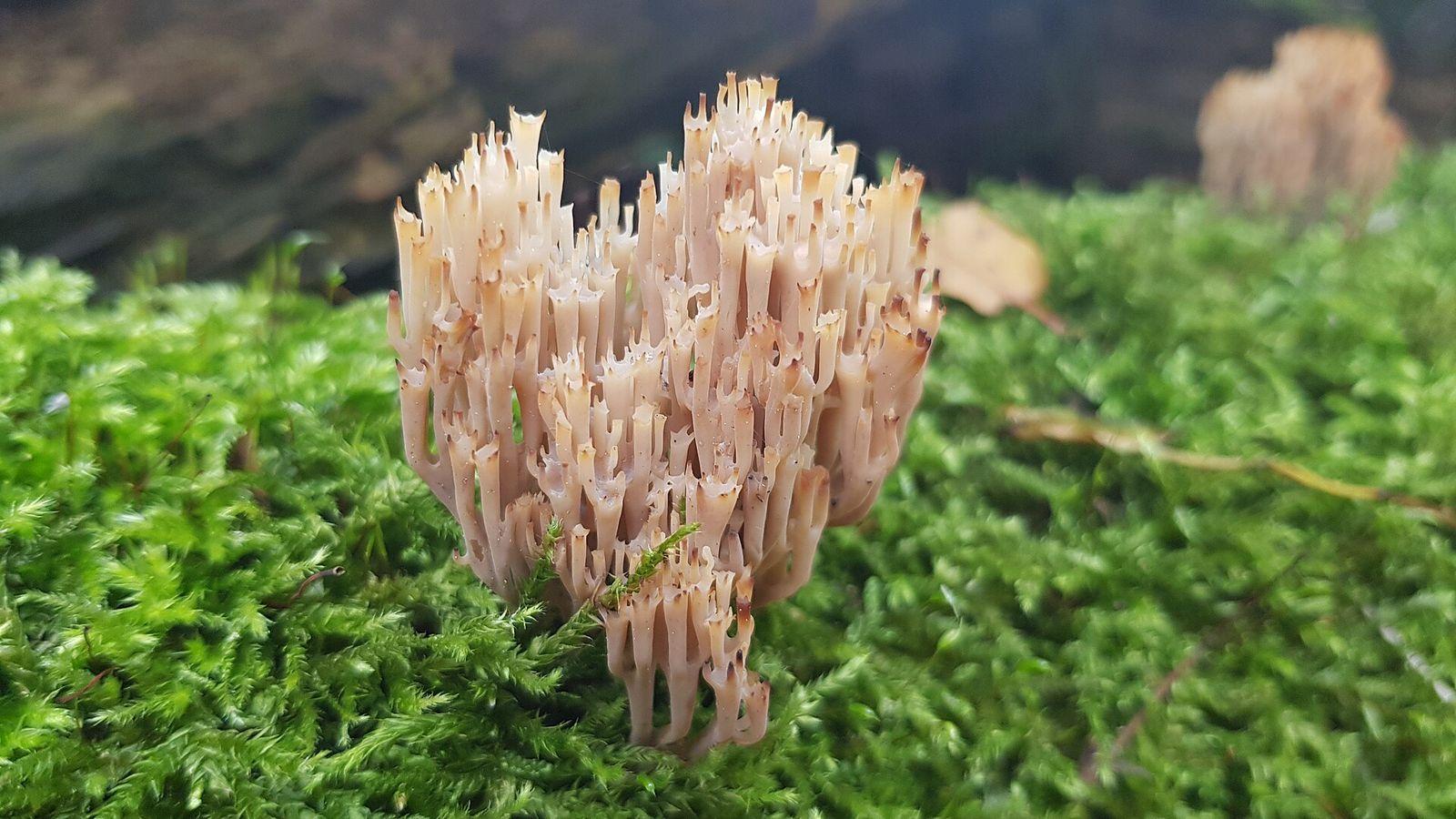
Artomyces pyxidatus
Also called crown coral, candelabra coral.
The crown-tipped coral is a pale yellow to tan coral fungus that grows on rotting hardwood logs, especially aspen and poplar. Each branch ends in a tiny cup ringed with points, like a crown, which separates it from the corals that grow on the ground.
The tell
Pale branched coral on dead wood, each branch tip ending in a small crown of points.
Field marks
Cap, underside and stem show in a photo. The spore print does not, and it is often the deciding check.
Where and when
Lookalikes
Each card says how to tell the two apart.
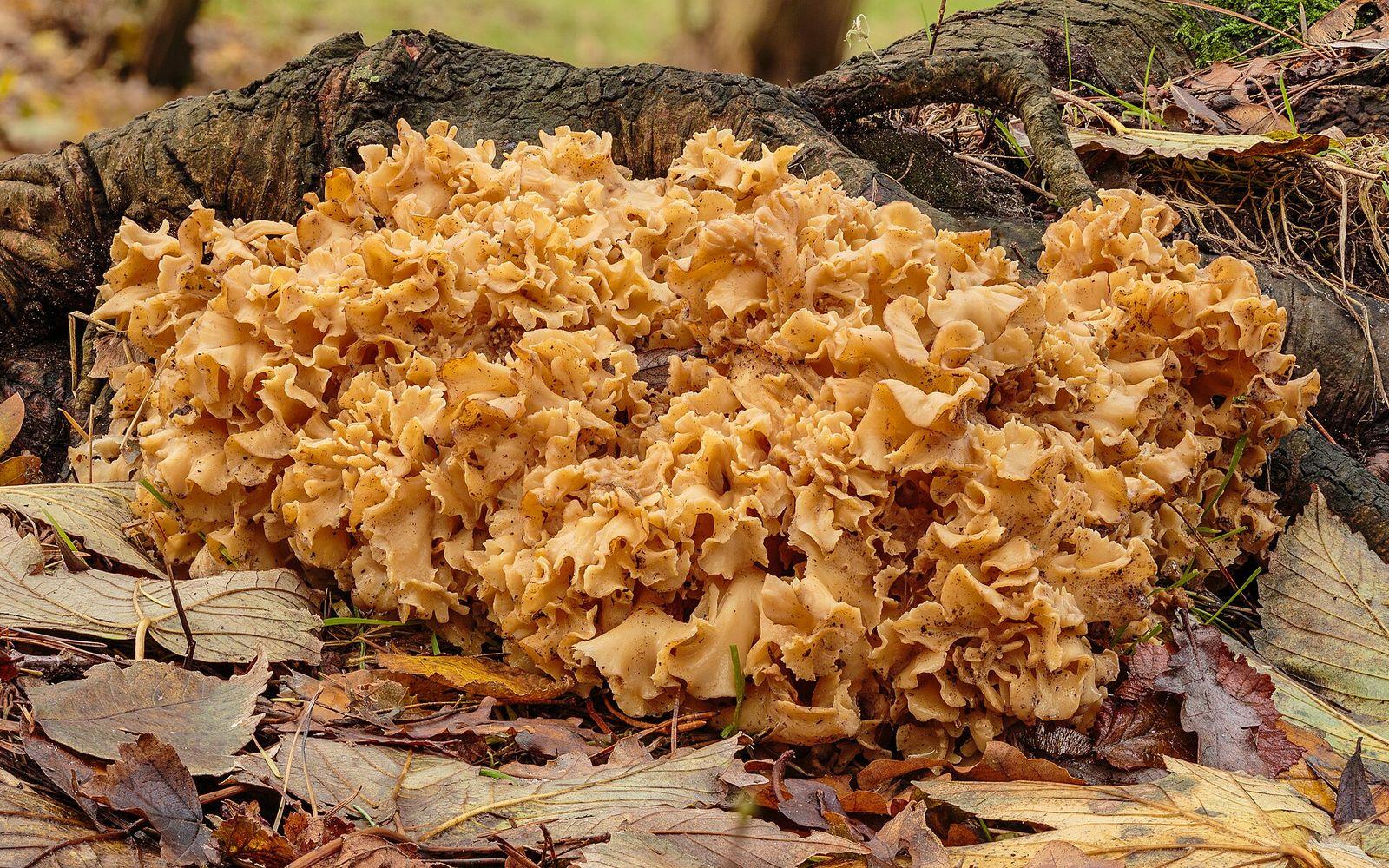
Most grow on the ground rather than on wood, and their branch tips are pointed or blunt, not crown-shaped. Some are recorded as causing gastrointestinal upset.
A white coral on the ground, with branch tips that are finely toothed or crested rather than ending in small cups.
Hericium coralloides
Also white and branched on hardwood logs, but its spines hang downward and it has no upward-pointing crowned tips.
Edibility
Field guides list the crown-tipped coral as edible. It is small and somewhat tough, and some guides note a peppery taste when raw. Coral fungi in the genus Ramaria, which grow on the ground rather than wood, include species recorded as causing gastrointestinal upset.
This page states what field guides record. It is not advice to eat, taste or handle anything, and a photo cannot settle edibility. If someone has eaten a wild mushroom that may be toxic, call poison control (1-800-222-1222 in the US) right away, before symptoms start: the deadliest species act hours later.
FAQ
Field guides list Artomyces pyxidatus as edible. It is small and somewhat tough, and some guides describe its raw taste as peppery.
By the branch tips and the wood it grows on. Each branch ends in a tiny cup with points around the rim, like a crown, and it grows on rotting hardwood logs, not on the ground. Most other coral fungi grow from soil.
On rotting logs and stumps of hardwoods, especially aspen, poplar and willow, from summer into fall. It is most common in eastern and midwestern North America.
Sources
MushroomExpert.com
Fungi Growing on Wood, Gary Emberger (MushroomExpert.com)
Missouri Department of Conservation
Index Fungorum
Waitlist
We will send one email when Mushrooms.id opens, and nothing else.
This opens your email app with the request written for you. Send it and we add you to the list. No email app? Write to hello@mushrooms.id with the subject “Add me to the Mushrooms.id waitlist”.