Edible
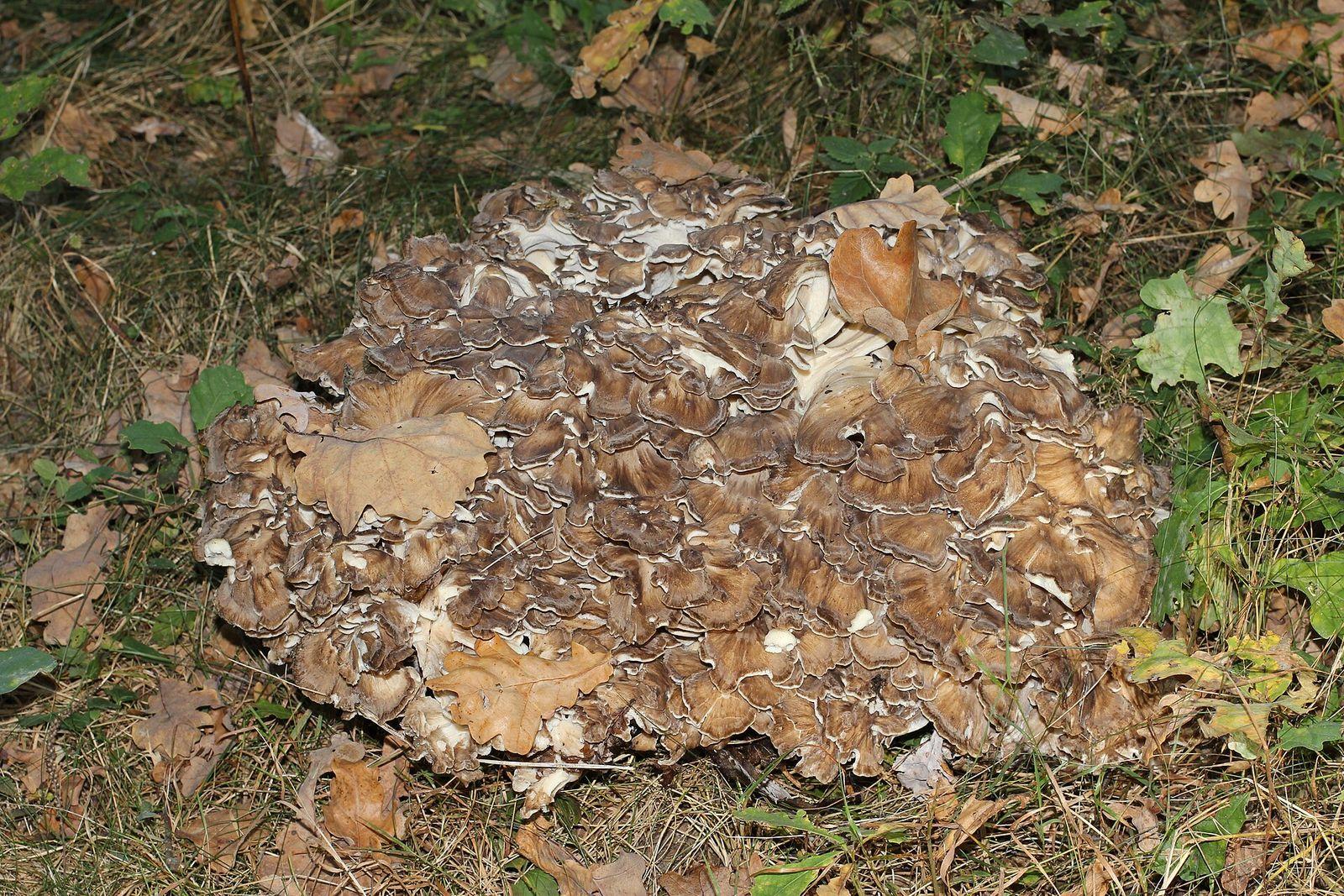
Hen of the Woods
Grifola frondosa
Made of gray-brown, spoon-shaped caps with white pores underneath, and grows at the base of oaks.
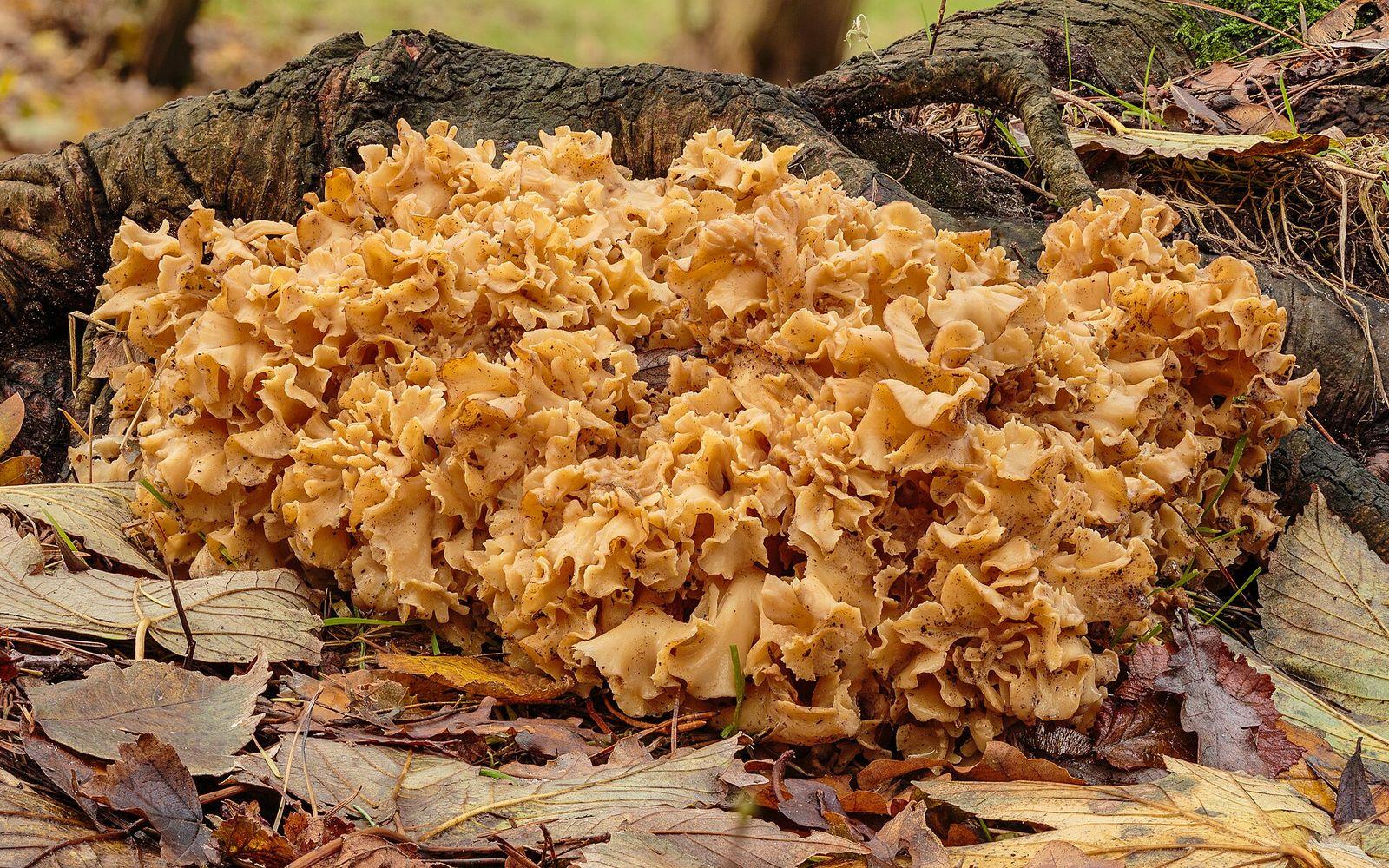
Sparassis americana
Also called cauliflower fungus.
The cauliflower mushroom is a rounded mass of flat, wavy, cream-colored lobes that grows at the base of conifers, especially pines, in late summer and fall. It has no cap, gills or pores, and resembles a sea sponge or a head of leaf lettuce.
The tell
Rounded mass of flat, wavy, cream-colored lobes like a sea sponge, at the base of a conifer.
Field marks
Cap, underside and stem show in a photo. The spore print does not, and it is often the deciding check.
Where and when
Lookalikes
Each card says how to tell the two apart.
Coral fungi branch into rounded, upright, finger-like tips rather than flat, wavy ribbons, and some species are recorded as causing gastrointestinal upset.
Grifola frondosa
Made of gray-brown, spoon-shaped caps with white pores underneath, and grows at the base of oaks.
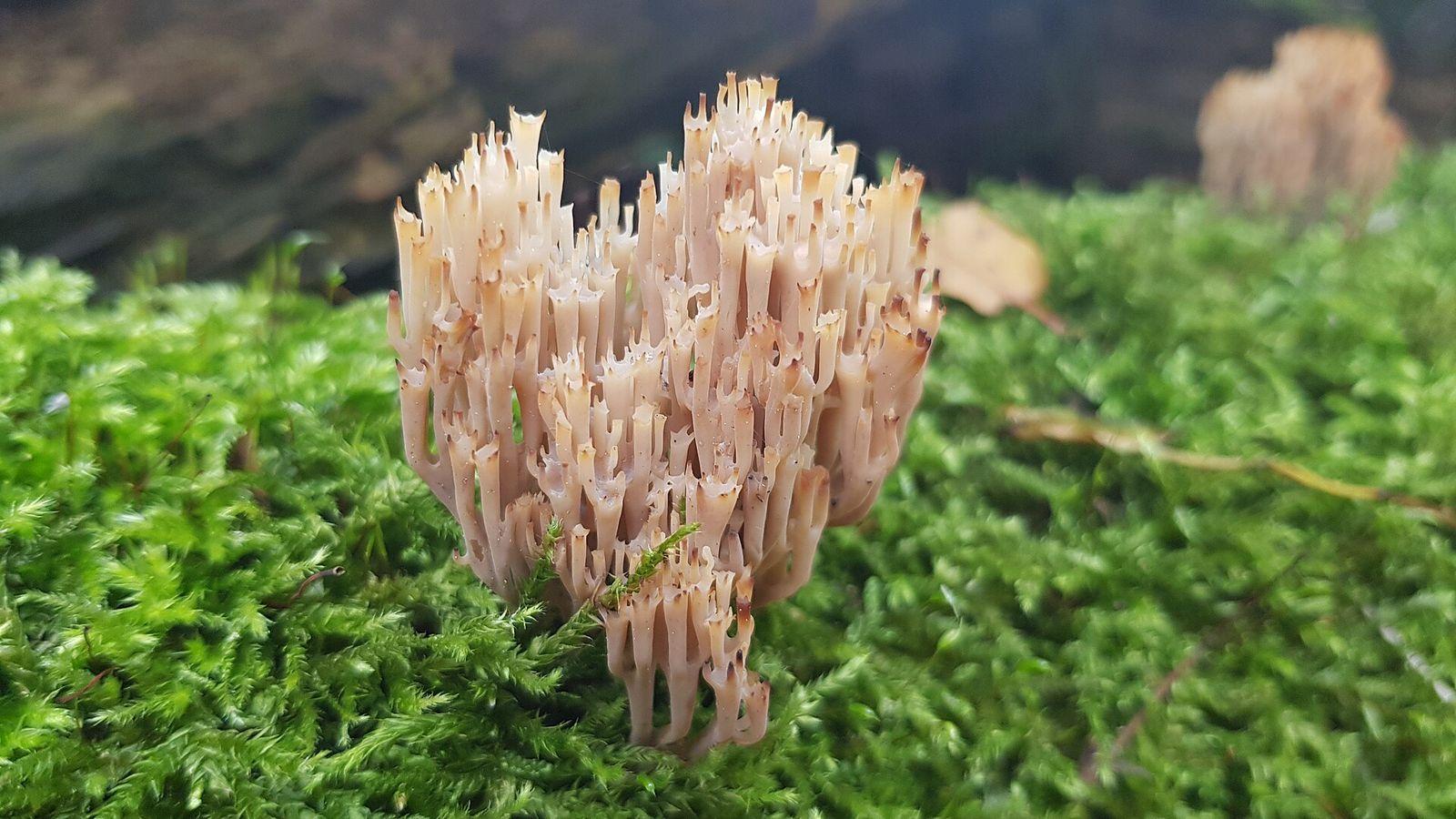
Artomyces pyxidatus
A much smaller coral on rotting hardwood logs, with narrow, round branches ending in tiny crown-shaped tips.
Edibility
Field guides list cauliflower mushrooms as choice edibles. Some coral fungi in the genus Ramaria, which have rounded rather than flattened branches, are recorded as causing gastrointestinal upset.
This page states what field guides record. It is not advice to eat, taste or handle anything, and a photo cannot settle edibility. If someone has eaten a wild mushroom that may be toxic, call poison control (1-800-222-1222 in the US) right away, before symptoms start: the deadliest species act hours later.
FAQ
Field guides list Sparassis species as choice edibles. The main confusion guides record is with Ramaria coral fungi, some of which cause gastrointestinal upset and which have rounded rather than flat branches.
A rounded mass of thin, flat, wavy lobes, white to cream or pale yellow, often compared to a sea sponge, a head of leaf lettuce or a pile of egg noodles. It has no cap, gills or pores, and can reach 2 feet across.
At the base of conifers, especially pines, from late summer into fall. The fungus lives on the tree's roots, so it often returns to the same tree in later years.
Sources
MushroomExpert.com
Fungi Growing on Wood, Gary Emberger (MushroomExpert.com)
Index Fungorum
Waitlist
We will send one email when Mushrooms.id opens, and nothing else.
This opens your email app with the request written for you. Send it and we add you to the list. No email app? Write to hello@mushrooms.id with the subject “Add me to the Mushrooms.id waitlist”.