Cauliflower mushroom vs hen of the woods: how to tell them apart
Quick answer
Hen of the woods is made of many gray-brown, spoon-shaped caps on branched stems, each with a white pore surface underneath; the cauliflower mushroom is a mass of thin, flat, wavy cream-colored lobes with no pores at all. Cauliflower mushrooms also grow at the base of conifers, hen of the woods at the base of oaks.
Side by side
The tell for each
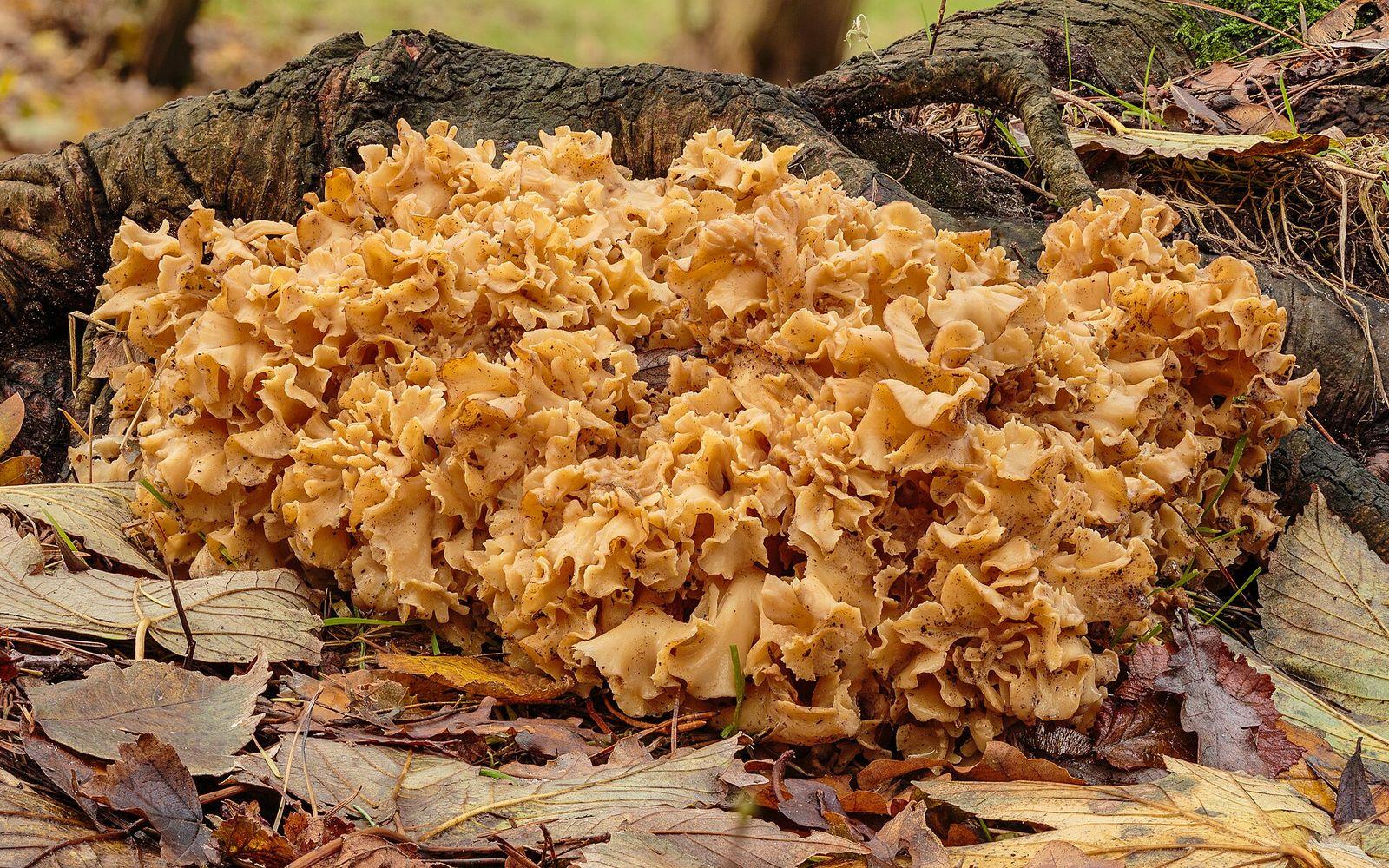
The tellRounded mass of flat, wavy, cream-colored lobes like a sea sponge, at the base of a conifer.
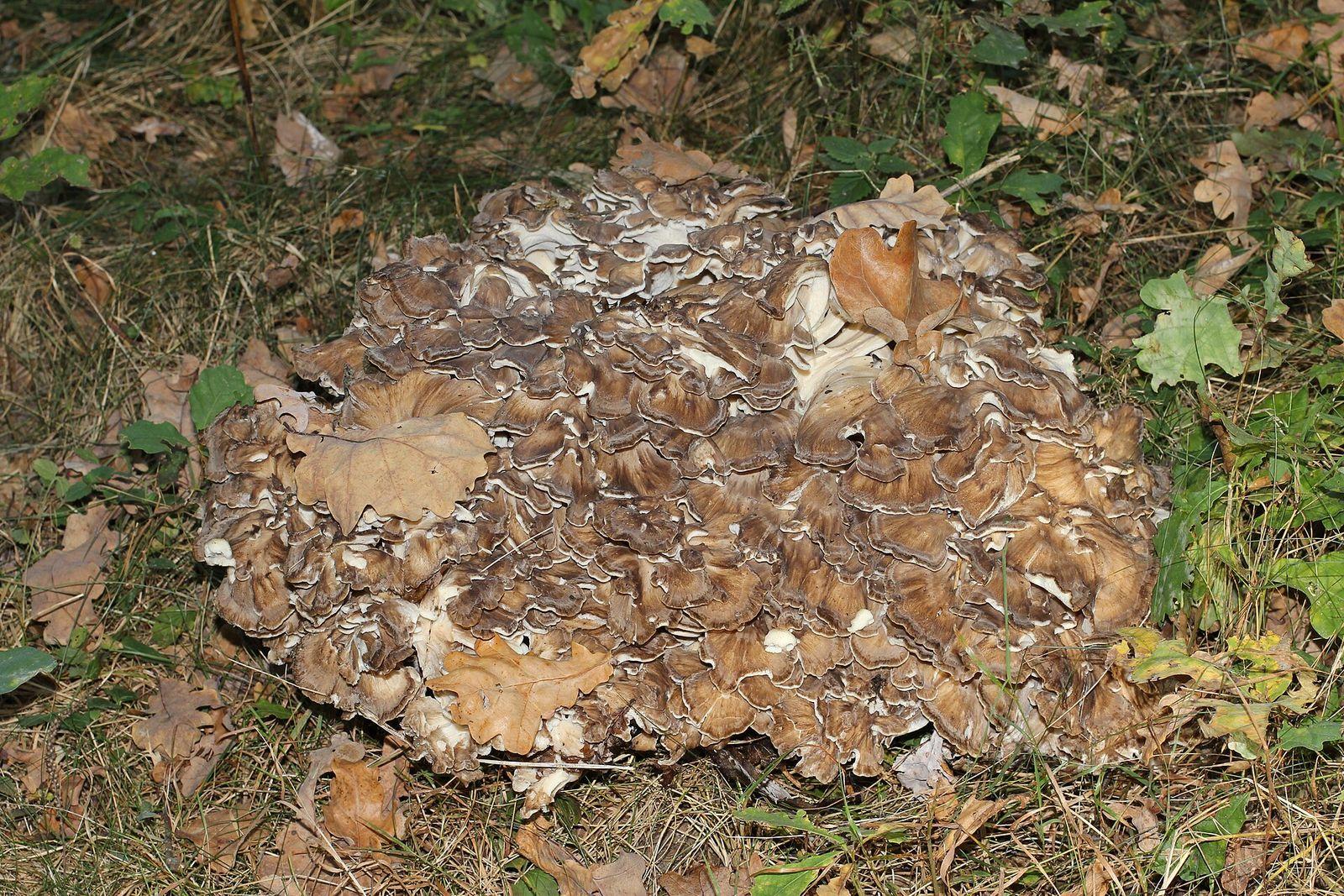
The tellLarge gray-brown rosette of overlapping spoon-shaped caps at the base of an oak.
How they differ
| Feature | Cauliflower Mushroom | Hen of the Woods |
|---|---|---|
| Structure | Cauliflower MushroomThin, flat, curly lobes like a sea sponge. | Hen of the WoodsOverlapping spoon- to fan-shaped caps on branched stems. |
| Underside | Cauliflower MushroomNone; spores form on the surfaces of the lobes. | Hen of the WoodsWhite to cream pore surface. |
| Color | Cauliflower MushroomWhite to cream or pale yellow, tan at the edges with age. | Hen of the WoodsGray-brown to tan, finely streaked. |
| Host tree | Cauliflower MushroomBase of conifers, especially pines. | Hen of the WoodsBase of oaks and their buried roots. |
| Base | Cauliflower MushroomA thick, tough root-like base reaching into the soil. | Hen of the WoodsA thick, white, branched base. |
FAQ
Common questions
Do cauliflower mushroom and hen of the woods grow on the same trees?
Usually not. Sparassis americana grows at the base of conifers, especially pines, while hen of the woods grows at the base of oaks. Related cauliflower mushrooms with oaks are treated as separate species.
Does hen of the woods have pores?
Yes. Each cap has a white to cream pore surface underneath. The cauliflower mushroom has no pores.
Sources
Where these facts come from
- Sparassis americana
MushroomExpert.com
- Grifola frondosa
MushroomExpert.com
Keep checking
Read both pages in full
- More on the cauliflower mushroom
- More on the hen of the woods
- Not sure it is either? Narrow it down with the identification key
This page states what field guides record. It is not advice to eat, taste or handle anything, and a photo cannot settle edibility. If someone has eaten a wild mushroom that may be toxic, call poison control (1-800-222-1222 in the US) right away, before symptoms start: the deadliest species act hours later.
Waitlist
Hear when it opens
We will send one email when Mushrooms.id opens, and nothing else.
This opens your email app with the request written for you. Send it and we add you to the list. No email app? Write to hello@mushrooms.id with the subject “Add me to the Mushrooms.id waitlist”.