Edible
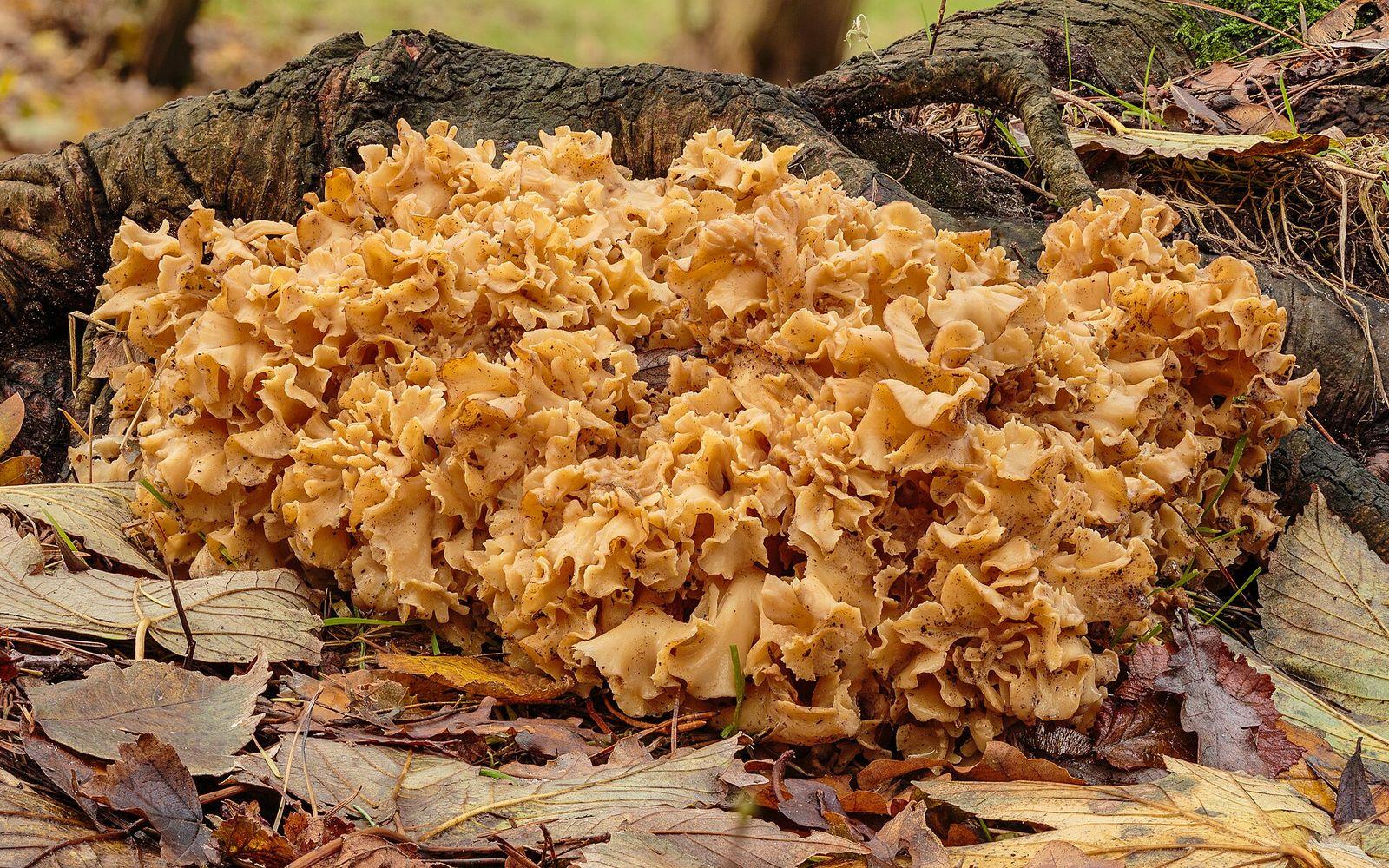
Cauliflower Mushroom
Sparassis americana
Made of thin, flat, wavy cream-colored lobes with no pores, and usually grows at the base of conifers.
Grifola frondosa
Also called maitake, sheep's head, ram's head.
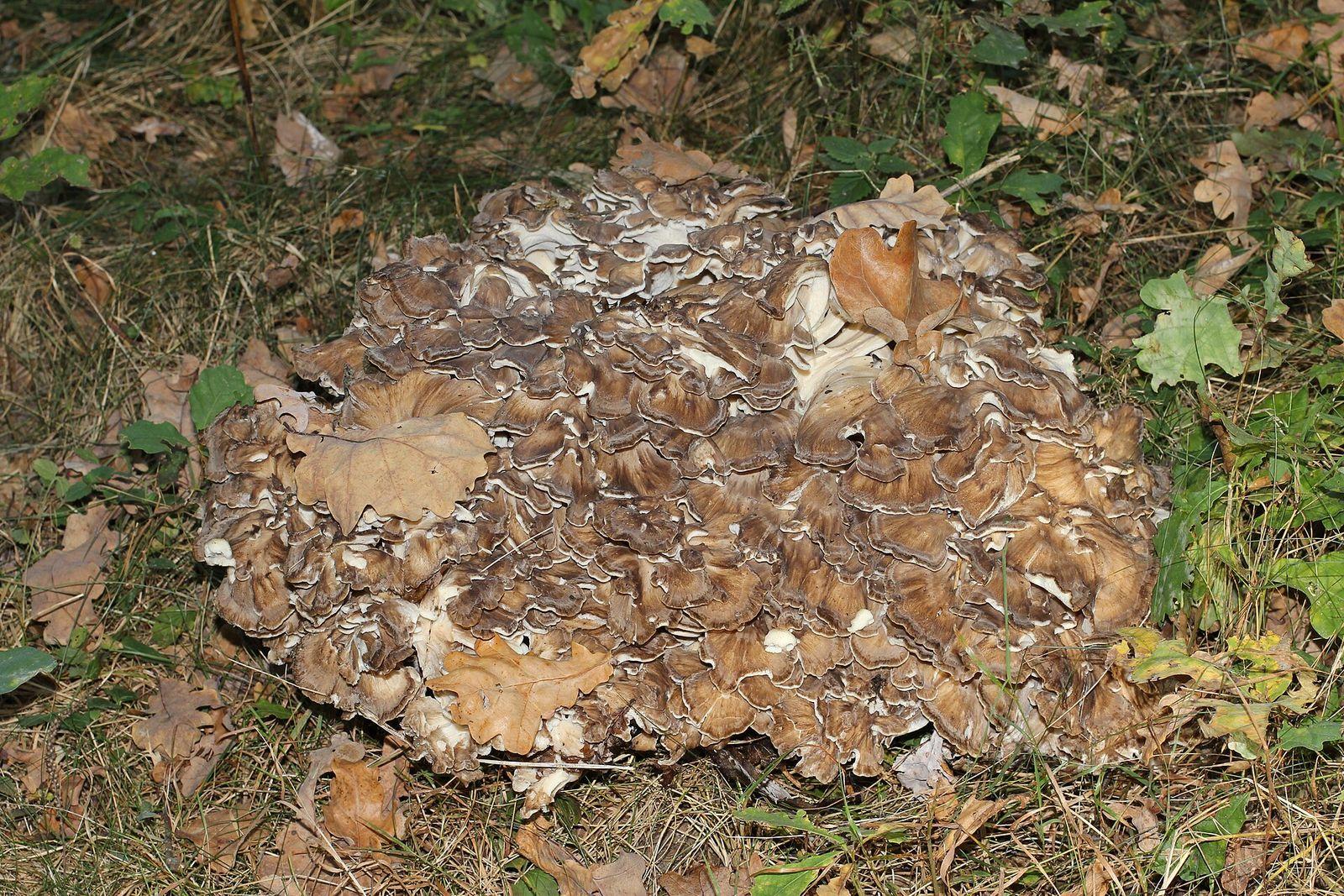
Hen of the woods is a large rosette of gray-brown, spoon-shaped caps that grows at the base of oaks in early fall. It has white pores underneath and returns to the same trees year after year. In grocery stores it is sold as maitake.
The tell
Large gray-brown rosette of overlapping spoon-shaped caps at the base of an oak.
Field marks
Cap, underside and stem show in a photo. The spore print does not, and it is often the deciding check.
Where and when
Lookalikes
Each card says how to tell the two apart.
Larger, broader caps in a looser rosette, and its white pore surface bruises black where damaged.
Cream to pale tan caps that are much larger and thicker, with larger, angular pores and tough flesh.
Sparassis americana
Made of thin, flat, wavy cream-colored lobes with no pores, and usually grows at the base of conifers.
Laetiporus cincinnatus
Photo coming
Laetiporus cincinnatus
Also a rosette at the base of oaks, but its lobes are bright pinkish orange on top.
Edibility
Field guides list hen of the woods as a choice edible, and it is grown commercially as maitake. Its common lookalikes at the base of oaks are not recorded as seriously toxic. The base becomes woody in older specimens.
This page states what field guides record. It is not advice to eat, taste or handle anything, and a photo cannot settle edibility. If someone has eaten a wild mushroom that may be toxic, call poison control (1-800-222-1222 in the US) right away, before symptoms start: the deadliest species act hours later.
FAQ
Yes. Maitake is the Japanese name for Grifola frondosa, and the cultivated mushrooms sold as maitake are the same species as the wild hen of the woods.
At the base of oak trees, living or dead, and on their buried roots, in eastern North America. It appears from late summer through fall, often at the same tree for several years in a row.
The black-staining polypore, which has larger caps and bruises black, and Berkeley's polypore, which is cream to tan and much tougher. The cauliflower mushroom and the white-pored chicken of the woods also form rosettes at the base of trees.
Sources
MushroomExpert.com
Fungi Growing on Wood, Gary Emberger (MushroomExpert.com)
Missouri Department of Conservation
Index Fungorum
Waitlist
We will send one email when Mushrooms.id opens, and nothing else.
This opens your email app with the request written for you. Send it and we add you to the list. No email app? Write to hello@mushrooms.id with the subject “Add me to the Mushrooms.id waitlist”.