Edible
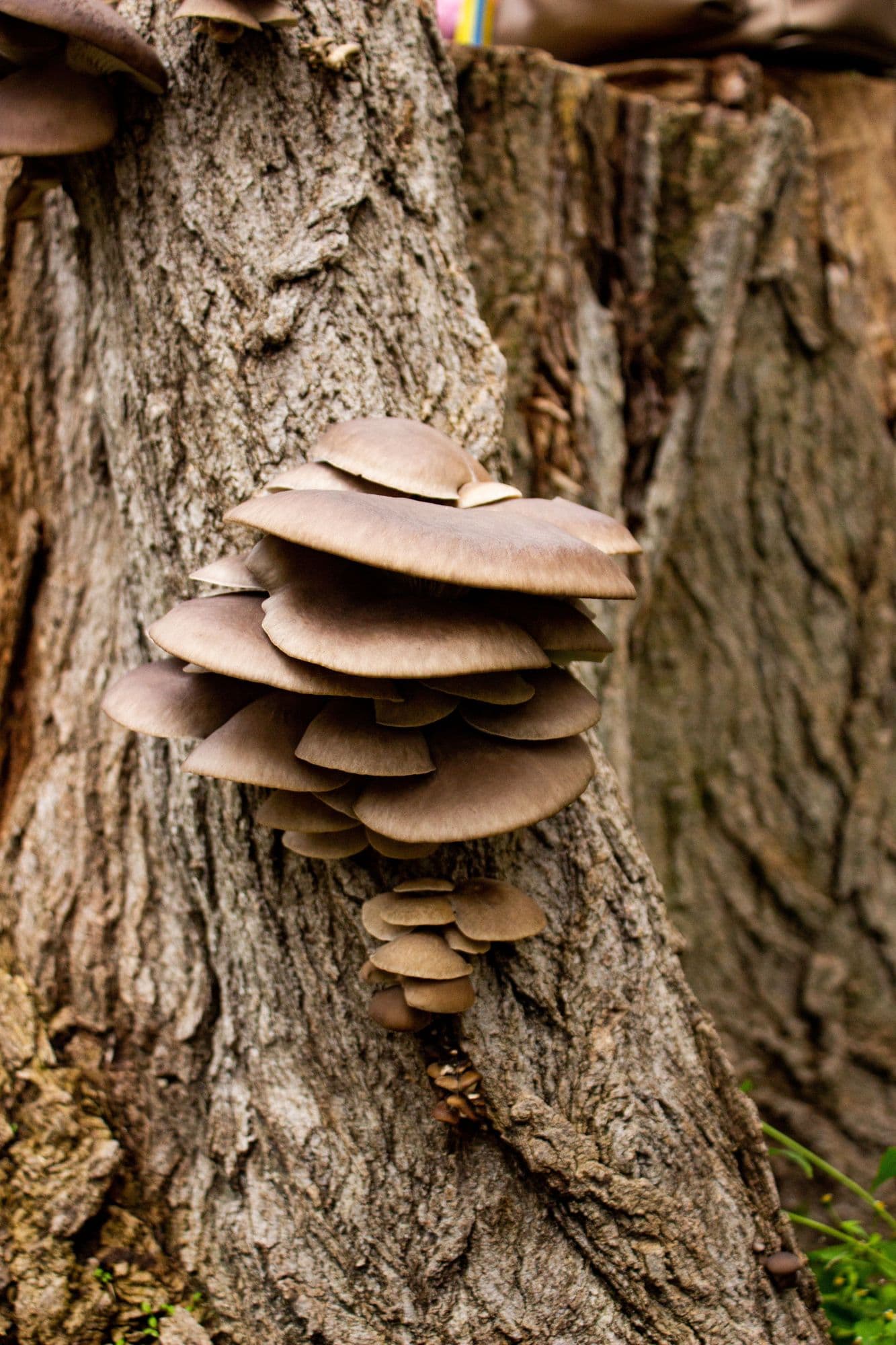
Oyster Mushroom
Pleurotus ostreatus
Grows on the same trees in spring, but has gills on the underside instead of pores and a smooth cap without scales.
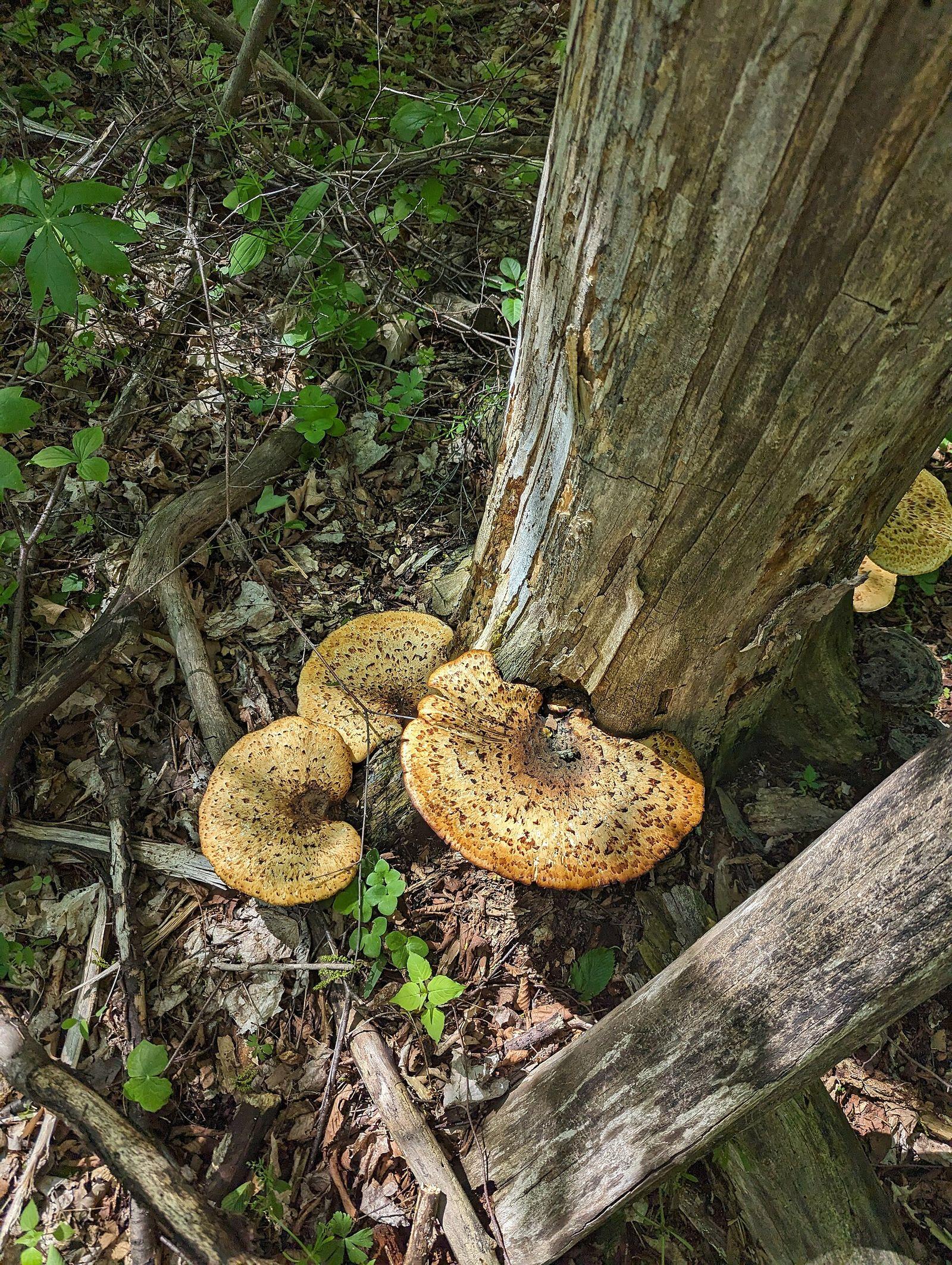
Cerioporus squamosus
Also called pheasant's back, scaly polypore.
Dryad's saddle is a large, cream-colored polypore patterned with brown scales like a pheasant's feathers. It grows from dead and dying hardwoods in spring, often during morel season, and smells of watermelon rind or cucumber when cut.
The tell
Cream bracket covered in brown, feathery scales, with large angular pores and a smell of watermelon rind.
Field marks
Cap, underside and stem show in a photo. The spore print does not, and it is often the deciding check.
Where and when
Lookalikes
Each card says how to tell the two apart.
Smooth, shiny reddish-brown cap without scales, tiny pores and a black stem base.
Much smaller, under 3 inches, with a central stem, a fringed cap edge and similar angular pores.
Pleurotus ostreatus
Grows on the same trees in spring, but has gills on the underside instead of pores and a smooth cap without scales.
Edibility
Field guides list dryad's saddle as edible when young and tender. Older brackets become tough and corky. No toxic polypore in North America is known to resemble it closely.
This page states what field guides record. It is not advice to eat, taste or handle anything, and a photo cannot settle edibility. If someone has eaten a wild mushroom that may be toxic, call poison control (1-800-222-1222 in the US) right away, before symptoms start: the deadliest species act hours later.
FAQ
Field guides list it as edible when young. The flesh becomes tough and leathery as the bracket ages, so mature specimens are described as inedible.
Fresh flesh smells of watermelon rind or cucumber. The smell is one of the features field guides use to confirm it.
Mostly in spring, at the same time as morels, on dead or dying hardwoods. A smaller flush sometimes appears in fall.
Sources
MushroomExpert.com
Fungi Growing on Wood, Gary Emberger (MushroomExpert.com)
Missouri Department of Conservation
Index Fungorum
Waitlist
We will send one email when Mushrooms.id opens, and nothing else.
This opens your email app with the request written for you. Send it and we add you to the list. No email app? Write to hello@mushrooms.id with the subject “Add me to the Mushrooms.id waitlist”.