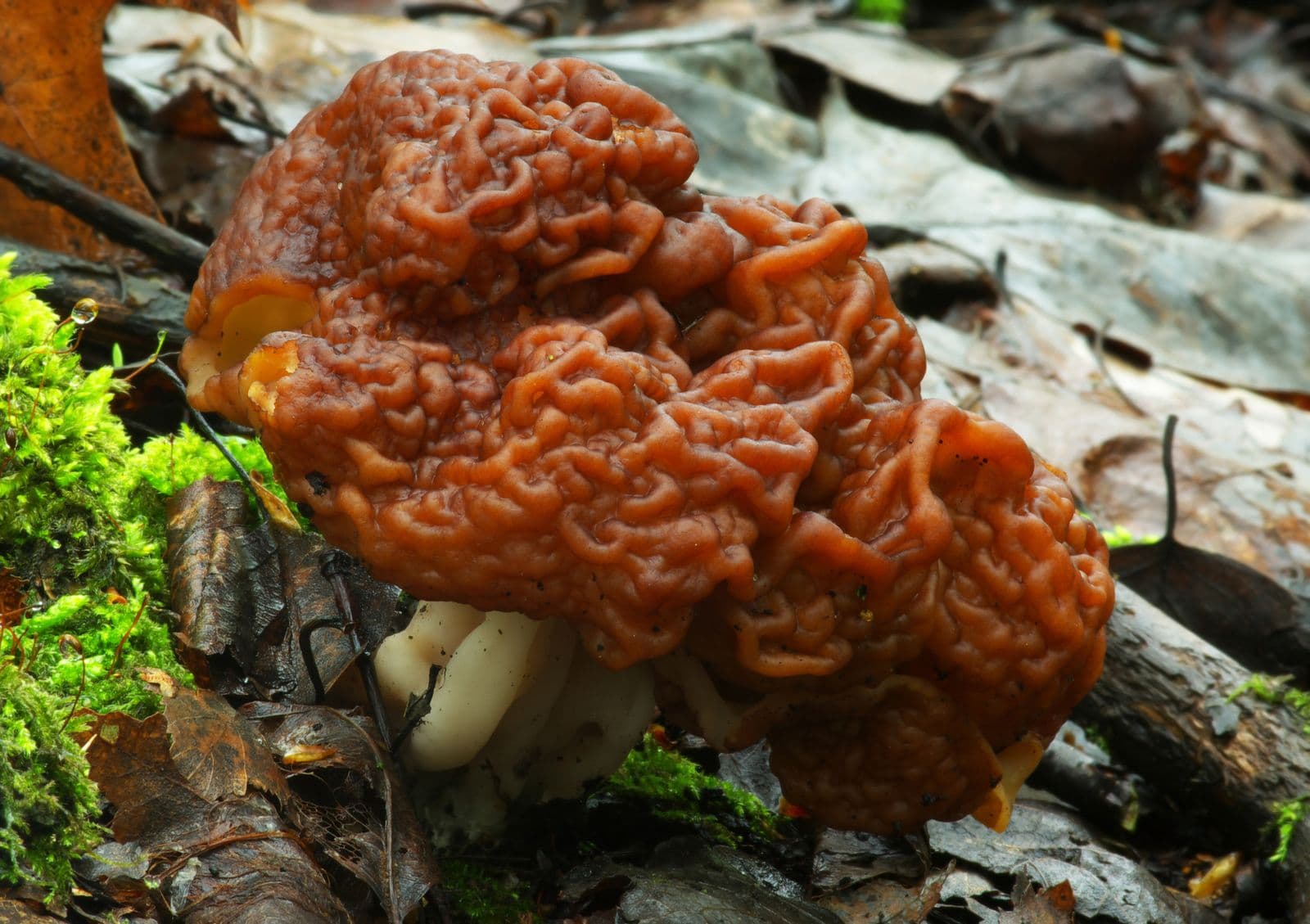
Toxic lookalike
False Morel
Gyromitra esculenta
The false morel has a reddish-brown, brain-like cap and fruits in spring under conifers.
Helvella crispa
Also called white elfin saddle, fluted white helvella.
The elfin saddle is a whitish fungus with a floppy, saddle-shaped cap on a deeply fluted stem. It grows on the ground in woods from late summer to fall and is related to the false morels. Most current field guides do not list it as edible.
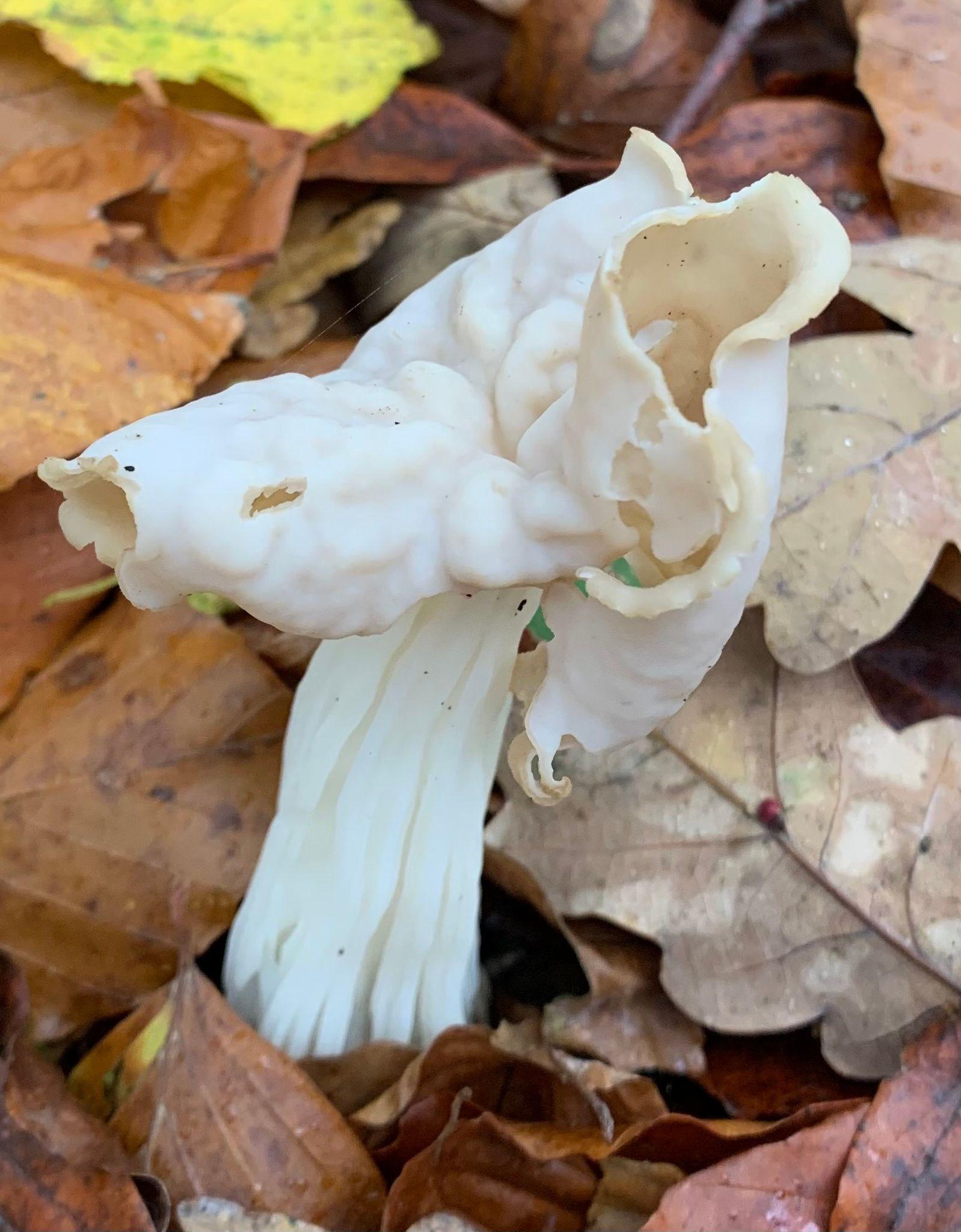
The tell
Whitish, floppy saddle-shaped cap on a deeply ribbed, chambered white stem.
Field marks
Cap, underside and stem show in a photo. The spore print does not, and it is often the deciding check.
Where and when
Lookalikes
Each card says how to tell the two apart.
Also saddle-shaped and also in fall, but its cap is reddish brown to dark brown and its stem is smooth rather than deeply ribbed. It grows on or near rotting wood and contains gyromitrin.
Gyromitra esculenta
The false morel has a reddish-brown, brain-like cap and fruits in spring under conifers.
Same shape and the same ribbed, chambered stem, but the cap is gray to black and the stem is gray.
Edibility
Field guides are split. Some older guides list the elfin saddle as edible after cooking, while most current guides list it as not recommended or poisonous, and raw specimens have been recorded causing gastrointestinal upset. Helvella is related to Gyromitra, and the hooded false morel (Gyromitra infula), which contains gyromitrin, has a similar saddle shape and fruits in the same season.
This page states what field guides record. It is not advice to eat, taste or handle anything, and a photo cannot settle edibility. If someone has eaten a wild mushroom that may be toxic, call poison control (1-800-222-1222 in the US) right away, before symptoms start: the deadliest species act hours later.
FAQ
Sources disagree. Some older guides list Helvella crispa as edible after cooking, while most current North American guides list it as not recommended, and raw specimens have caused gastrointestinal upset. It is related to the false morels, which contain the toxin gyromitrin.
A white to cream cap with two to four floppy lobes, shaped like a saddle, on a white stem with deep ribs and holes. It stands 2 to 6 inches tall and has no gills.
On the ground in hardwood and mixed forests, often beside trails and on disturbed soil. They appear from late summer through fall.
Sources
MushroomExpert.com
Index Fungorum
Waitlist
We will send one email when Mushrooms.id opens, and nothing else.
This opens your email app with the request written for you. Send it and we add you to the list. No email app? Write to hello@mushrooms.id with the subject “Add me to the Mushrooms.id waitlist”.