Edible
Morel
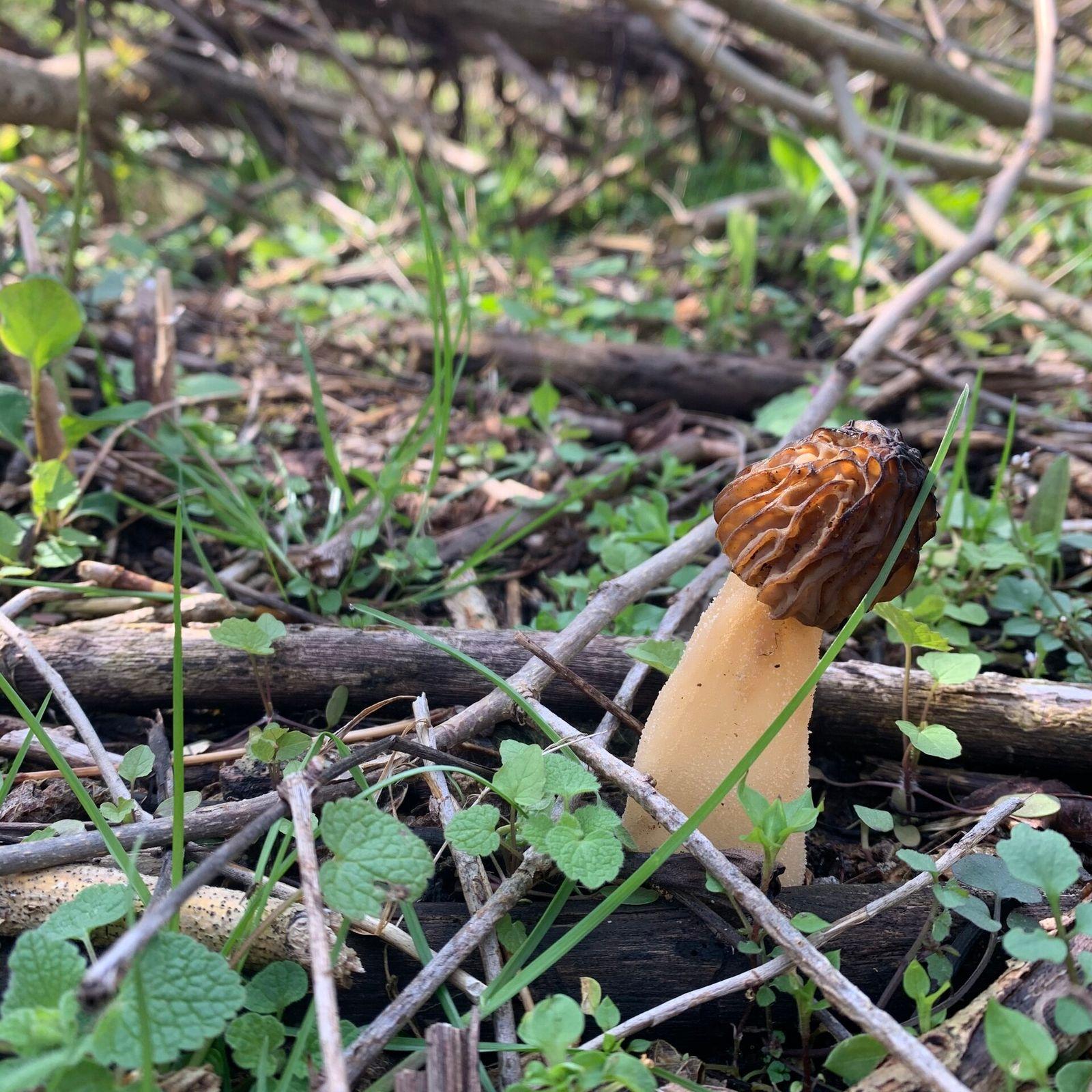
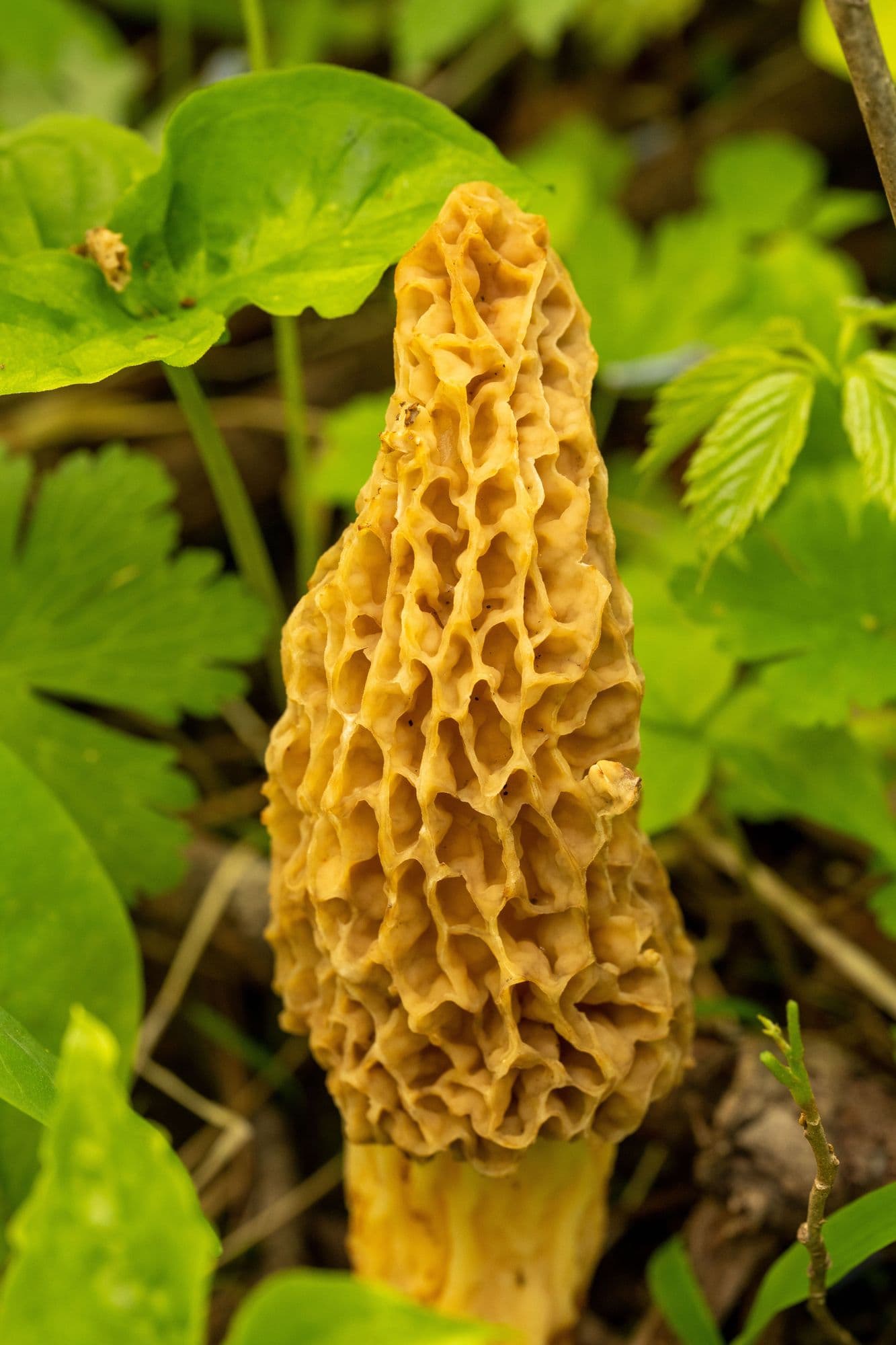
Morchella esculentoides
A true morel has a pitted honeycomb cap fused to the stem at its lower edge, and it is completely hollow from tip to base when sliced.
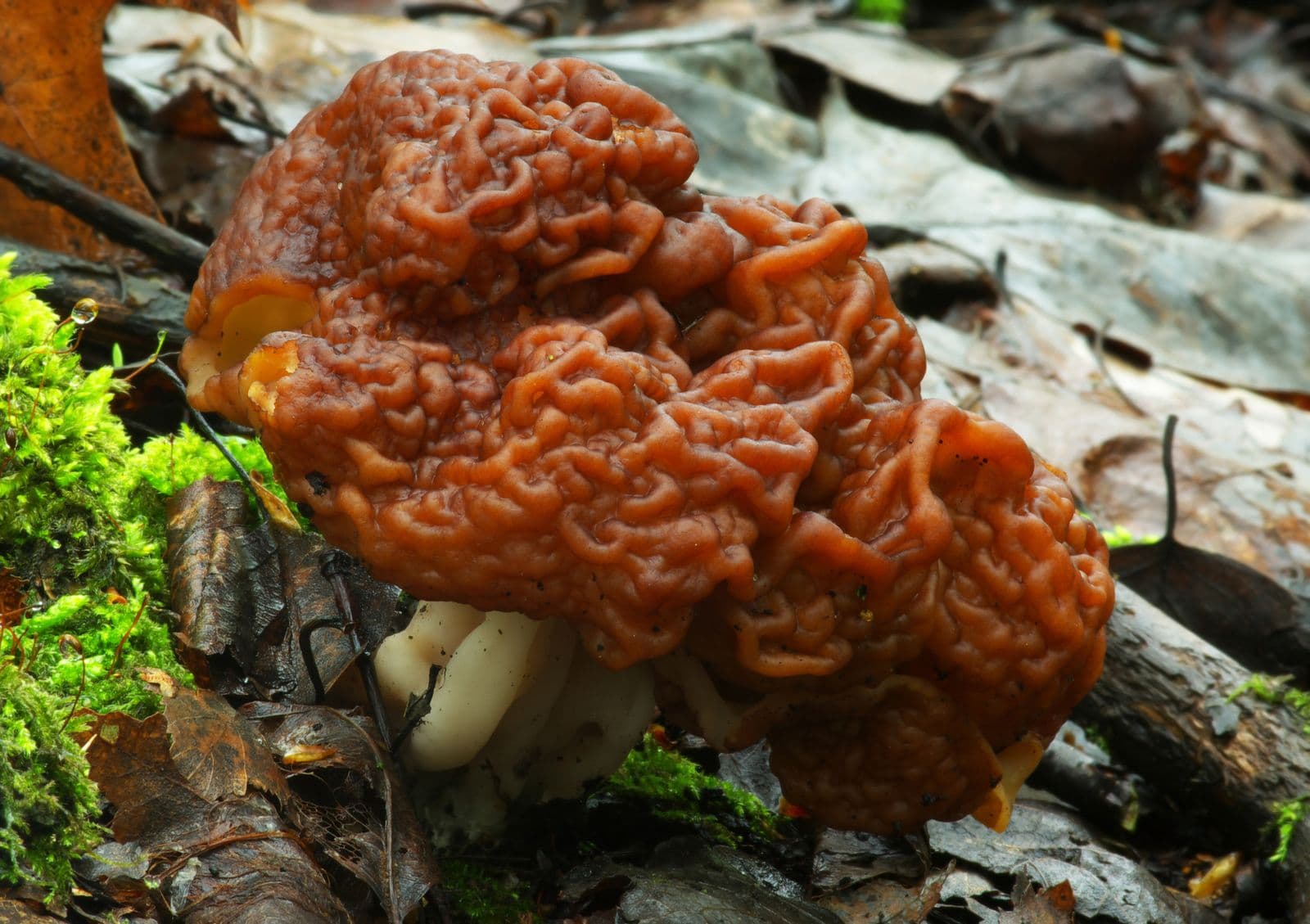
Gyromitra esculenta
Also called brain mushroom, turban fungus.
The false morel is a spring mushroom with a wrinkled, brain-like reddish-brown cap. It fruits under conifers in the same weeks as true morels and contains gyromitrin, a toxin that has caused liver damage and deaths.
The tell
Wrinkled, brain-like reddish-brown cap that is chambered or cottony inside, not hollow.
Field marks
Cap, underside and stem show in a photo. The spore print does not, and it is often the deciding check.
Where and when
Lookalikes
Each card says how to tell the two apart.
Morchella esculentoides
A true morel has a pitted honeycomb cap fused to the stem at its lower edge, and it is completely hollow from tip to base when sliced.
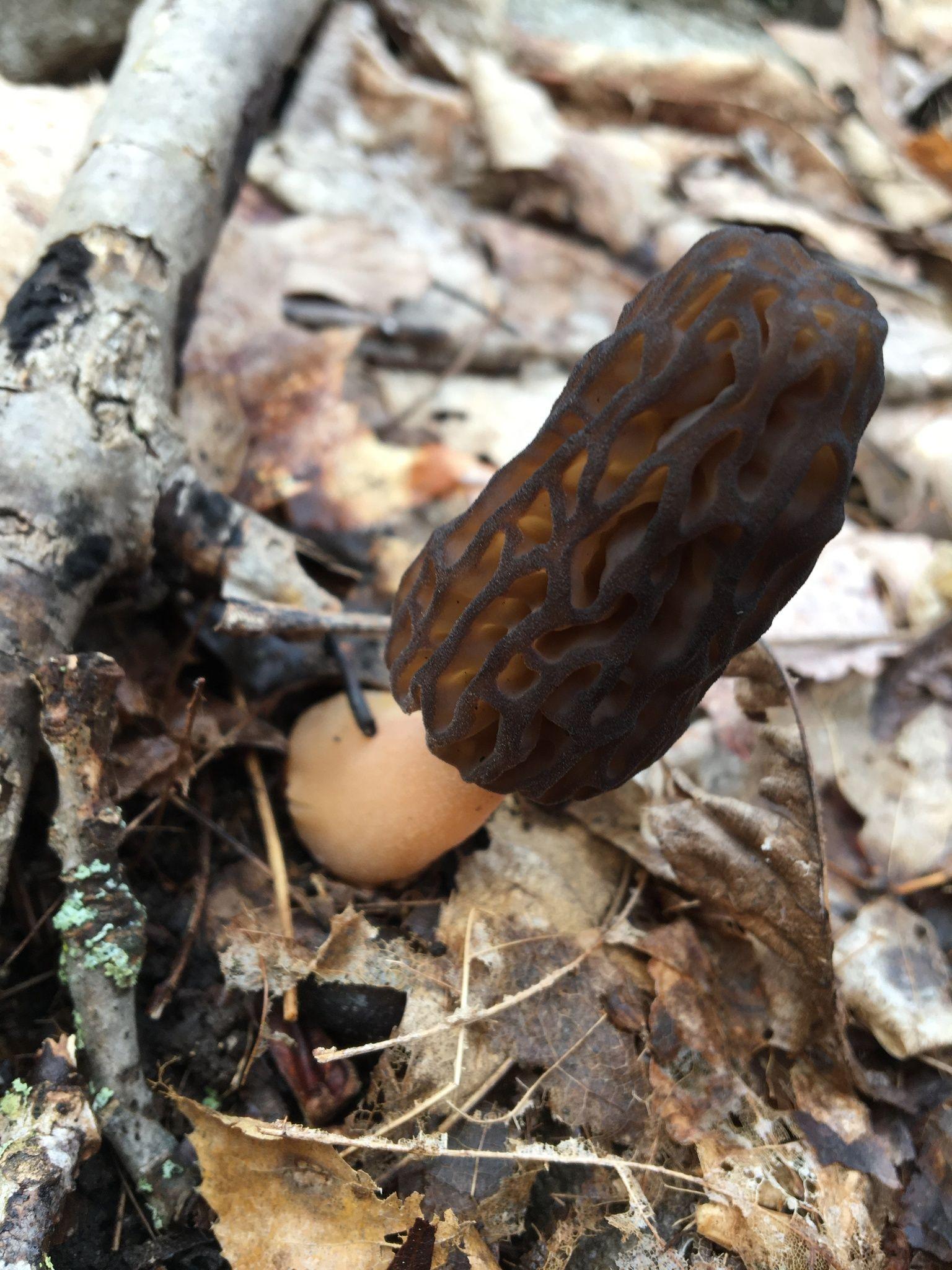
Morchella angusticeps
Black morels have conical caps with pits between dark vertical ridges, and they are one continuous hollow inside.
Verpa bohemica
Photo coming
Verpa bohemica
Verpa has a smaller, thimble-shaped cap that hangs free from the top of a long, cotton-stuffed stem.
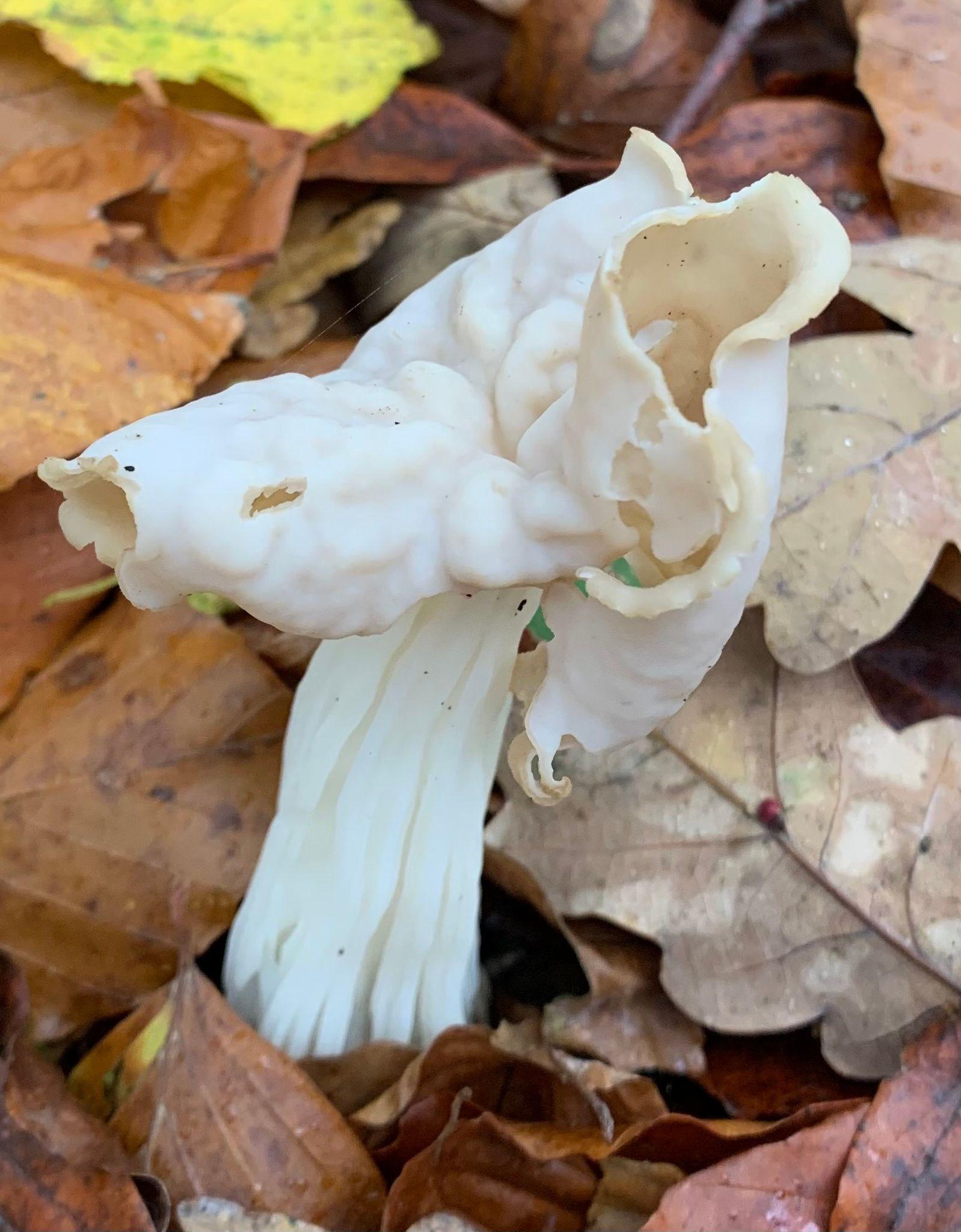
Helvella crispa
The elfin saddle is white to cream with a floppy saddle-shaped cap on a deeply ribbed stem, and it fruits in late summer and fall.
Edibility
Field guides list the false morel as poisonous. It contains gyromitrin, which breaks down in the body into monomethylhydrazine, a compound also used in rocket fuel. Recorded symptoms begin hours after a meal with vomiting, diarrhea and headache, and can progress to liver damage, seizures and death. Poisonings have also been reported from the vapors released during cooking. Toxin levels vary between collections, and guides record people who ate it without symptoms on earlier occasions.
This page states what field guides record. It is not advice to eat, taste or handle anything, and a photo cannot settle edibility. If someone has eaten a wild mushroom that may be toxic, call poison control (1-800-222-1222 in the US) right away, before symptoms start: the deadliest species act hours later.
FAQ
Yes. Field guides list Gyromitra esculenta as poisonous because it contains gyromitrin, which the body converts to monomethylhydrazine. Poisonings have caused vomiting, liver damage, seizures and deaths.
A true morel has a pitted honeycomb cap and is completely hollow when sliced lengthwise. A false morel has a wrinkled, brain-like cap, usually reddish brown, and the inside is divided into chambers or filled with cottony tissue.
Under conifers, especially pines, and in mixed forests in spring, often in sandy soil or on disturbed ground. They are most common in the northern states, Canada and the western mountains, sometimes appearing near melting snow.
Sources
MushroomExpert.com
Beaty Biodiversity Museum, University of British Columbia
MykoWeb, California Fungi
Index Fungorum
Waitlist
We will send one email when Mushrooms.id opens, and nothing else.
This opens your email app with the request written for you. Send it and we add you to the list. No email app? Write to hello@mushrooms.id with the subject “Add me to the Mushrooms.id waitlist”.