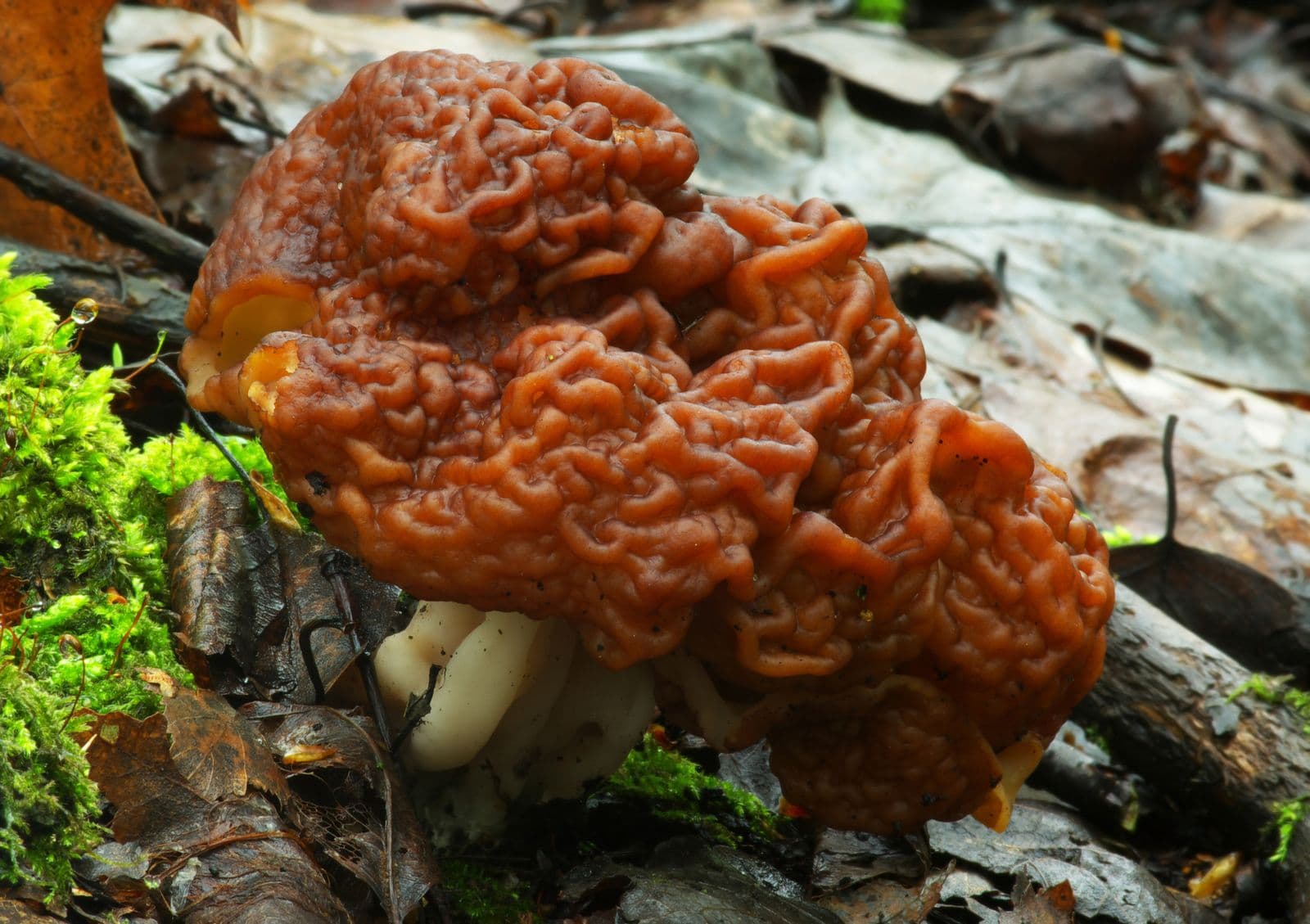
Toxic lookalike
False Morel
Gyromitra esculenta
A false morel has a wrinkled, brain-like reddish-brown cap rather than pits and ridges, and is chambered or cottony inside instead of hollow.
Morchella angusticeps
Also called eastern black morel, narrow-headed morel.
The black morel is an early-spring morel of eastern North America, with a pointed cap whose ridges darken to brown or black. Like all true morels it is hollow inside, which separates it from the toxic false morels that fruit in the same weeks.
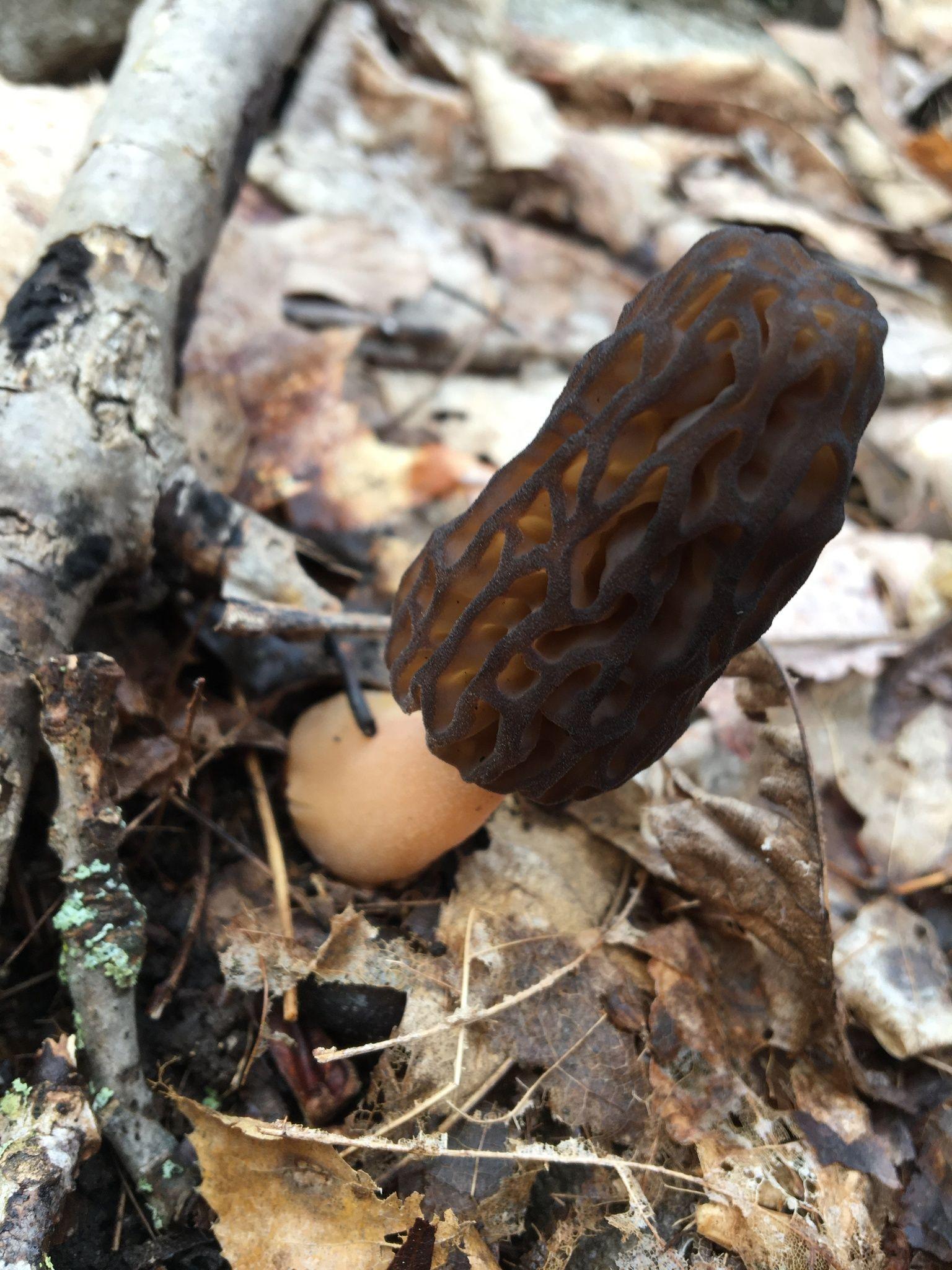
The tell
Conical honeycomb cap with dark, mostly vertical ridges, hollow from tip to base.
Field marks
Cap, underside and stem show in a photo. The spore print does not, and it is often the deciding check.
Where and when
Lookalikes
Each card says how to tell the two apart.
Gyromitra esculenta
A false morel has a wrinkled, brain-like reddish-brown cap rather than pits and ridges, and is chambered or cottony inside instead of hollow.
Verpa bohemica
Photo coming
Verpa bohemica
Its wrinkled cap hangs free like a thimble and attaches only at the very top of the stem, and the stem is stuffed with cottony fibers.
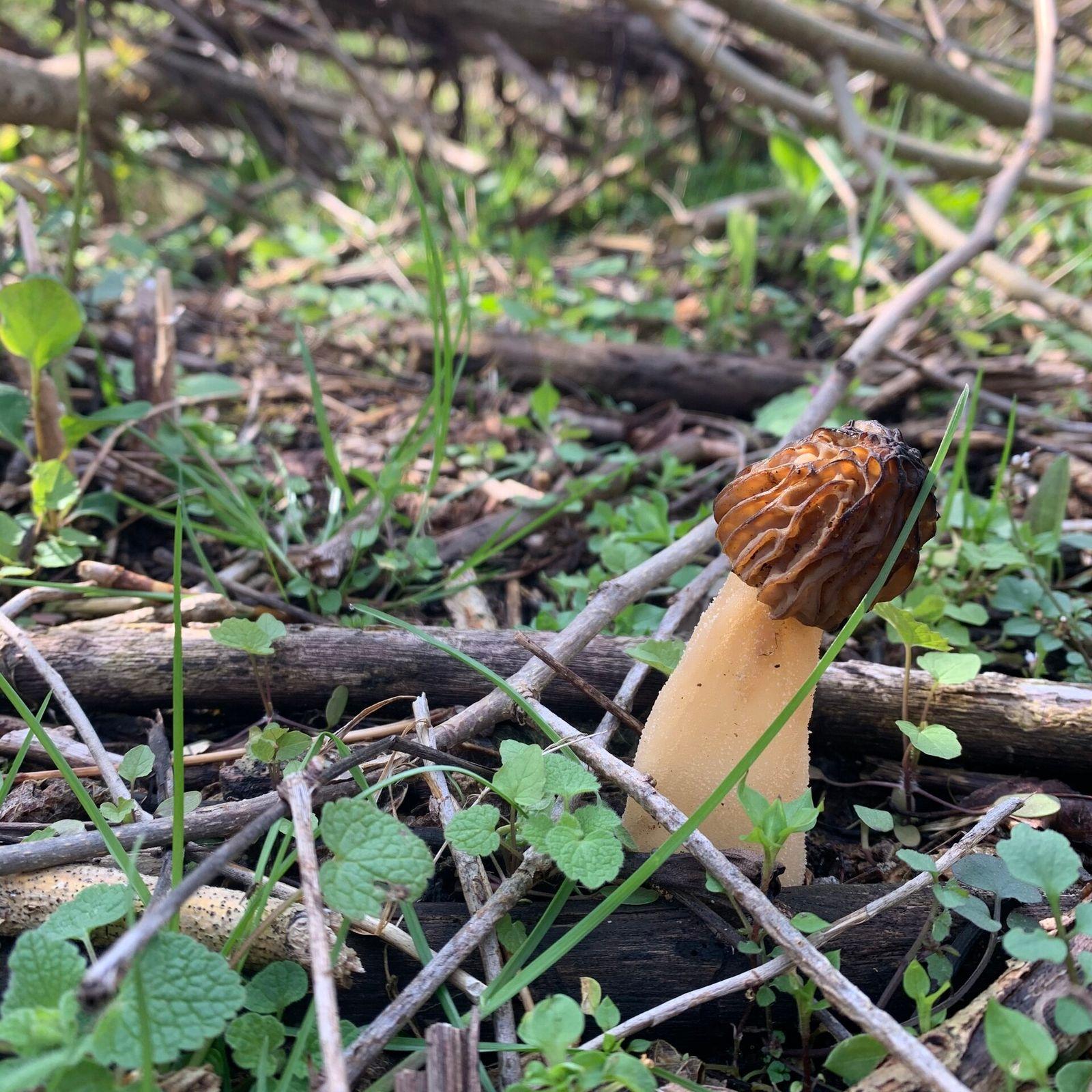
Morchella punctipes
Also a true morel and also hollow, but its small cap attaches only about halfway up, with the lower half hanging free over a long stem.
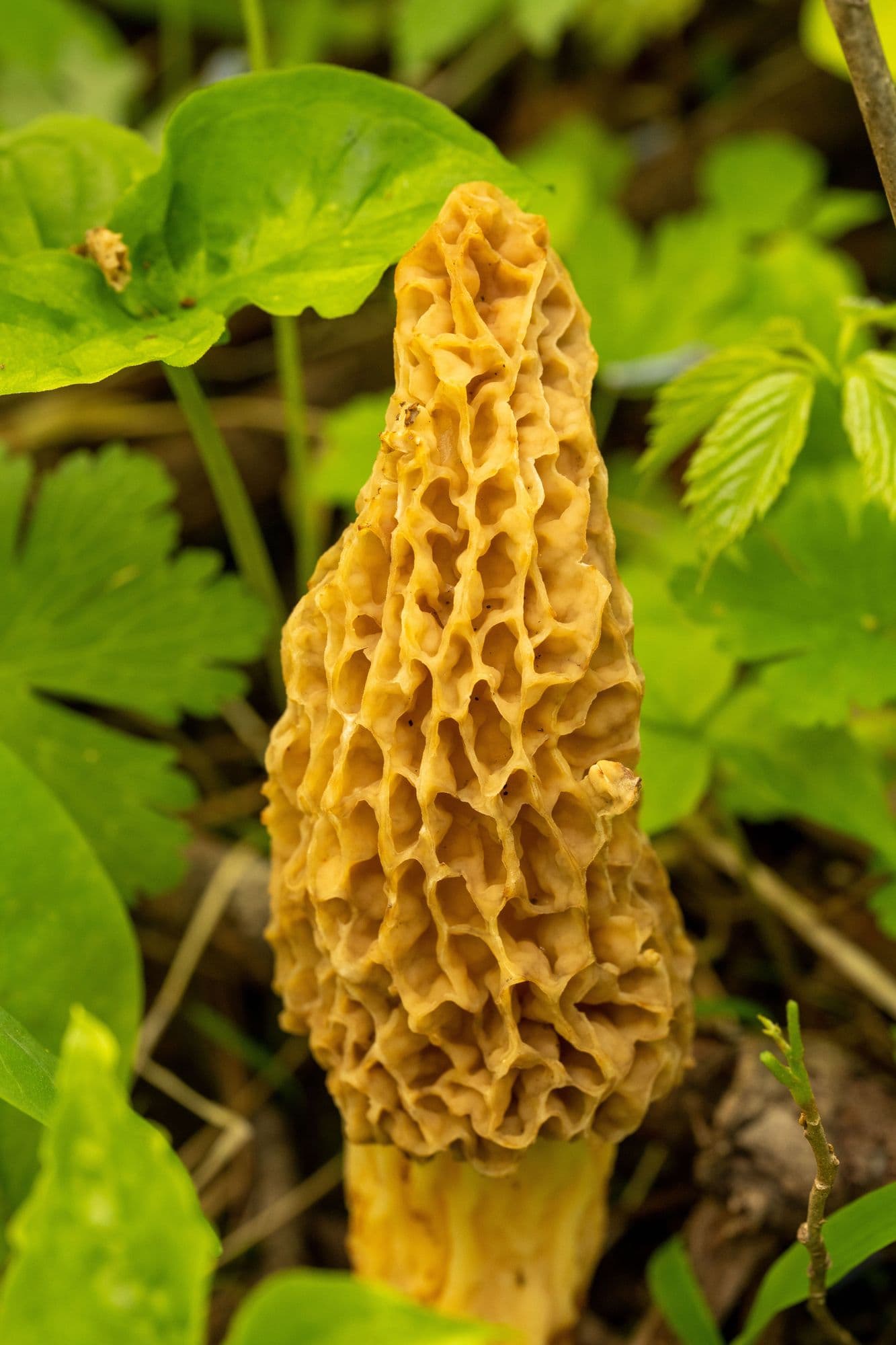
Morchella esculentoides
The yellow morel's ridges stay pale and form a more random honeycomb, and it usually fruits later in spring.
Edibility
Field guides list the black morel as a choice edible when cooked, with the same cautions recorded for other morels: illness has followed eating them raw or undercooked, and some people report upset when morels are eaten with alcohol. False morels (Gyromitra) and Verpa species fruit in the same season and are separated by the hollow interior and the way the cap attaches.
This page states what field guides record. It is not advice to eat, taste or handle anything, and a photo cannot settle edibility. If someone has eaten a wild mushroom that may be toxic, call poison control (1-800-222-1222 in the US) right away, before symptoms start: the deadliest species act hours later.
FAQ
Both are true morels and both are hollow inside. Black morels have a more conical cap whose ridges run mostly lengthwise and turn dark brown to black with age, while yellow morels have paler ridges in a more random honeycomb. Black morels also tend to appear earlier in spring.
Field guides list black morels as edible when cooked. Like other morels, they have caused illness when eaten raw or undercooked, and some people react to them, especially with alcohol. The dangerous confusion is the false morel, which has a brain-like cap and is not hollow.
In early spring, often before yellow morels in the same woods. In the eastern United States that is usually from March in the South to May in the northern states.
Sources
MushroomExpert.com
Missouri Department of Conservation
Index Fungorum
Waitlist
We will send one email when Mushrooms.id opens, and nothing else.
This opens your email app with the request written for you. Send it and we add you to the list. No email app? Write to hello@mushrooms.id with the subject “Add me to the Mushrooms.id waitlist”.