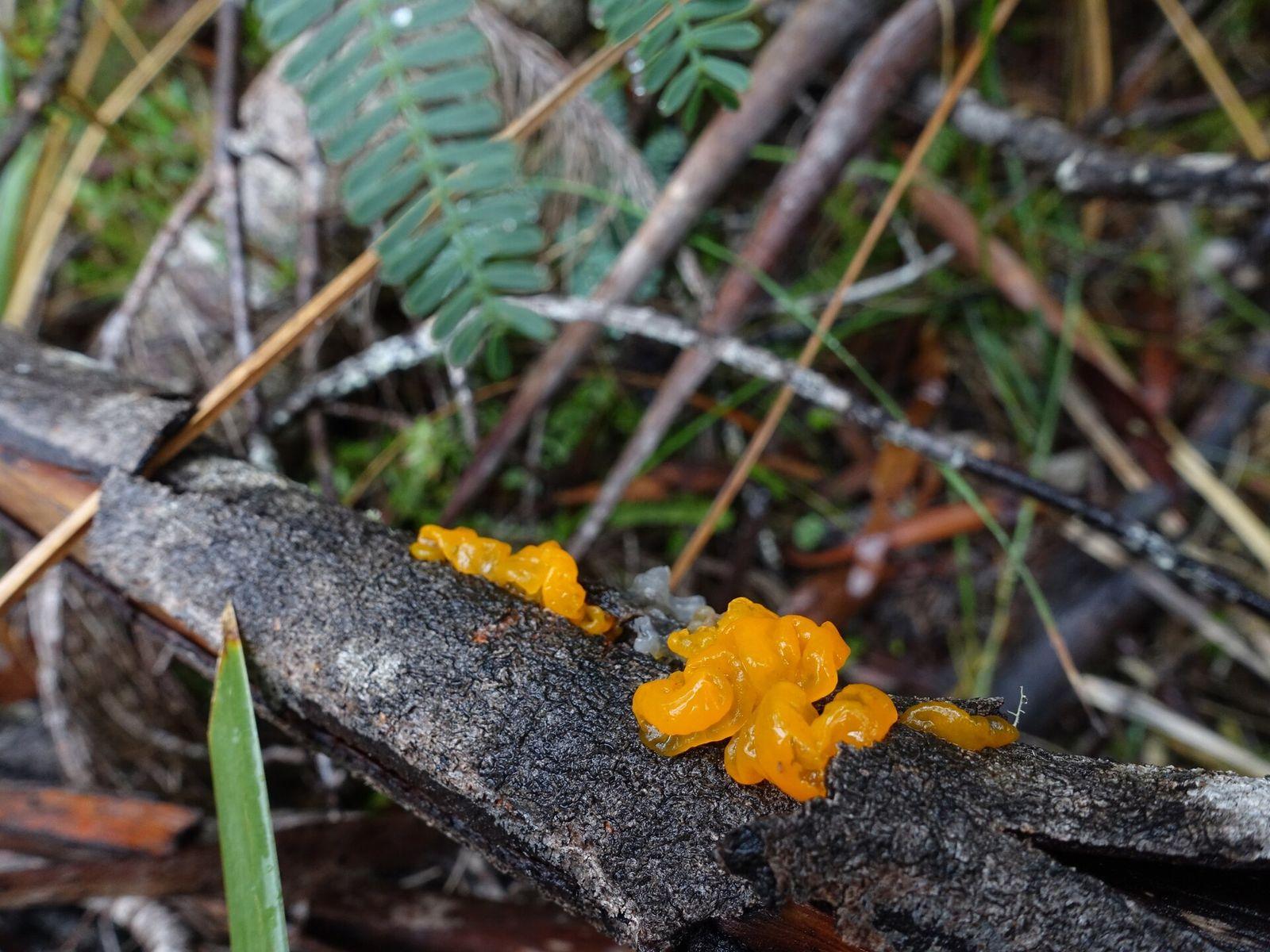
Sarcoscypha austriaca
Photo coming
Inedible
Scarlet Elf Cup
Sarcoscypha austriaca
Deep scarlet rather than orange, deeper and more cup-shaped, and grows on buried sticks in early spring.
Aleuria aurantia
Also called orange fairy cup, orange peel.
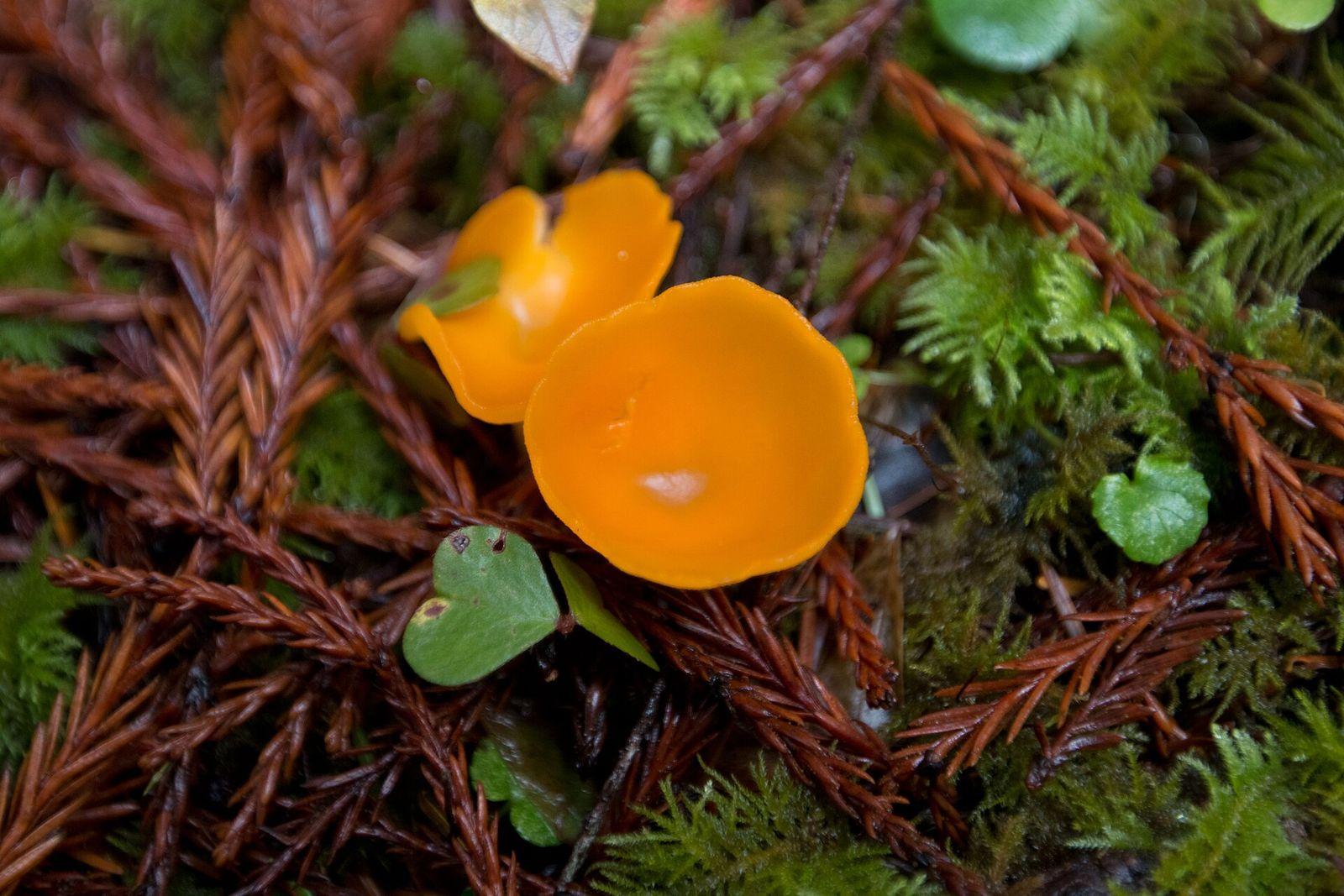
Orange peel fungus is a bright orange cup fungus that grows on bare, disturbed soil along roads, paths and trails. It looks like a dropped piece of orange peel, with a vivid orange inside and a paler, downy outside. It is brittle and has little flavor.
The tell
A bright orange, brittle cup on bare soil that looks like a discarded piece of orange peel.
Field marks
Cap, underside and stem show in a photo. The spore print does not, and it is often the deciding check.
Where and when
Lookalikes
Each card says how to tell the two apart.
Sarcoscypha austriaca
Photo coming
Sarcoscypha austriaca
Deep scarlet rather than orange, deeper and more cup-shaped, and grows on buried sticks in early spring.
Much smaller, under 1/2 inch, red-orange, with a fringe of stiff black hairs around the rim.
Yellow-orange cup that stains blue-green, growing under conifers in spring near melting snow.
Edibility
Field guides list orange peel fungus as edible but with little flavor, and it is thin and brittle. It is not known to be toxic. No dangerous mushroom in North America resembles it closely.
This page states what field guides record. It is not advice to eat, taste or handle anything, and a photo cannot settle edibility. If someone has eaten a wild mushroom that may be toxic, call poison control (1-800-222-1222 in the US) right away, before symptoms start: the deadliest species act hours later.
FAQ
Field guides list it as edible but nearly tasteless. It is thin and brittle, and it is not known to be toxic.
On bare or disturbed soil: roadsides, trail edges, gravel and landscaped beds. It fruits from late summer into fall, and through winter on the Pacific Coast.
A bright orange, wavy cup or saucer up to about 4 inches wide, sitting directly on the soil. The outside is paler and slightly fuzzy, like the inside of an orange peel.
Sources
MushroomExpert.com
MykoWeb, California Fungi
Index Fungorum
Waitlist
We will send one email when Mushrooms.id opens, and nothing else.
This opens your email app with the request written for you. Send it and we add you to the list. No email app? Write to hello@mushrooms.id with the subject “Add me to the Mushrooms.id waitlist”.