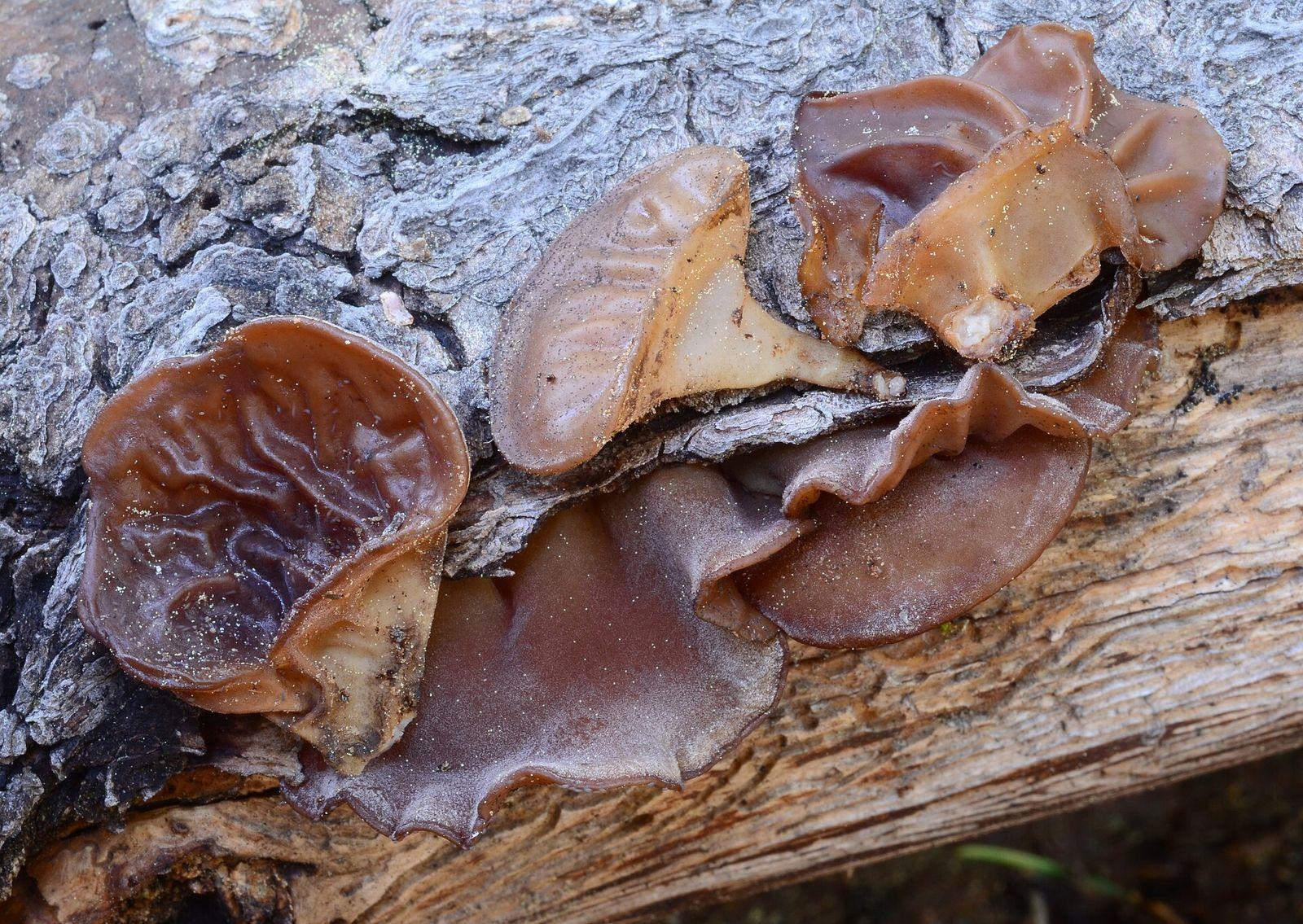
Edible, tasteless
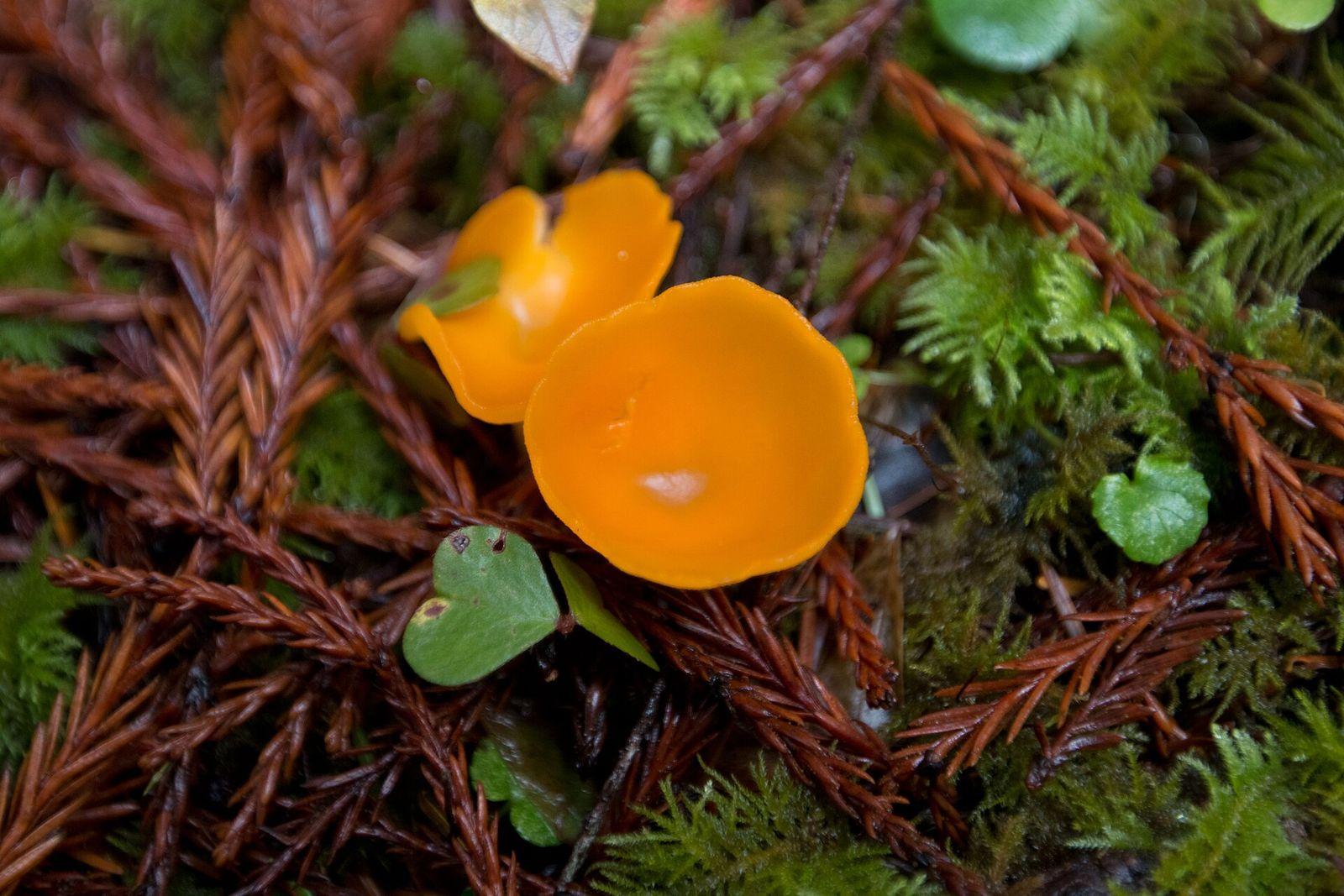
Orange Peel Fungus
Aleuria aurantia
A brittle orange cup on bare soil, not a soft jelly on wood.
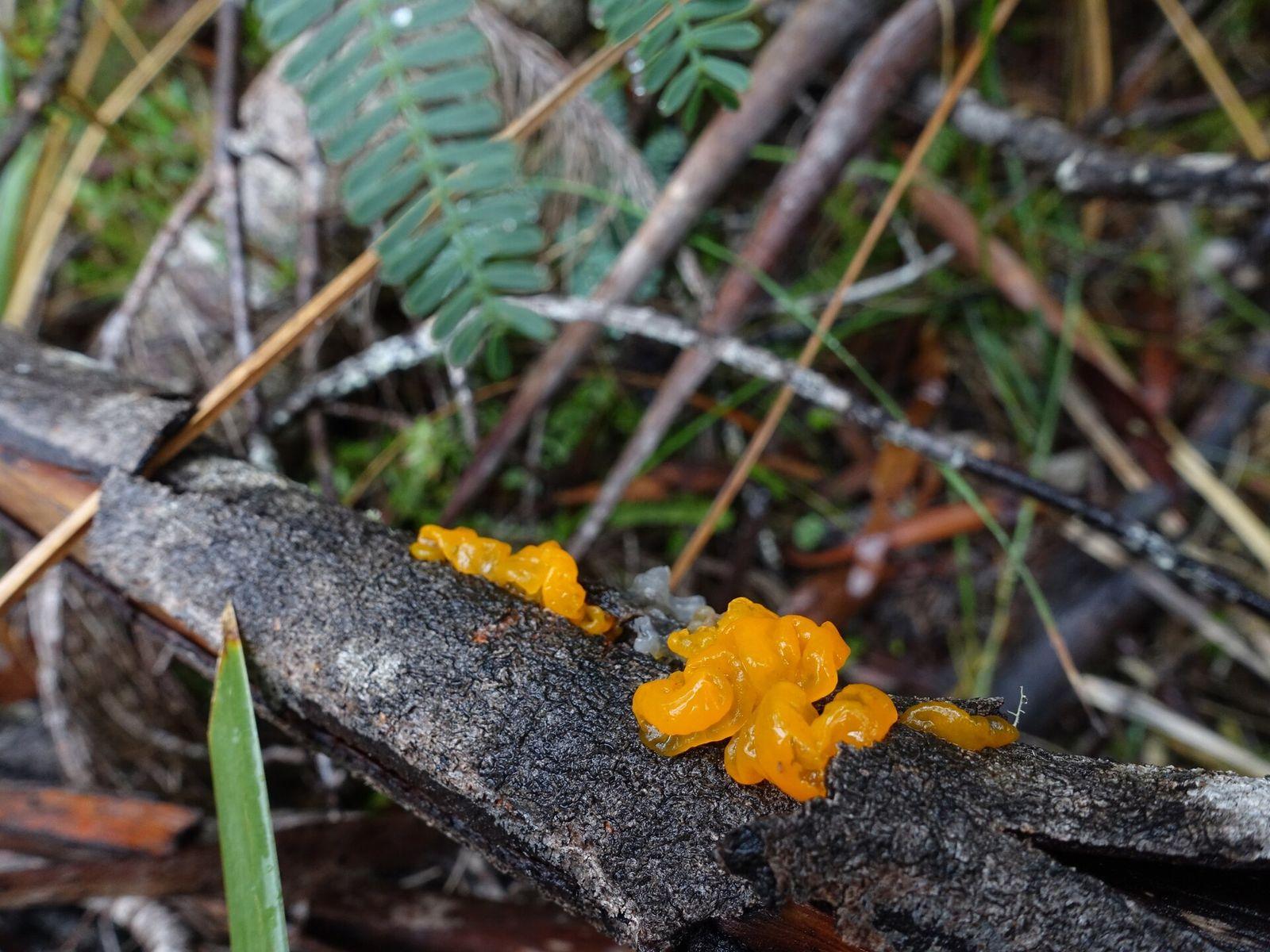
Tremella mesenterica
Also called yellow brain, golden jelly fungus, yellow trembler.
Witches' butter is a bright yellow to orange jelly fungus with lobed, brain-like folds. It appears on dead hardwood branches after rain, dries to a thin orange crust and swells again when wet. It lives as a parasite on crust fungi in the wood.
The tell
A bright yellow to orange, wobbly, brain-like jelly on dead hardwood branches.
Field marks
Cap, underside and stem show in a photo. The spore print does not, and it is often the deciding check.
Where and when
Lookalikes
Each card says how to tell the two apart.
Grows on conifer wood, not hardwood, and has a whitish point of attachment. It is firmer and more orange.
Grows on hardwood as a parasite of Stereum crust fungi, often with the host visible beside it, and has a firmer, whitish core.
Aleuria aurantia
A brittle orange cup on bare soil, not a soft jelly on wood.
Edibility
Field guides list witches' butter as edible but nearly tasteless, valued only for texture. Related Tremella species are cultivated in Asia and used in soups and desserts. It is not known to be toxic.
This page states what field guides record. It is not advice to eat, taste or handle anything, and a photo cannot settle edibility. If someone has eaten a wild mushroom that may be toxic, call poison control (1-800-222-1222 in the US) right away, before symptoms start: the deadliest species act hours later.
FAQ
Field guides list it as edible but without flavor. Related jelly fungi in the genus Tremella are used in Asian soups and desserts.
In European folklore, the yellow jelly appearing on gates and fences was blamed on witches. The name is now used for several yellow and orange jelly fungi.
On dead hardwood branches, often still attached to the tree, across North America. It appears after rain at any time of year and is most noticeable in cool, wet months.
Sources
MushroomExpert.com
Fungi Growing on Wood, Gary Emberger (MushroomExpert.com)
Missouri Department of Conservation
Index Fungorum
Waitlist
We will send one email when Mushrooms.id opens, and nothing else.
This opens your email app with the request written for you. Send it and we add you to the list. No email app? Write to hello@mushrooms.id with the subject “Add me to the Mushrooms.id waitlist”.