Edible, tasteless
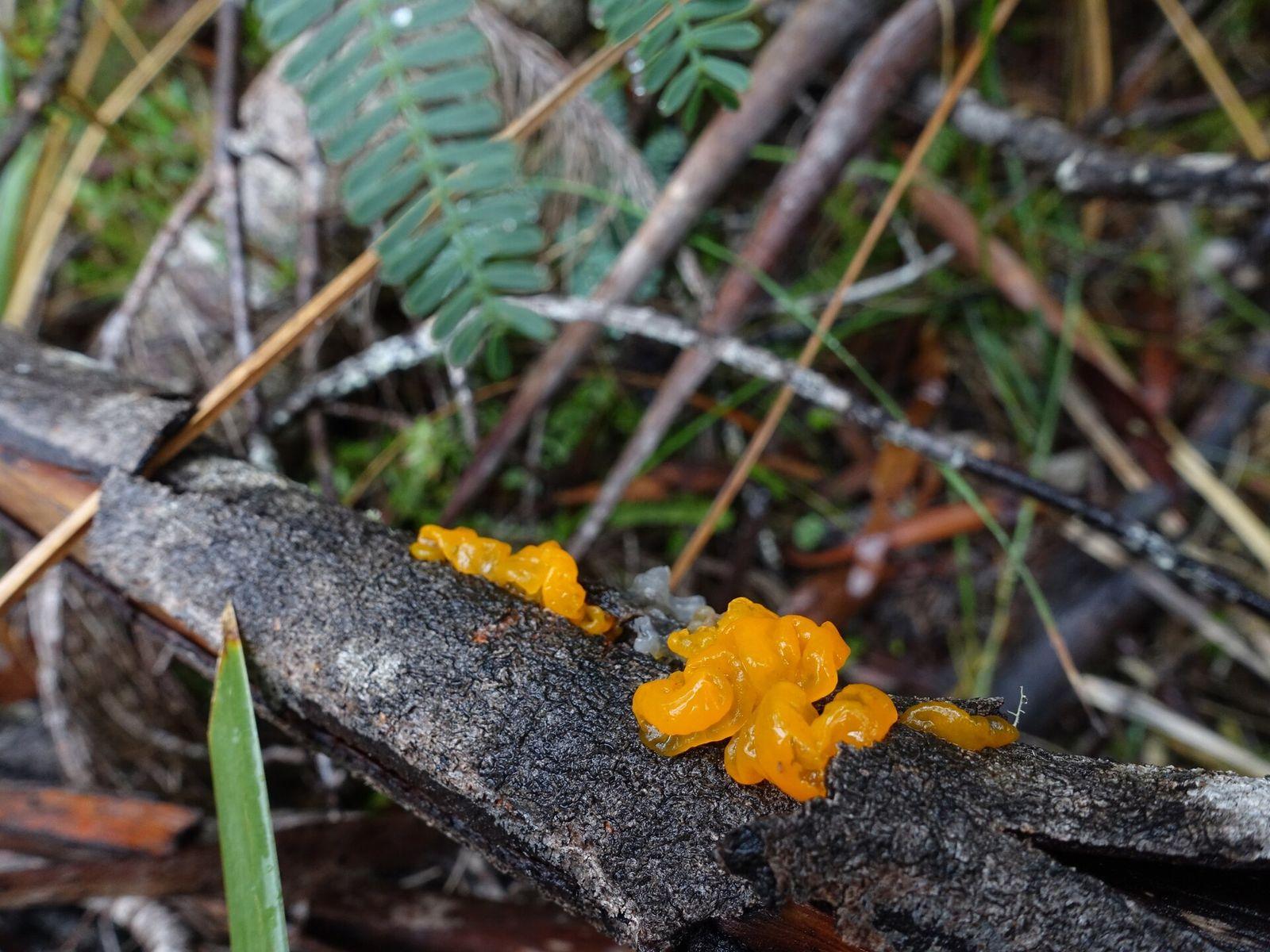
Witches' Butter
Tremella mesenterica
Bright yellow to orange and brain-like, not brown and ear-shaped.
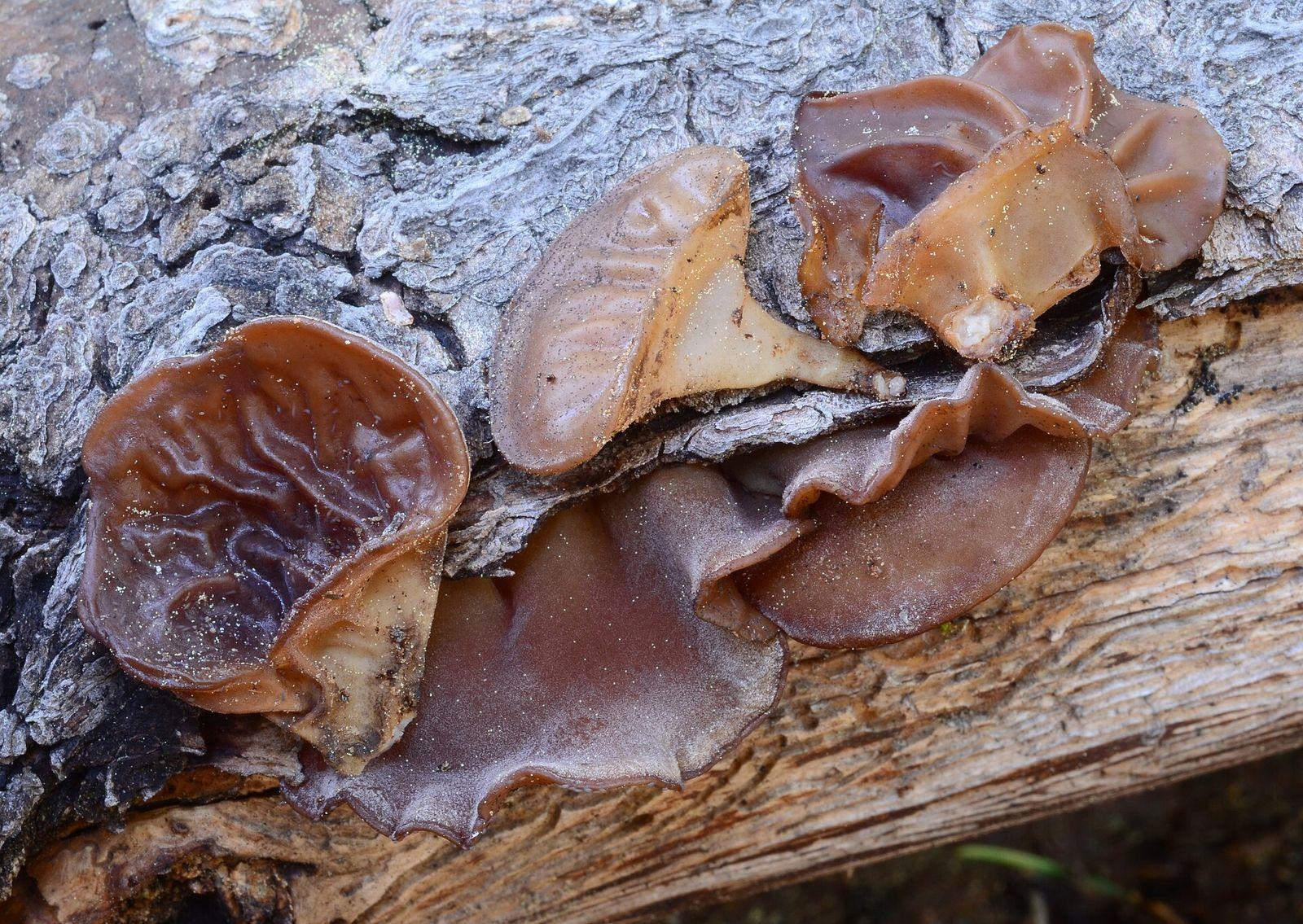
Auricularia americana
Also called tree ear, jelly ear.
Wood ear is a brown, rubbery jelly fungus shaped like a human ear. It grows on dead wood in wet weather, shrinks when dry and revives after rain. Related Asian wood ears are a common ingredient in Chinese cooking.
The tell
A rubbery, brown, ear-shaped jelly fungus on dead wood, finely hairy on the back.
Field marks
Cap, underside and stem show in a photo. The spore print does not, and it is often the deciding check.
Where and when
Lookalikes
Each card says how to tell the two apart.
Smaller, amber to orange-brown and more translucent, with a smooth back rather than a hairy one. Grows on willow and other hardwoods.
Brittle and fragile rather than rubbery, and usually on soil or very rotten wood.
Tremella mesenterica
Bright yellow to orange and brain-like, not brown and ear-shaped.
Edibility
Field guides list wood ear as edible, valued for its crunchy texture rather than flavor. Cultivated Asian species of Auricularia are sold dried as wood ear or cloud ear in grocery stores. Auricularia americana was separated from the Eurasian Auricularia auricula-judae by DNA study.
This page states what field guides record. It is not advice to eat, taste or handle anything, and a photo cannot settle edibility. If someone has eaten a wild mushroom that may be toxic, call poison control (1-800-222-1222 in the US) right away, before symptoms start: the deadliest species act hours later.
FAQ
Field guides list it as edible. Related wood ears are cultivated in Asia and sold dried for soups and stir-fries, valued for texture more than taste.
A brown, rubbery, ear-shaped fungus on dead wood, with a finely hairy back and a smooth, shiny inner side. It shrivels when dry and swells again after rain.
On dead logs, stumps and branches across North America. Auricularia americana grows mostly on conifers, and a close relative grows on hardwoods.
Sources
MushroomExpert.com
MykoWeb, California Fungi
Index Fungorum
Waitlist
We will send one email when Mushrooms.id opens, and nothing else.
This opens your email app with the request written for you. Send it and we add you to the list. No email app? Write to hello@mushrooms.id with the subject “Add me to the Mushrooms.id waitlist”.