Edible
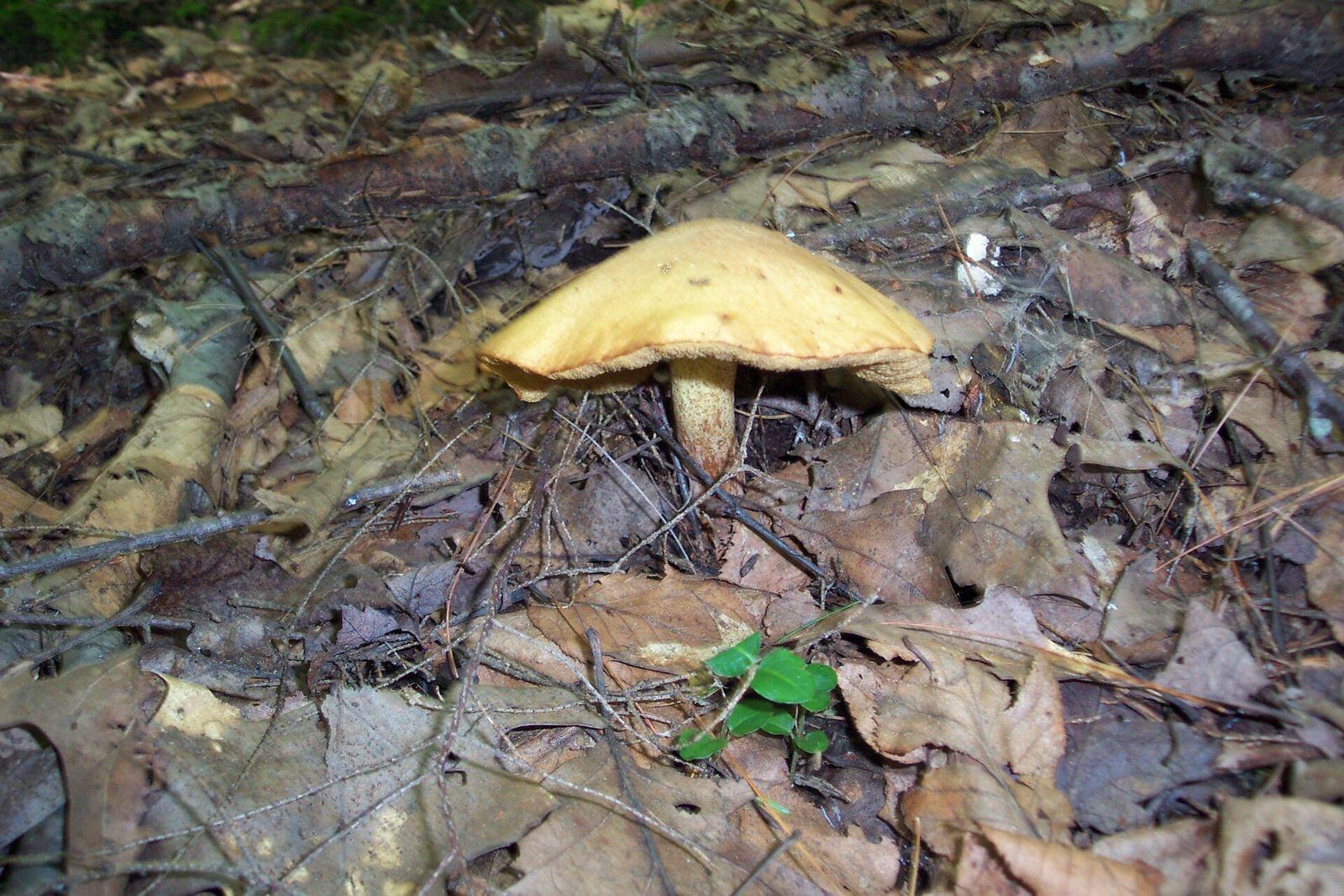
Chicken Fat Mushroom
Suillus americanus
The chicken fat mushroom is bright yellow with reddish streaks, has no true ring, and grows only with eastern white pine.
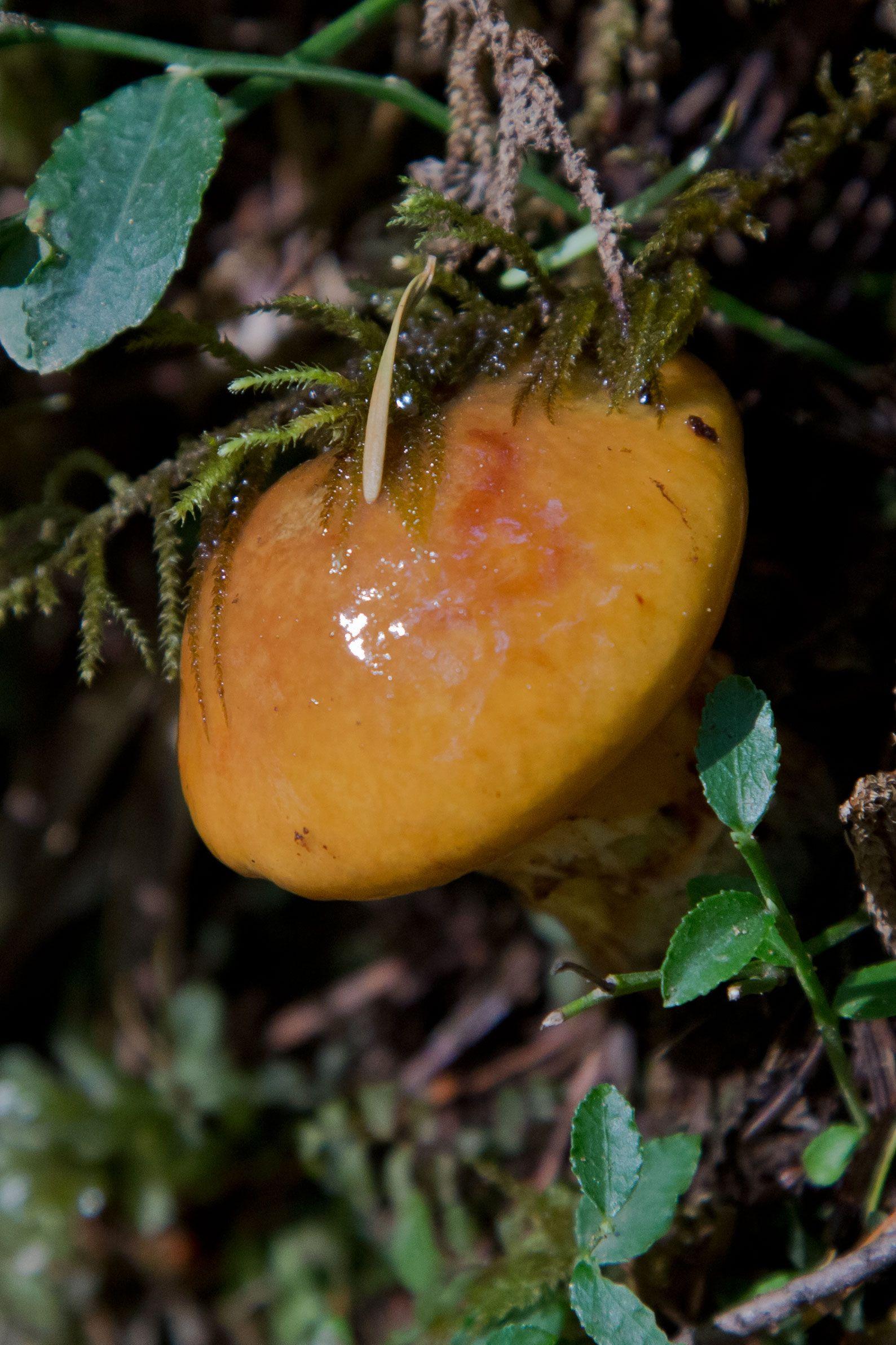
Suillus luteus
The slippery jack is a slimy-capped bolete that grows under pines, especially planted pines and pine plantations. Its brown slime layer and the purplish ring on its stem make it one of the easier boletes to recognize.
The tell
A slimy brown cap over yellow pores, and a large membranous ring that is purplish underneath, under pines.
Field marks
Cap, underside and stem show in a photo. The spore print does not, and it is often the deciding check.
Where and when
Lookalikes
Each card says how to tell the two apart.
Suillus americanus
The chicken fat mushroom is bright yellow with reddish streaks, has no true ring, and grows only with eastern white pine.
Several Suillus species under pines have slimy brown caps. Many lack a ring, or have a ring that is not purplish underneath.
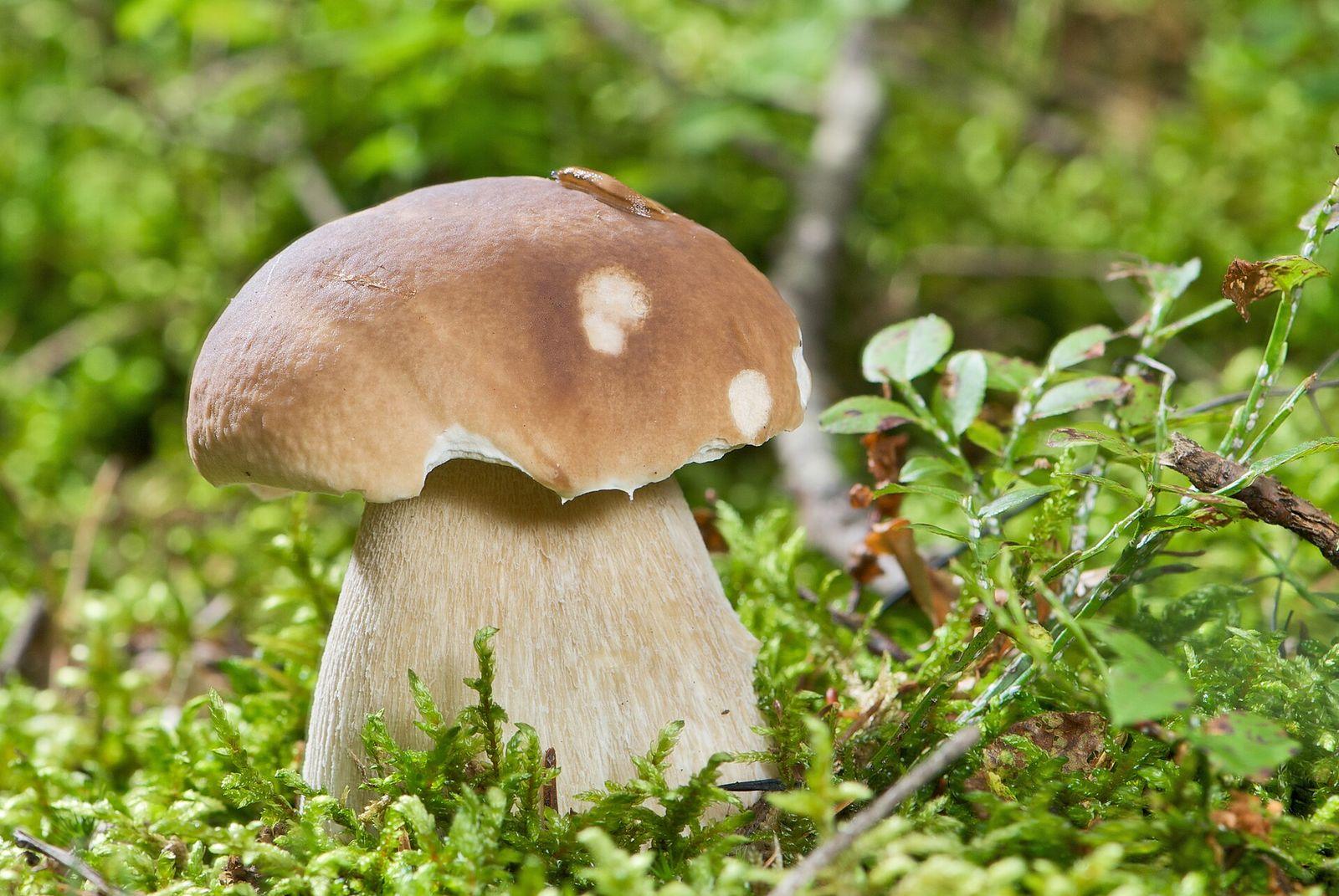
Boletus edulis
The king bolete has a dry to slightly sticky cap without thick slime, a fat netted stem, and no ring.
Edibility
Field guides list the slippery jack as edible. They note that the slimy cap skin has caused diarrhea and other digestive upset in some people, and that it is usually removed. Some people also react to the mushroom itself.
This page states what field guides record. It is not advice to eat, taste or handle anything, and a photo cannot settle edibility. If someone has eaten a wild mushroom that may be toxic, call poison control (1-800-222-1222 in the US) right away, before symptoms start: the deadliest species act hours later.
FAQ
Field guides list it as edible. They record digestive upset in some people, mostly attributed to the slimy skin on the cap, which is usually peeled off.
A brown, very slimy cap 2 to 5 inches across, yellow pores underneath, and a whitish stem with a large membranous ring that is purplish on its underside. It grows under pines.
Under pines, especially planted pines such as Scots pine, in plantations, parks and yards. It has spread to many areas with pine plantings.
Sources
MushroomExpert.com
Index Fungorum
Waitlist
We will send one email when Mushrooms.id opens, and nothing else.
This opens your email app with the request written for you. Send it and we add you to the list. No email app? Write to hello@mushrooms.id with the subject “Add me to the Mushrooms.id waitlist”.