Inedible lookalike
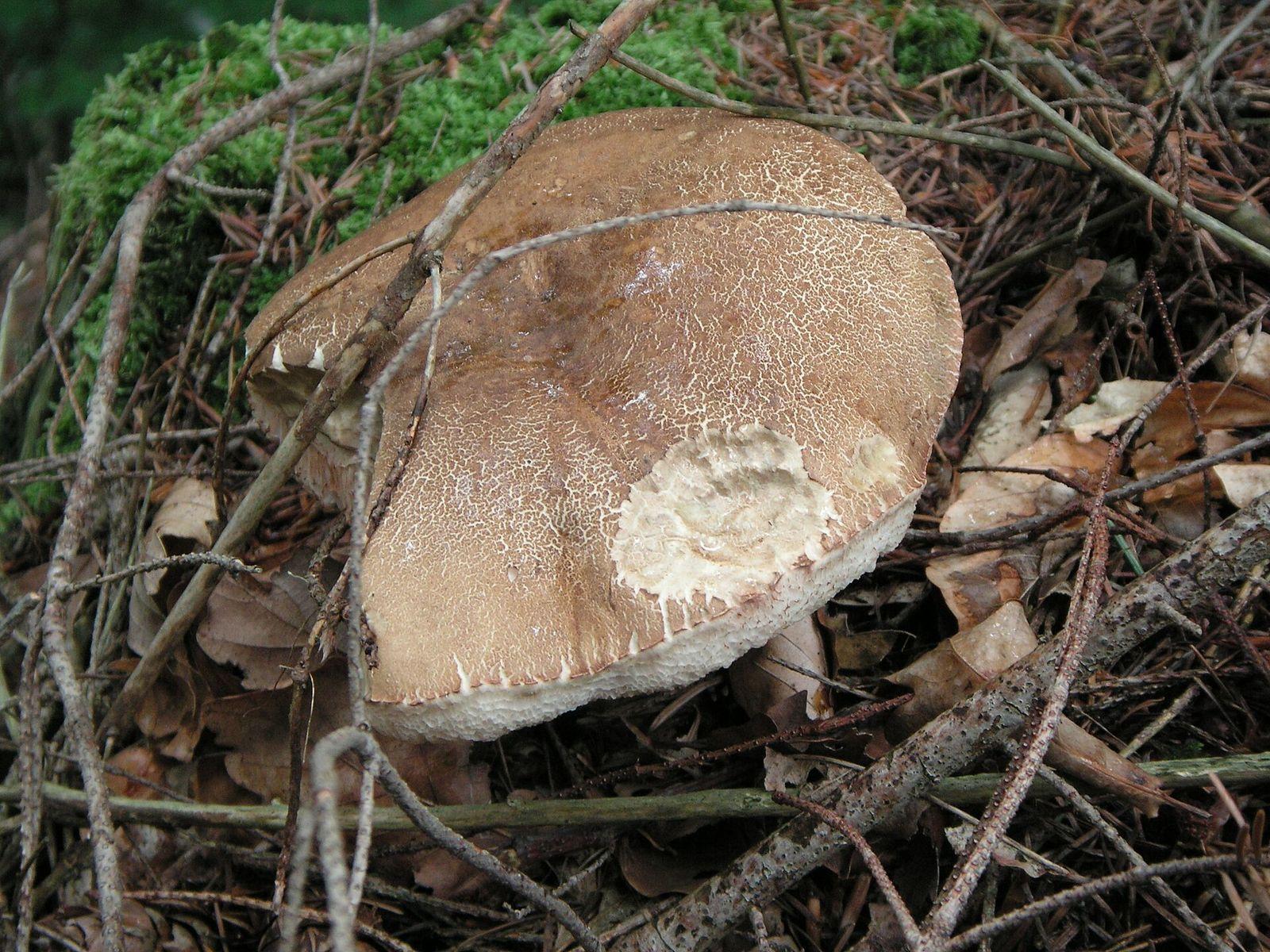
Bitter Bolete
Tylopilus felleus
The bitter bolete's pores turn pinkish with age, its stem carries a coarse brown net rather than a fine white one, and its flesh is intensely bitter. It leaves a pinkish-brown spore print.
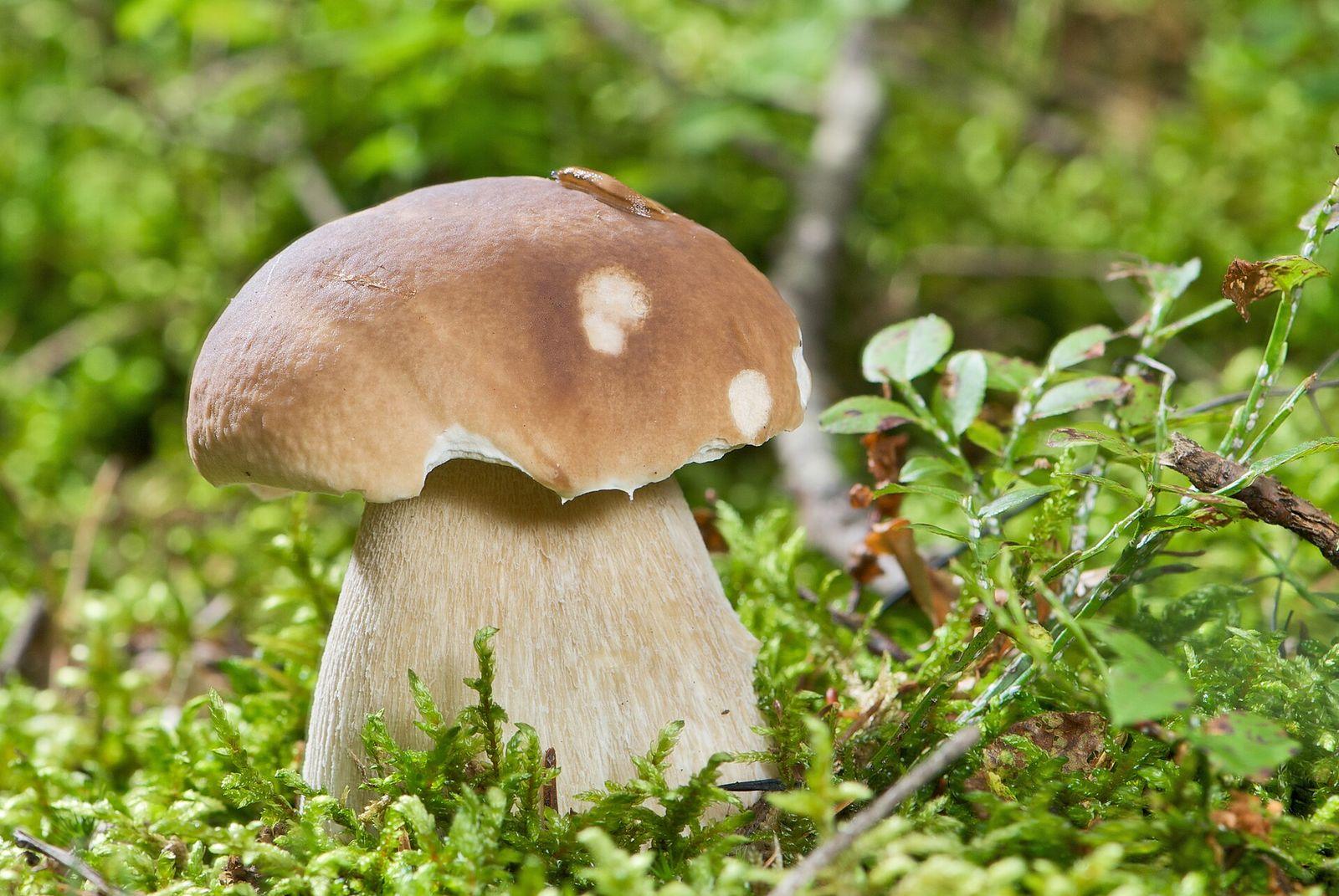
Boletus edulis
Also called porcini, cep, penny bun.
The king bolete is the porcini of Italian cooking: a heavy brown-capped mushroom with pores instead of gills and a thick, netted stem. It grows with conifers and some hardwoods, and its most common lookalike is the bitter bolete.
The tell
A brown bun-shaped cap over white to olive-yellow pores that do not bruise blue, on a fat stem with fine white netting near the top.
Field marks
Cap, underside and stem show in a photo. The spore print does not, and it is often the deciding check.
Where and when
Lookalikes
Each card says how to tell the two apart.
Tylopilus felleus
The bitter bolete's pores turn pinkish with age, its stem carries a coarse brown net rather than a fine white one, and its flesh is intensely bitter. It leaves a pinkish-brown spore print.
Several large boletes have red or orange pores and flesh or pores that bruise blue. Some cause severe gastrointestinal illness. The king bolete's pores are white to olive-yellow and do not bruise blue.
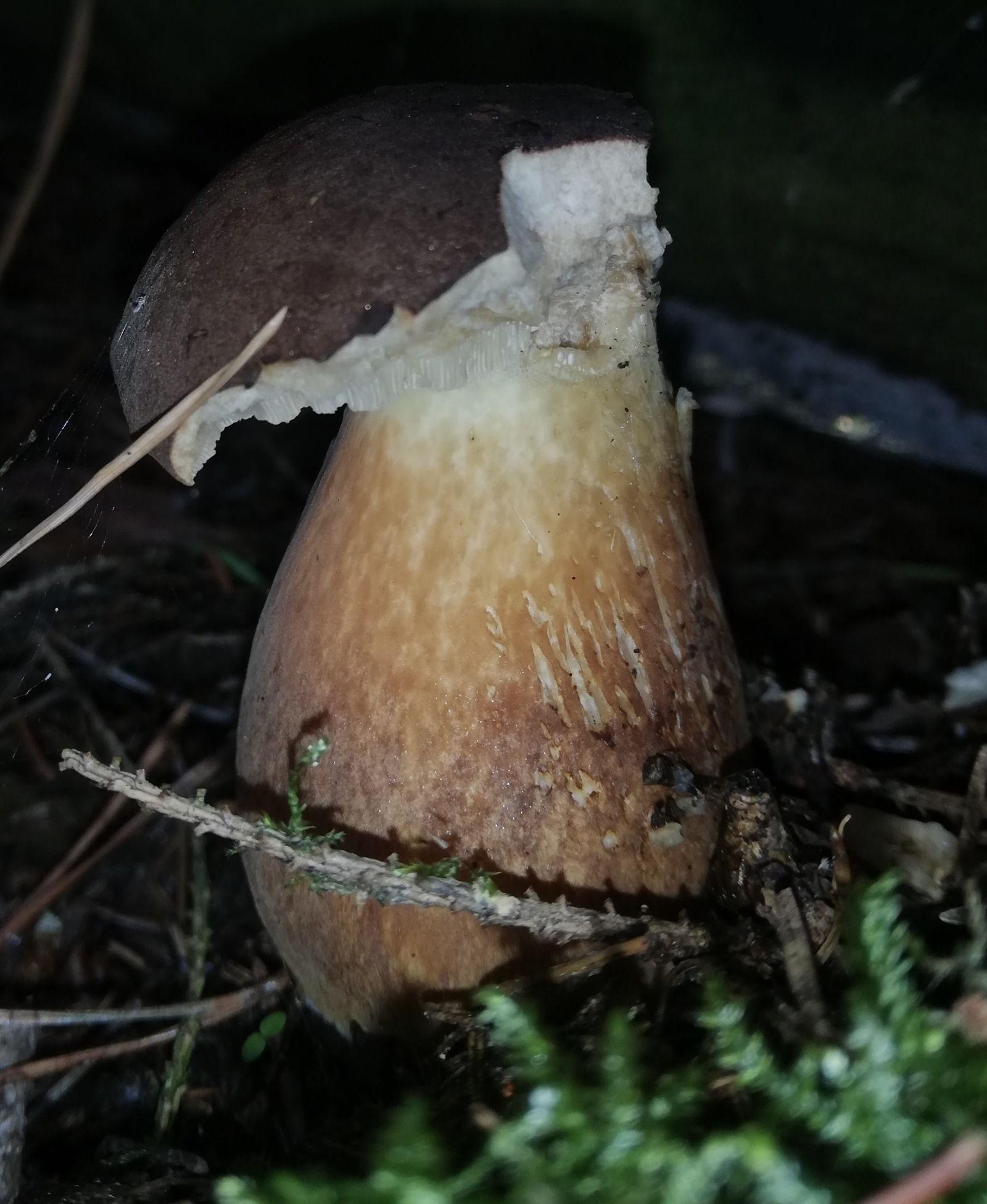
Imleria badia
The bay bolete has a chestnut-brown cap, pale yellow pores that bruise blue-green, and a smooth stem with no netting.
More side-by-side comparisons
Edibility
Field guides list the king bolete as a choice edible, and it is sold fresh and dried as porcini. Insect larvae often tunnel through the flesh of older specimens. The bitter bolete, its most frequent confusion, is not poisonous but is bitter enough to spoil a dish; some red-pored boletes cause severe gastrointestinal illness.
This page states what field guides record. It is not advice to eat, taste or handle anything, and a photo cannot settle edibility. If someone has eaten a wild mushroom that may be toxic, call poison control (1-800-222-1222 in the US) right away, before symptoms start: the deadliest species act hours later.
FAQ
Yes. Porcini is the Italian name for Boletus edulis and its close relatives. Cep and penny bun are names used in France and Britain.
Look at the pores and the stem. King bolete pores are white to olive-yellow and its stem has a fine white net near the top. Bitter bolete pores turn pinkish, and its stem carries a coarse, dark brown net.
On the ground under conifers such as spruce, pine, fir and hemlock, and with some hardwoods including birch and oak. They are most common in northern and western North America.
Sources
MushroomExpert.com
Beaty Biodiversity Museum, University of British Columbia
MykoWeb, California Fungi
Index Fungorum
Also on Mushrooms.id
Leccinum insigne
Photo coming
Leccinum insigne
An orange to reddish-brown cap on a whitish stem covered in small dark scabers, under aspen.
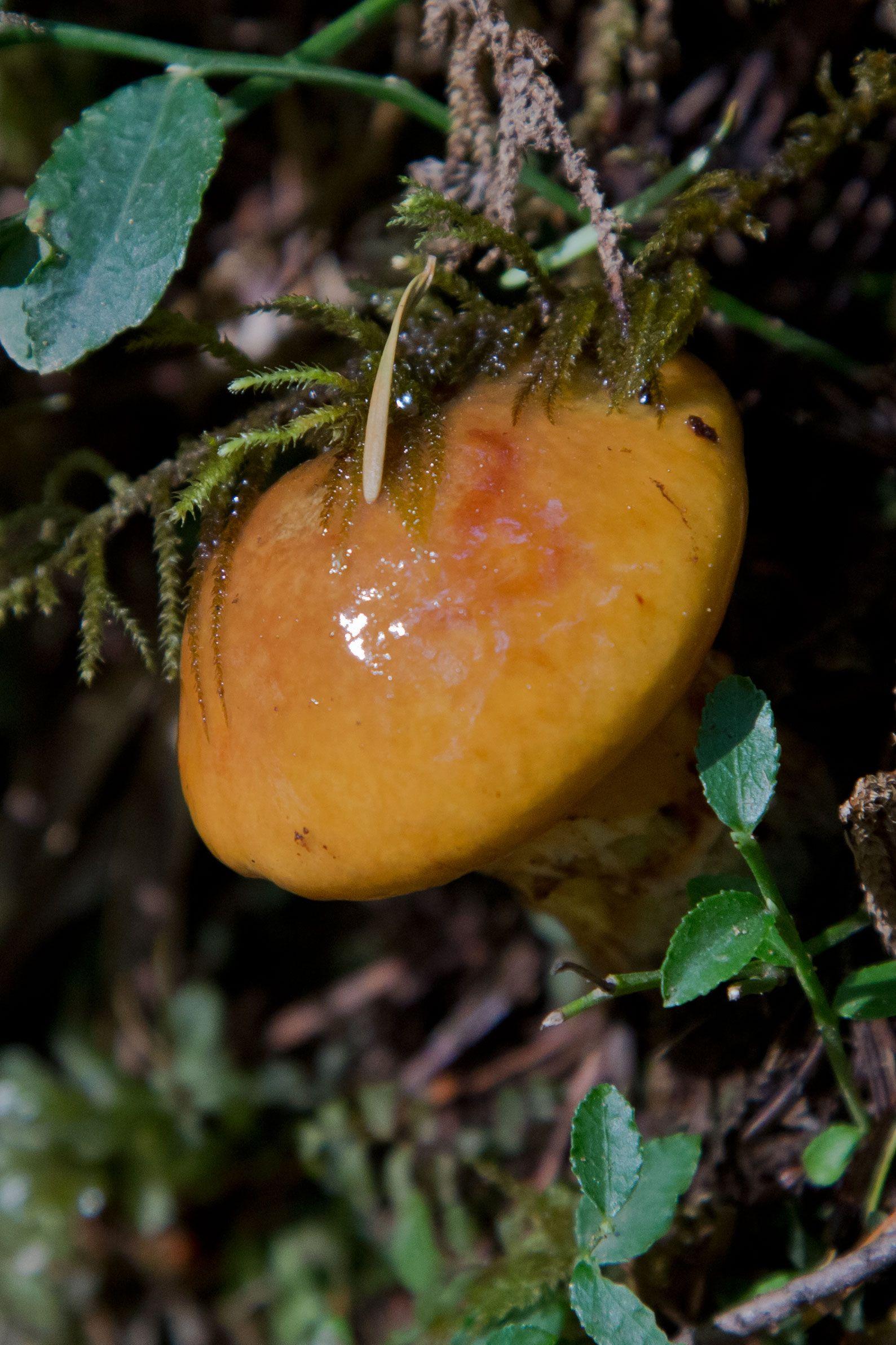
Suillus luteus
A slimy brown cap over yellow pores, and a large membranous ring that is purplish underneath, under pines.
Baorangia bicolor
Photo coming
Baorangia bicolor
A rose-red cap and stem with bright yellow pores that bruise blue slowly.
Waitlist
We will send one email when Mushrooms.id opens, and nothing else.
This opens your email app with the request written for you. Send it and we add you to the list. No email app? Write to hello@mushrooms.id with the subject “Add me to the Mushrooms.id waitlist”.