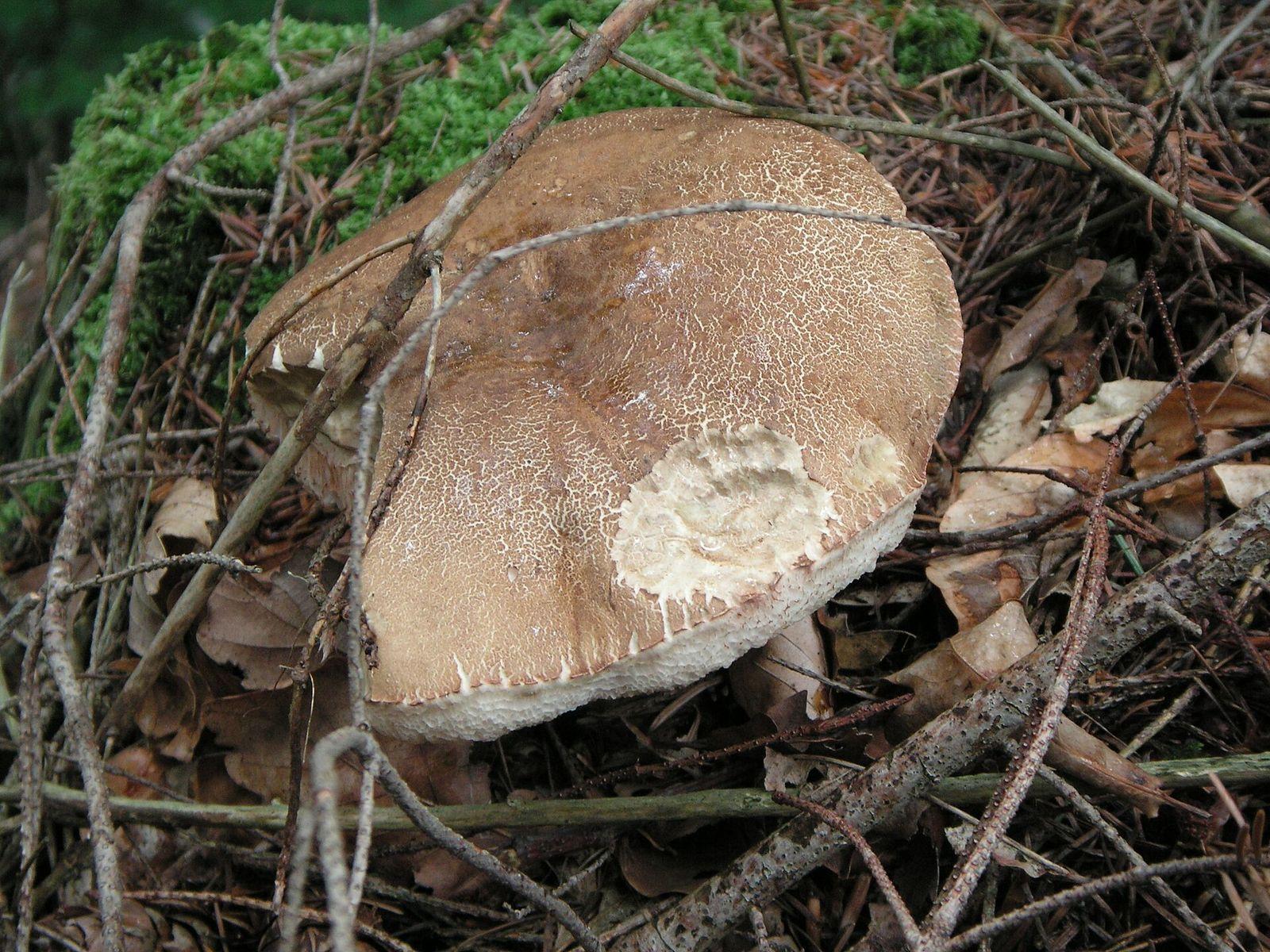
Inedible lookalike
Bitter Bolete
Tylopilus felleus
The bitter bolete has pinkish pores and a stem covered in a coarse brown net rather than scabers. Its flesh is intensely bitter.
Leccinum insigne
The aspen bolete is an orange-capped Leccinum, a scaber stalk, that grows with aspen across northern North America and the Rocky Mountains. It is listed as edible, but orange-capped Leccinums have caused gastrointestinal poisonings, especially in the Rockies.
Leccinum insigne
Photo coming
The tell
An orange to reddish-brown cap on a whitish stem covered in small dark scabers, under aspen.
Field marks
Cap, underside and stem show in a photo. The spore print does not, and it is often the deciding check.
Where and when
Lookalikes
Each card says how to tell the two apart.
Several orange-capped Leccinum species grow with aspen, birch and conifers and are hard to separate without microscopes. As a group they have been involved in gastrointestinal poisonings in North America.
Tylopilus felleus
The bitter bolete has pinkish pores and a stem covered in a coarse brown net rather than scabers. Its flesh is intensely bitter.
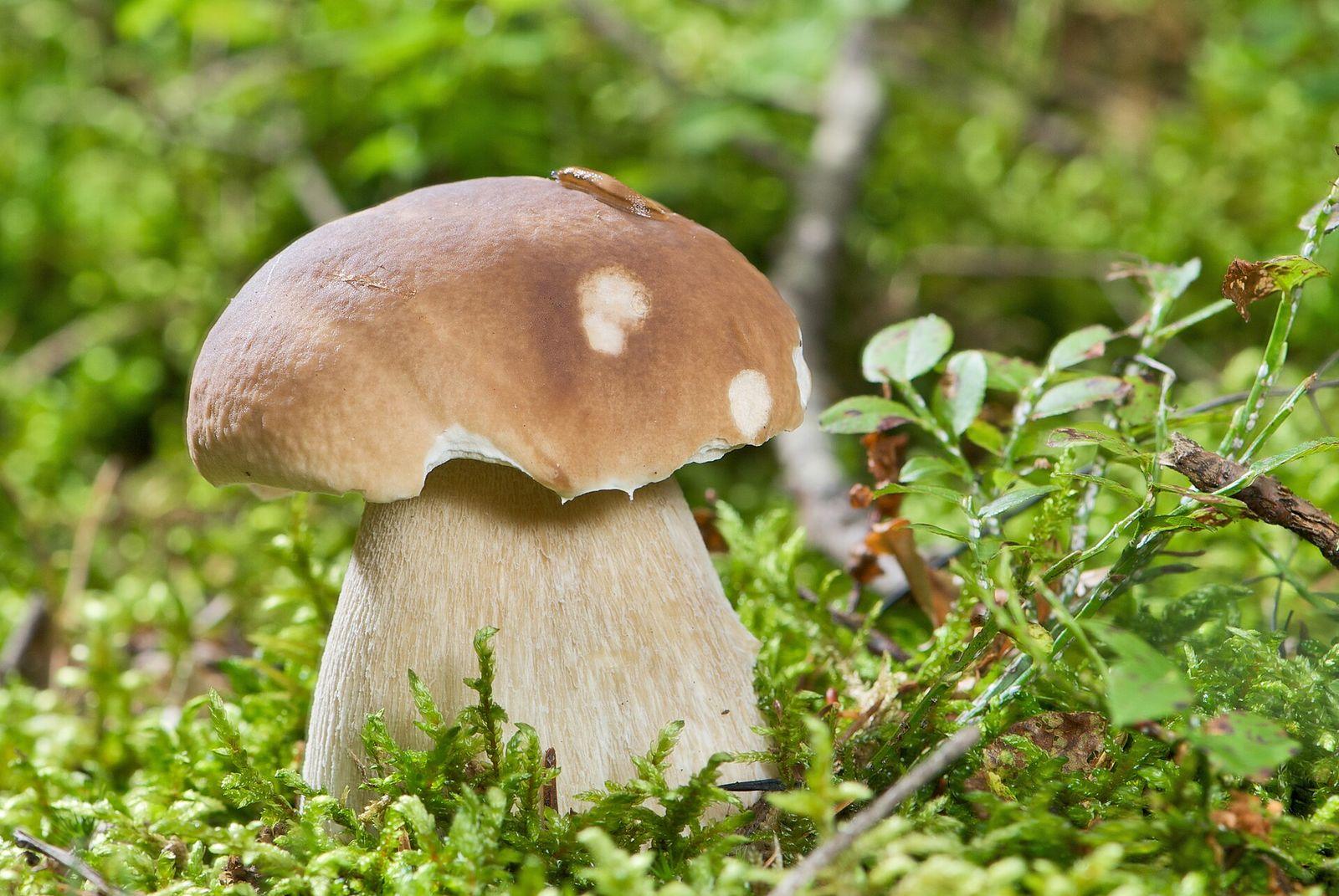
Boletus edulis
The king bolete has a brown cap and a fat stem with a fine white net, not scabers, and its flesh does not darken when cut.
Edibility
Field guides list the aspen bolete as edible when thoroughly cooked. The same guides record gastrointestinal poisonings from orange-capped Leccinum species in North America, many from the Rocky Mountain region, and some cases involved undercooked mushrooms. The species involved are often not identified precisely.
This page states what field guides record. It is not advice to eat, taste or handle anything, and a photo cannot settle edibility. If someone has eaten a wild mushroom that may be toxic, call poison control (1-800-222-1222 in the US) right away, before symptoms start: the deadliest species act hours later.
FAQ
Field guides list it as edible when thoroughly cooked, but orange-capped Leccinum species have caused vomiting and diarrhea in some people, particularly in the Rocky Mountains. Some of those cases involved undercooked mushrooms.
Scaber stalks are boletes in the genus Leccinum and its relatives. Their stems are covered in small, rough, raised scales called scabers, which usually darken to brown or black as the mushroom ages.
On the ground under aspen across northern North America and through the Rocky Mountains, from summer into early fall.
Sources
Wikipedia
Index Fungorum
Waitlist
We will send one email when Mushrooms.id opens, and nothing else.
This opens your email app with the request written for you. Send it and we add you to the list. No email app? Write to hello@mushrooms.id with the subject “Add me to the Mushrooms.id waitlist”.