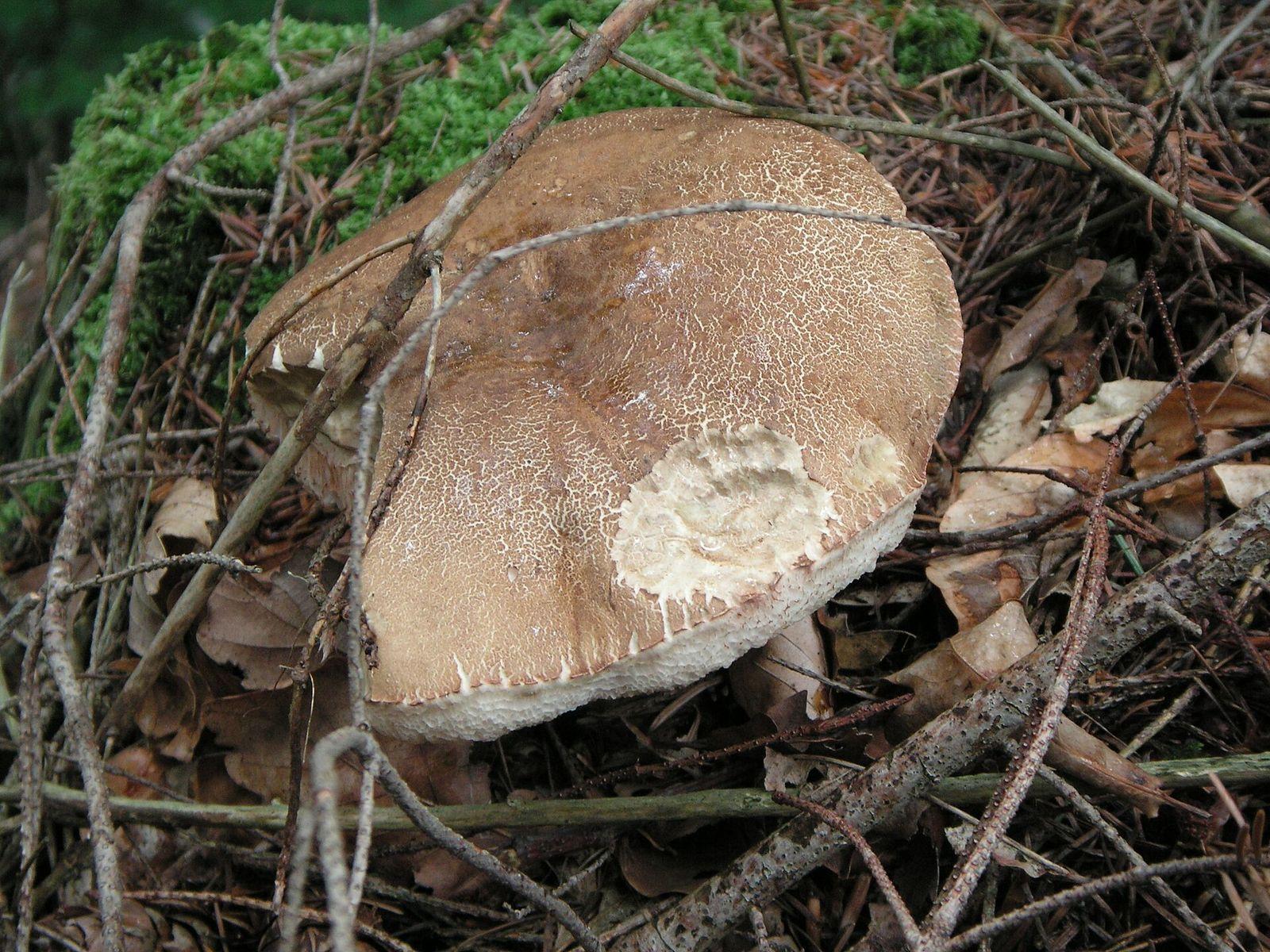
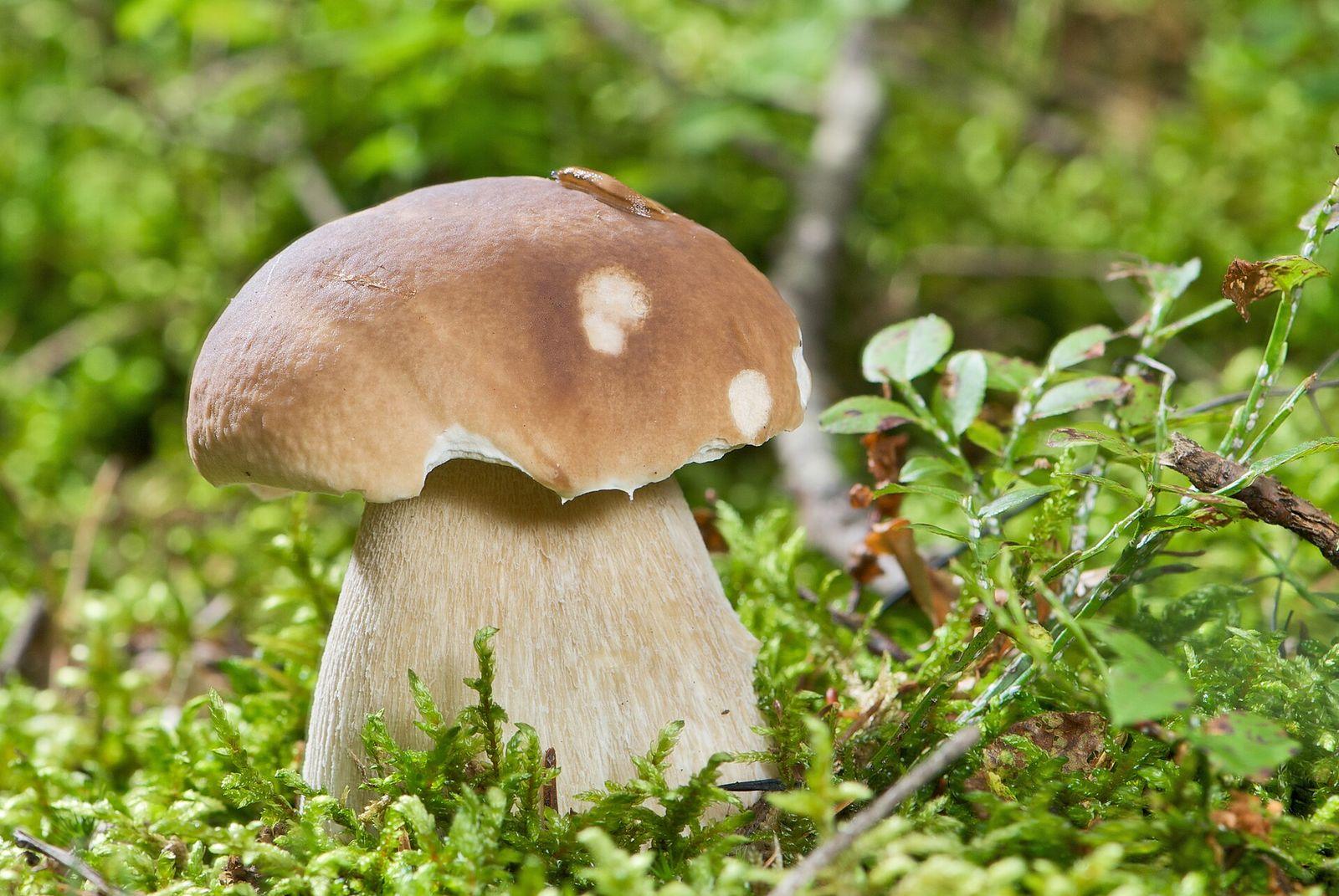
Bitter bolete vs king bolete
Check the pores and stem net: pink pores and a coarse brown net mean bitter bolete. King boletes have white to olive pores and a fine white net.
Quick answer
The aspen bolete's stem is covered in small, rough scales called scabers that darken to brown or black, and its flesh slowly darkens to purplish gray when cut; the king bolete's stem carries a fine white net near the top, and its flesh stays white. They also grow with different trees: the aspen bolete with aspen, the king bolete mostly with conifers.
Side by side
Leccinum insigne
Photo coming
The tellAn orange to reddish-brown cap on a whitish stem covered in small dark scabers, under aspen.
The tellA brown bun-shaped cap over white to olive-yellow pores that do not bruise blue, on a fat stem with fine white netting near the top.
| Feature | Aspen Bolete | King Bolete |
|---|---|---|
| Stem surface | Aspen BoleteSmall rough scabers that darken to brown or black. | King BoleteFine white net, mostly near the top. |
| Cut flesh | Aspen BoleteWhite, slowly darkening to purplish gray or grayish black. | King BoleteWhite, not changing color. |
| Cap | Aspen BoleteOrange to orange-brown or reddish brown, often with a flap of tissue at the edge. | King BoleteLight brown to reddish brown, slightly sticky when wet. |
| Pores | Aspen BoleteWhitish to buff, becoming olive-buff, bruising olive-brown. | King BoleteWhite, then yellow to olive-yellow, not bruising. |
| Host trees | Aspen BoleteQuaking and bigtooth aspen, sometimes birch. | King BoleteSpruce, pine, fir and hemlock, and some hardwoods. |
| Spore print | Aspen BoleteBrown to yellowish brown. | King BoleteOlive-brown. |
FAQ
Small, rough, scale-like tufts on the stem that mark the genus Leccinum. They are often pale at first and darken to brown or black by maturity. King boletes have netting instead.
Field guides list it as edible, but the University of Colorado's Arts and Sciences Magazine notes that poisonings have been reported and that two species, one of them poisonous, may be sharing one name.
Sources
MushroomExpert.com
MushroomExpert.com
University of Colorado Boulder, Arts and Sciences Magazine
Keep checking
This page states what field guides record. It is not advice to eat, taste or handle anything, and a photo cannot settle edibility. If someone has eaten a wild mushroom that may be toxic, call poison control (1-800-222-1222 in the US) right away, before symptoms start: the deadliest species act hours later.
Waitlist
We will send one email when Mushrooms.id opens, and nothing else.
This opens your email app with the request written for you. Send it and we add you to the list. No email app? Write to hello@mushrooms.id with the subject “Add me to the Mushrooms.id waitlist”.