Leccinum insigne
Photo coming
Aspen bolete vs king bolete
Aspen boletes have dark scabers on the stem and grow under aspen. King boletes have a fine white net on the stem and flesh that never darkens.
Quick answer
The bitter bolete's pores turn pink to pinkish brown with age, and its stem carries a coarse net darker brown than the stem; the king bolete's pores go from white to yellow and olive-yellow, never pink, and its net is fine and white, mostly near the top. Young bitter boletes have white pores, so in a very young specimen the spore print is the difference: pinkish brown for the bitter bolete, olive-brown for the king.
Toxicity
The bitter bolete (Tylopilus felleus) is not recorded as a dangerous poison. The Missouri Department of Conservation lists it as not recommended and not edible, and MushroomExpert.com describes its taste as extremely bitter. Its bitterness can make a collection unusable.
Side by side
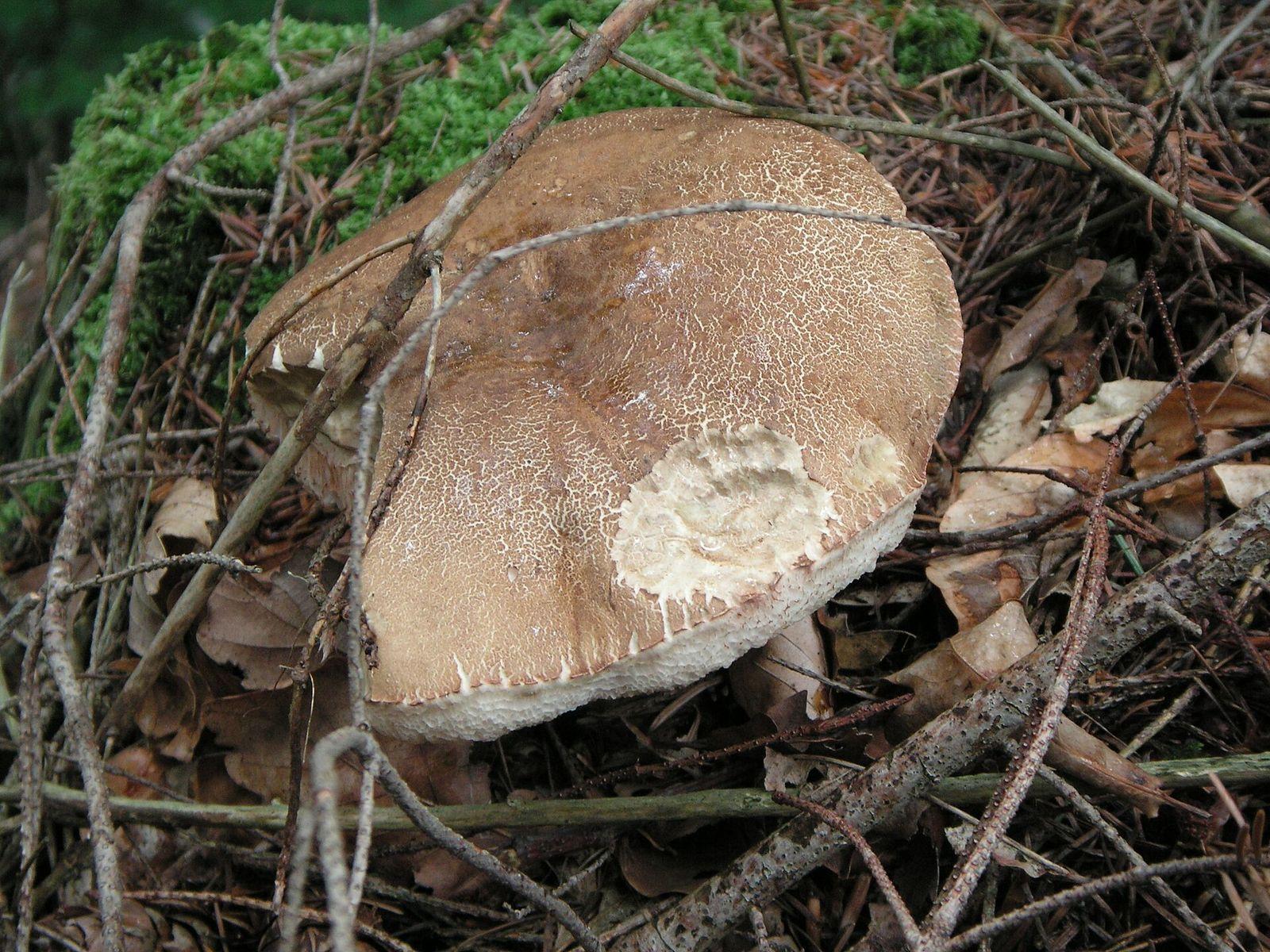
The tellA brown bolete with pinkish pores and a coarse, dark brown net on the stem.
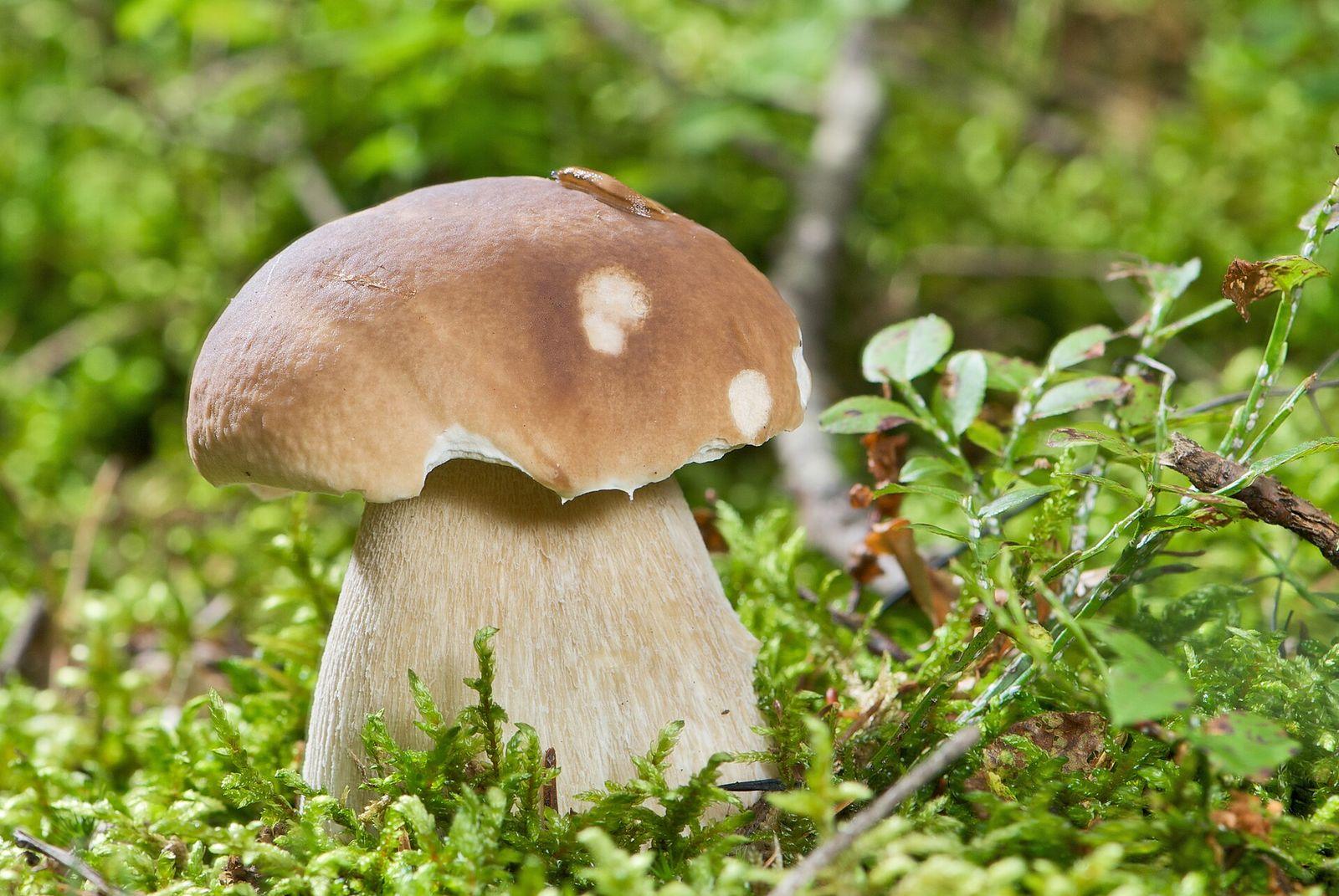
The tellA brown bun-shaped cap over white to olive-yellow pores that do not bruise blue, on a fat stem with fine white netting near the top.
| Feature | Bitter Bolete | King Bolete |
|---|---|---|
| Pores | Bitter BoleteWhite at first, then pink to pinkish brown. | King BoleteWhite, then yellow to olive-yellow; never pink, not bruising blue. |
| Stem net | Bitter BoleteCoarse net, darker brown than the stem. | King BoleteFine white net, mostly on the upper stem. |
| Spore print | Bitter BoletePinkish to pinkish brown. | King BoleteOlive-brown. |
| Taste recorded in field guides | Bitter BoleteExtremely bitter, which sets it apart from most other boletes. | King BoleteNot bitter. |
| Habitat | Bitter BoleteHardwood and mixed forests, often with hemlock, and near very rotted stumps. | King BoleteUnder spruce, pine, fir and hemlock, and with some hardwoods. |
| Range | Bitter BoleteEastern North America, east of the Rocky Mountains. | King BoleteNorthern North America and the western mountains, with related king boletes elsewhere. |
FAQ
It is not recorded as seriously toxic. Field guides list it as inedible because of its extreme bitterness.
Pink pores and a coarse, dark brown net on the stem mean bitter bolete. White to olive-yellow pores and a fine white net near the top of the stem mean king bolete.
Usually, if the pores and stem are both in the picture. Young specimens of both have white pores, and those are hard to separate from a photo.
Sources
MushroomExpert.com
MushroomExpert.com
Missouri Department of Conservation
Beaty Biodiversity Museum, University of British Columbia
Keep checking
This page states what field guides record. It is not advice to eat, taste or handle anything, and a photo cannot settle edibility. If someone has eaten a wild mushroom that may be toxic, call poison control (1-800-222-1222 in the US) right away, before symptoms start: the deadliest species act hours later.
Waitlist
We will send one email when Mushrooms.id opens, and nothing else.
This opens your email app with the request written for you. Send it and we add you to the list. No email app? Write to hello@mushrooms.id with the subject “Add me to the Mushrooms.id waitlist”.