Edible
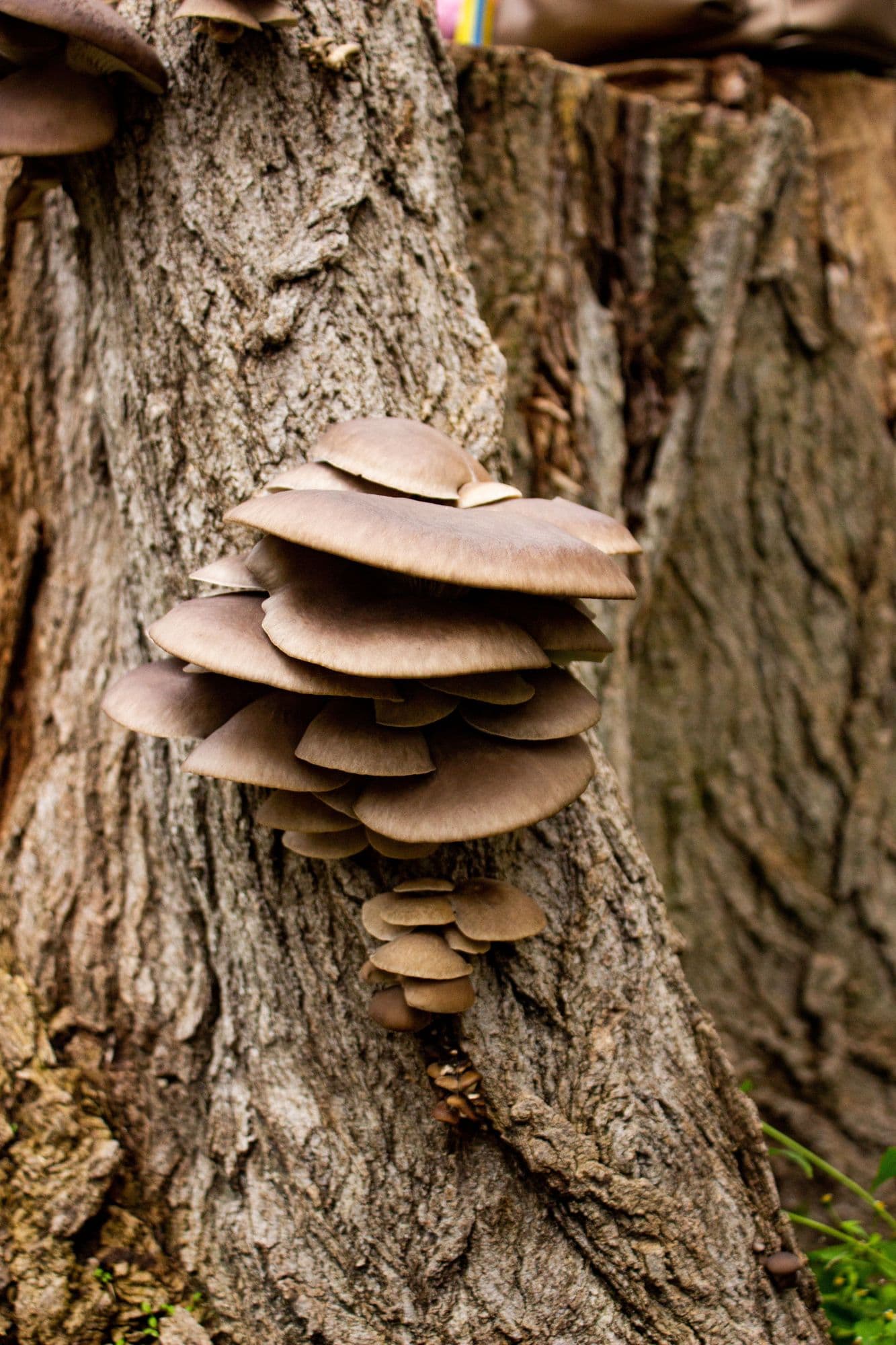
Oyster Mushroom
Pleurotus ostreatus
Oyster mushrooms are thicker and fleshier, white to gray or tan, and grow mostly on hardwoods.
Pleurocybella porrigens
Also called angel's wings.
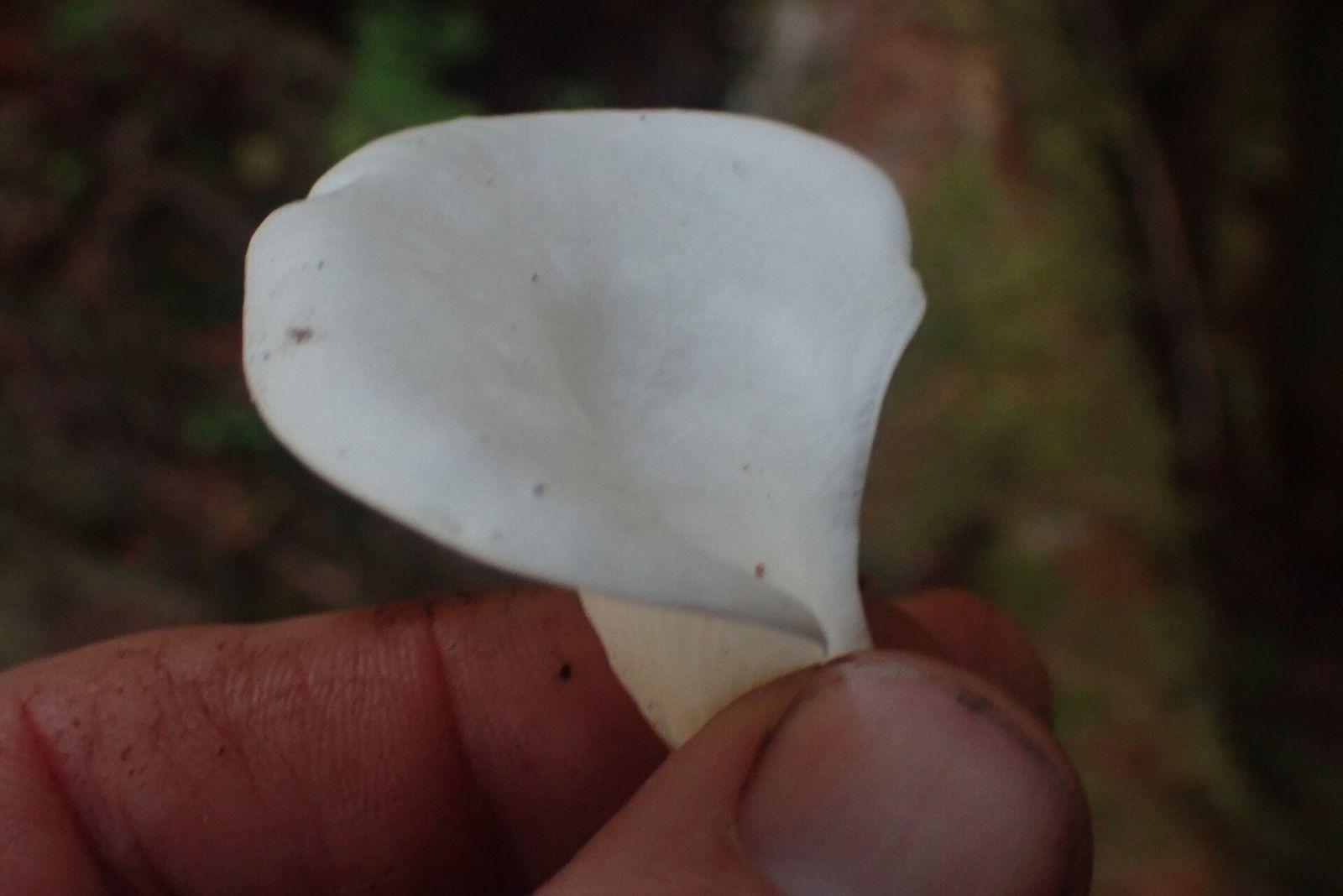
Angel wings is a thin, pure white, fan-shaped mushroom that grows in overlapping groups on rotting conifer logs, especially hemlock. Once listed as edible, it was linked to a 2004 outbreak of fatal brain illness in Japan, mostly among people with kidney disease.
The tell
Thin, pure white, fan-shaped caps in overlapping groups on dead conifer wood.
Field marks
Cap, underside and stem show in a photo. The spore print does not, and it is often the deciding check.
Where and when
Lookalikes
Each card says how to tell the two apart.
Pleurotus ostreatus
Oyster mushrooms are thicker and fleshier, white to gray or tan, and grow mostly on hardwoods.
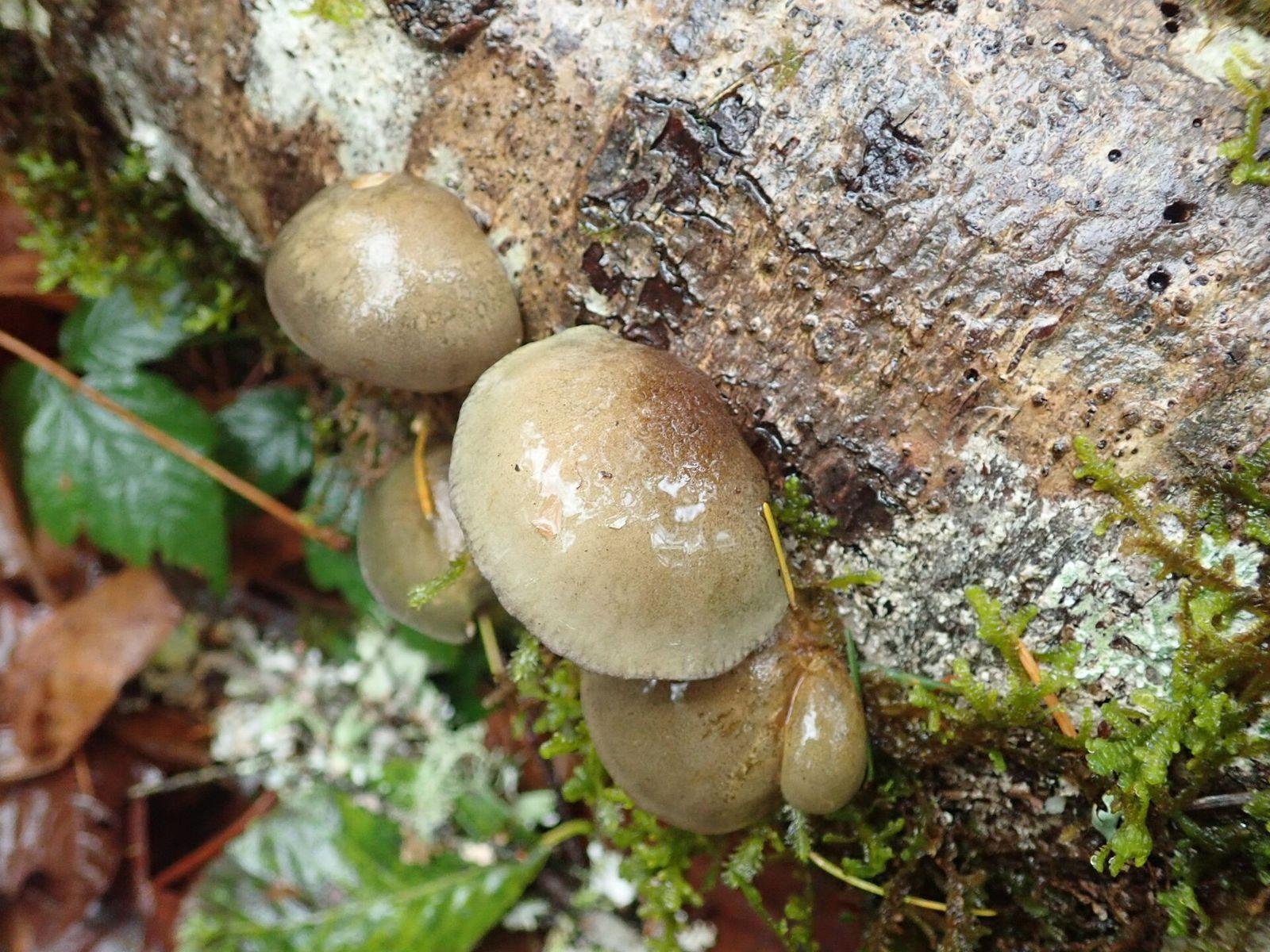
Sarcomyxa serotina
Greenish to olive-brown, with a gelatinous layer under the cap skin and yellowish gills.
Small white to brownish shelf mushrooms on wood whose gills turn brown with age; they give a brown spore print instead of white.
Edibility
Older North American field guides listed angel wings as edible. In 2004 eating it was linked to an outbreak of acute encephalopathy, a brain illness, in Japan that killed more than a dozen people, most with chronic kidney disease. Current guides list it as poisonous. The responsible compound has not been confirmed.
This page states what field guides record. It is not advice to eat, taste or handle anything, and a photo cannot settle edibility. If someone has eaten a wild mushroom that may be toxic, call poison control (1-800-222-1222 in the US) right away, before symptoms start: the deadliest species act hours later.
FAQ
Current field guides list Pleurocybella porrigens as poisonous. In 2004 it was linked to an outbreak of acute encephalopathy in Japan that killed more than a dozen people, most with kidney disease. Older guides listed it as edible.
Angel wings are pure white, thin and small, usually under 4 inches, and grow on rotting conifer wood, especially hemlock. Oyster mushrooms are thicker and fleshier, often gray or tan, and grow mostly on hardwoods.
In overlapping groups on rotting conifer logs and stumps, especially hemlock, from late summer to fall. They are found in northern and western North America, including the Pacific Northwest, the Great Lakes region and the Northeast.
Sources
Fungi Growing on Wood, Gary Emberger (MushroomExpert.com)
Beaty Biodiversity Museum, University of British Columbia
Index Fungorum
Waitlist
We will send one email when Mushrooms.id opens, and nothing else.
This opens your email app with the request written for you. Send it and we add you to the list. No email app? Write to hello@mushrooms.id with the subject “Add me to the Mushrooms.id waitlist”.