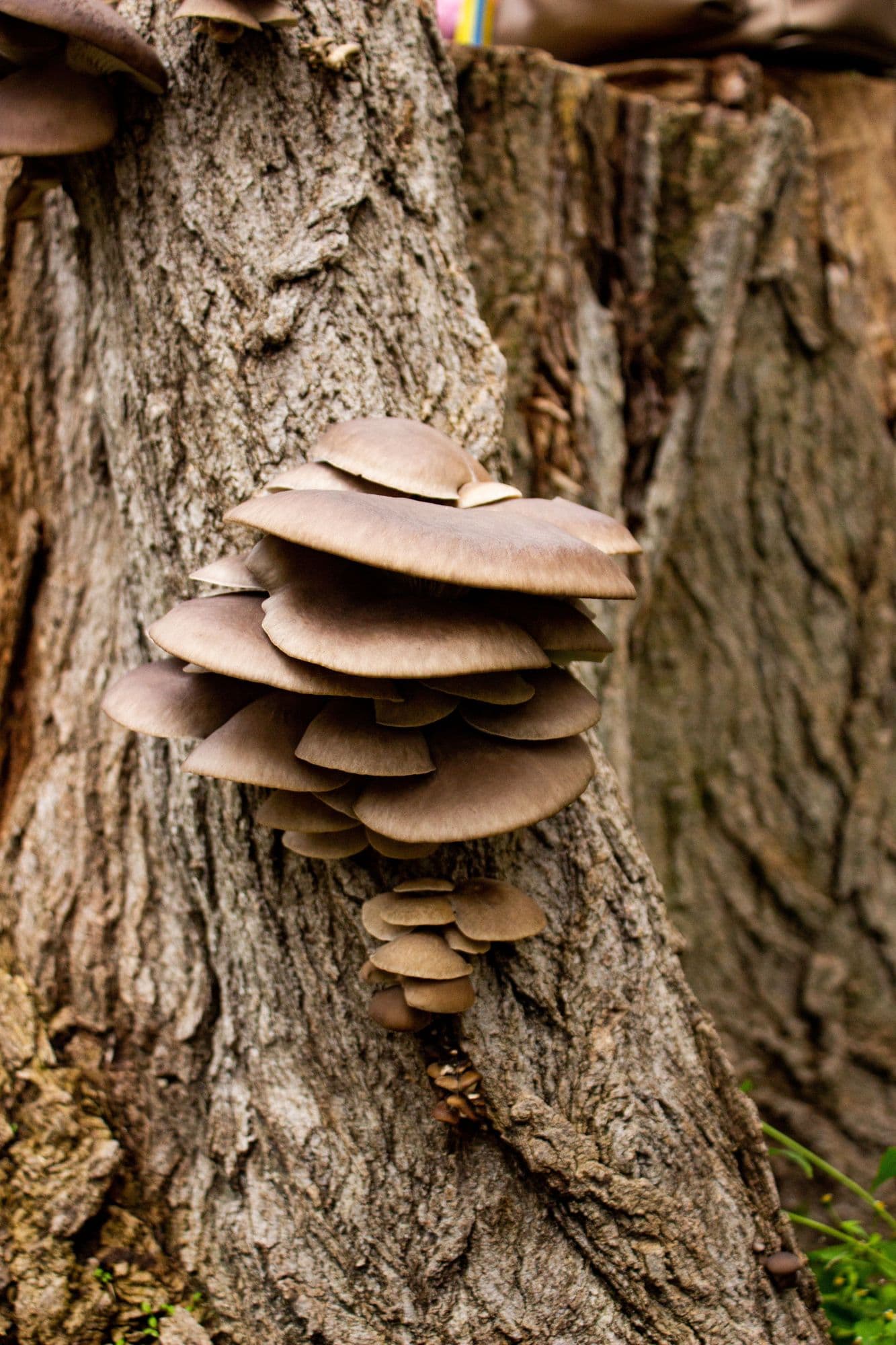
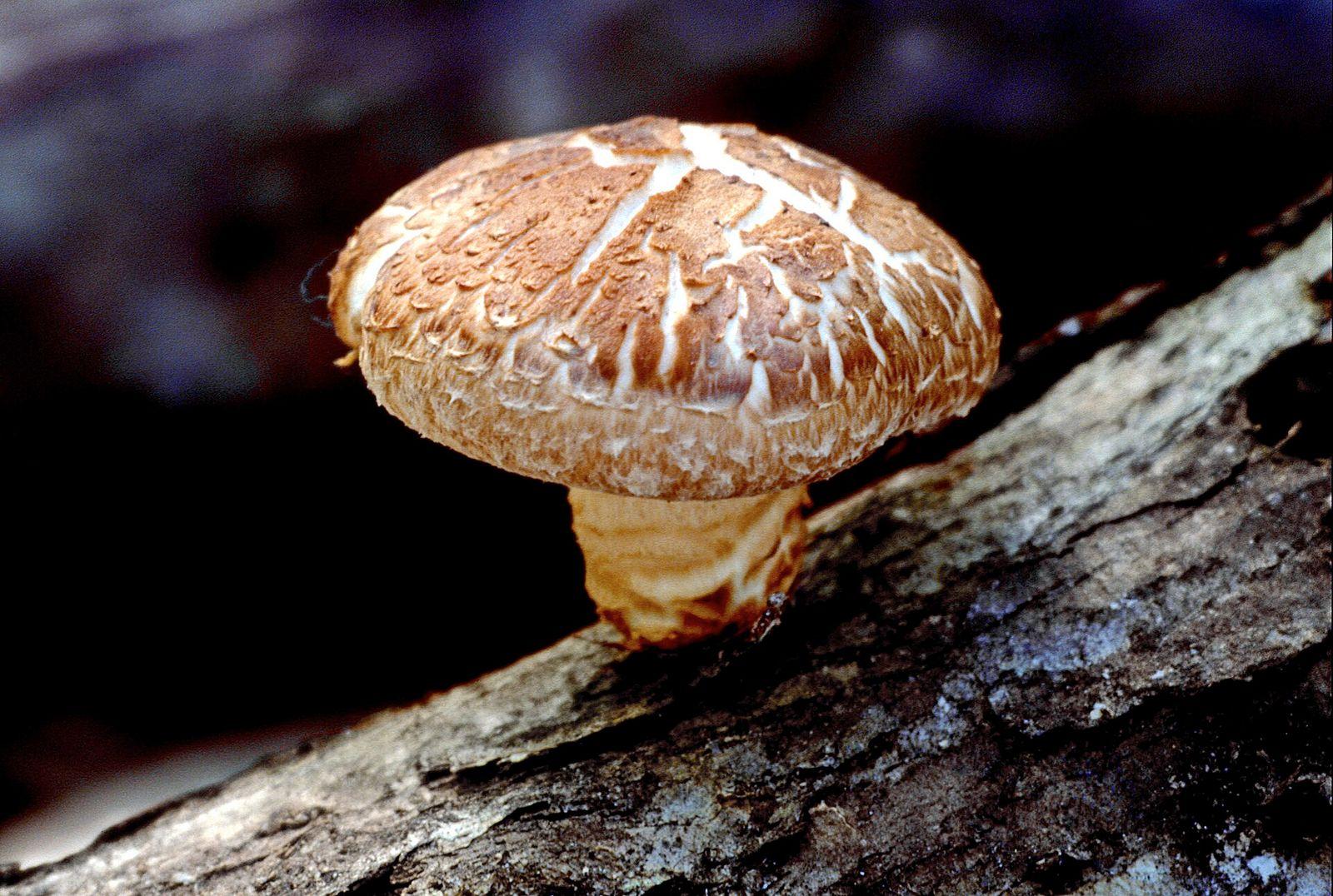
Oyster mushroom vs shiitake
Shiitake has a distinct tough stem and gills that stop at it. Oyster mushrooms grow in shelves with little or no stem and gills running down.
Quick answer
Angel wings grow on rotting conifer wood, especially hemlock, and the caps are pure white and so thin they look almost translucent; oyster mushrooms grow mostly on hardwoods and are thicker and fleshier, often gray, tan or brownish. Angel wings print white and oysters print white to pale lilac-gray.
Toxic lookalike
Angel wings (Pleurocybella porrigens) was once listed as edible. In 2004 in Japan, 59 people who had eaten it developed brain damage (acute encephalopathy) and 19 died, most of them older people with kidney disease, according to the University of British Columbia's Mushrooms Up! guide. Symptoms began anywhere from 1 to 31 days after eating it, with difficulty moving, muscle spasms and later convulsions. The toxin has not been confirmed; a 2015 study in Food Safety proposed cyanide and thiocyanate intoxication.
If someone has eaten a wild mushroom and feels unwell, or may have eaten one of these, call poison control now: 1-800-222-1222 in the US. Do not wait for symptoms.
Side by side
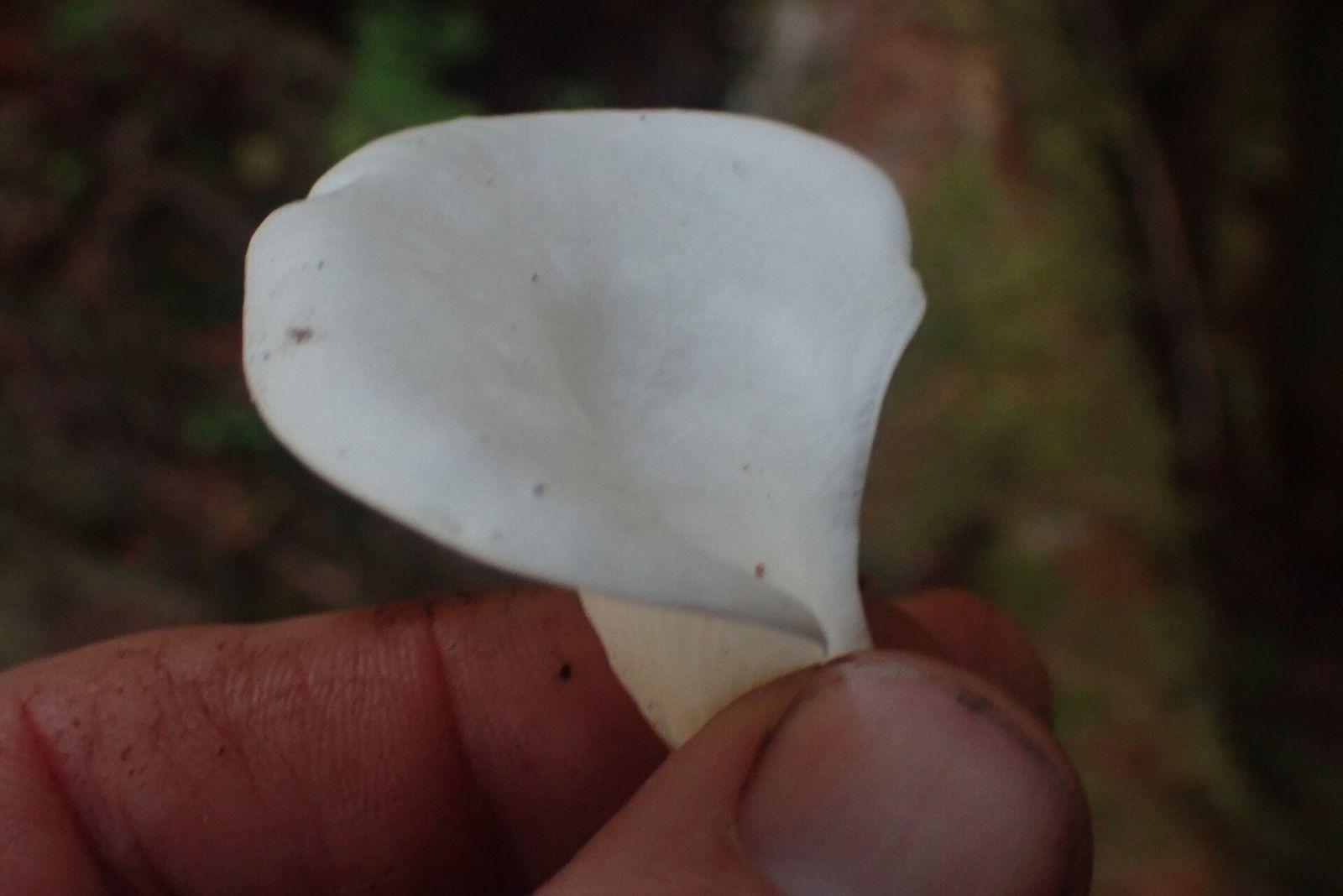
The tellThin, pure white, fan-shaped caps in overlapping groups on dead conifer wood.
The tellFan-shaped caps in overlapping shelves on dead hardwood, with white gills running down to a short stub of a stem.
| Feature | Angel Wings | Oyster Mushroom |
|---|---|---|
| Wood | Angel WingsRotting conifer logs and stumps, especially hemlock. | Oyster MushroomDead and dying hardwoods: aspen, poplar, beech, maple and oak. |
| Flesh | Angel WingsVery thin and pliable, nearly translucent. | Oyster MushroomThick and soft. |
| Cap color | Angel WingsPure white, sometimes cream with age. | Oyster MushroomWhite to gray, tan or brownish, often darker in cold weather. |
| Cap size | Angel Wings1 to 4 inches (2.5 to 10 cm). | Oyster Mushroom2 to 8 inches (5 to 20 cm). |
| Stem | Angel WingsAbsent, or a tiny stub. | Oyster MushroomA short, stubby, off-center stem, often hairy at the base, or none. |
| Season | Angel WingsLate summer to fall. | Oyster MushroomMostly fall through spring in cool weather, but any month. |
| Spore print | Angel WingsWhite. | Oyster MushroomWhite to pale lilac-gray. |
FAQ
Current guides list them as poisonous. In 2004 in Japan, 59 people became ill and 19 died after eating them, most with kidney disease. The toxin has not been confirmed.
Angel wings are pure white, paper-thin and grow on conifer wood. Oyster mushrooms are rarely pure white, are thicker and fleshier, and grow mostly on hardwoods.
Not reliably. Thickness and the kind of wood are the main clues, and a photo shows neither well. A white oyster seen from above can look much like angel wings.
Sources
Beaty Biodiversity Museum, University of British Columbia
MushroomExpert.com
First Nature
Food Safety (Food Safety Commission of Japan), J-STAGE
Keep checking
This page states what field guides record. It is not advice to eat, taste or handle anything, and a photo cannot settle edibility. If someone has eaten a wild mushroom that may be toxic, call poison control (1-800-222-1222 in the US) right away, before symptoms start: the deadliest species act hours later.
More comparisons
Shiitake has a distinct tough stem and gills that stop at it. Oyster mushrooms grow in shelves with little or no stem and gills running down.
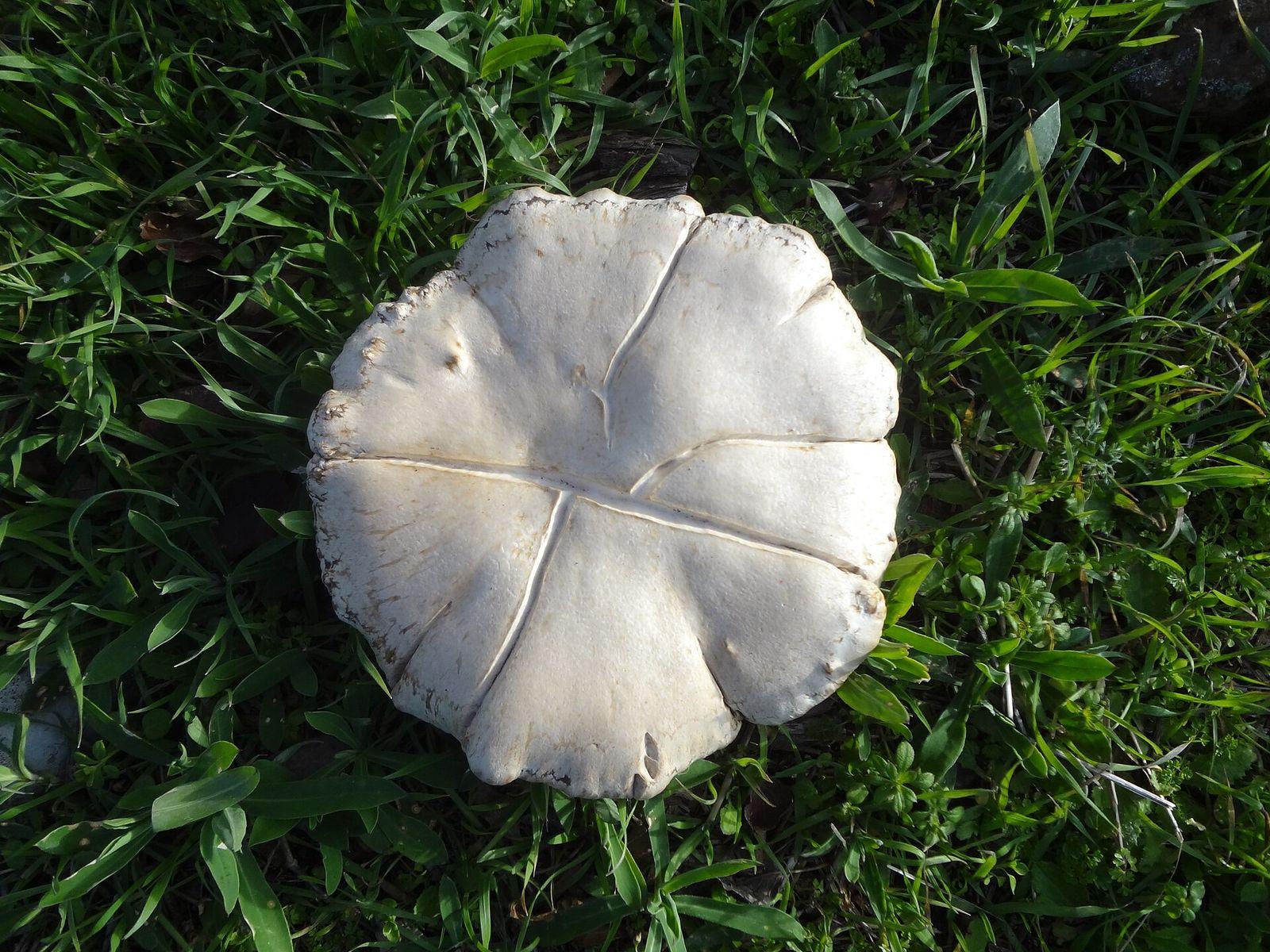
King oysters have a thick white stem bigger than the cap. Common oyster mushrooms grow in shelves on wood with little or no stem.
Hypsizygus ulmarius
Photo coming
Elm oysters have a distinct stem and gills that stop at it. Oyster mushrooms grow in shelves with gills running down to the attachment.
Waitlist
We will send one email when Mushrooms.id opens, and nothing else.
This opens your email app with the request written for you. Send it and we add you to the list. No email app? Write to hello@mushrooms.id with the subject “Add me to the Mushrooms.id waitlist”.