Edible
Fairy Ring Mushroom
Marasmius oreades
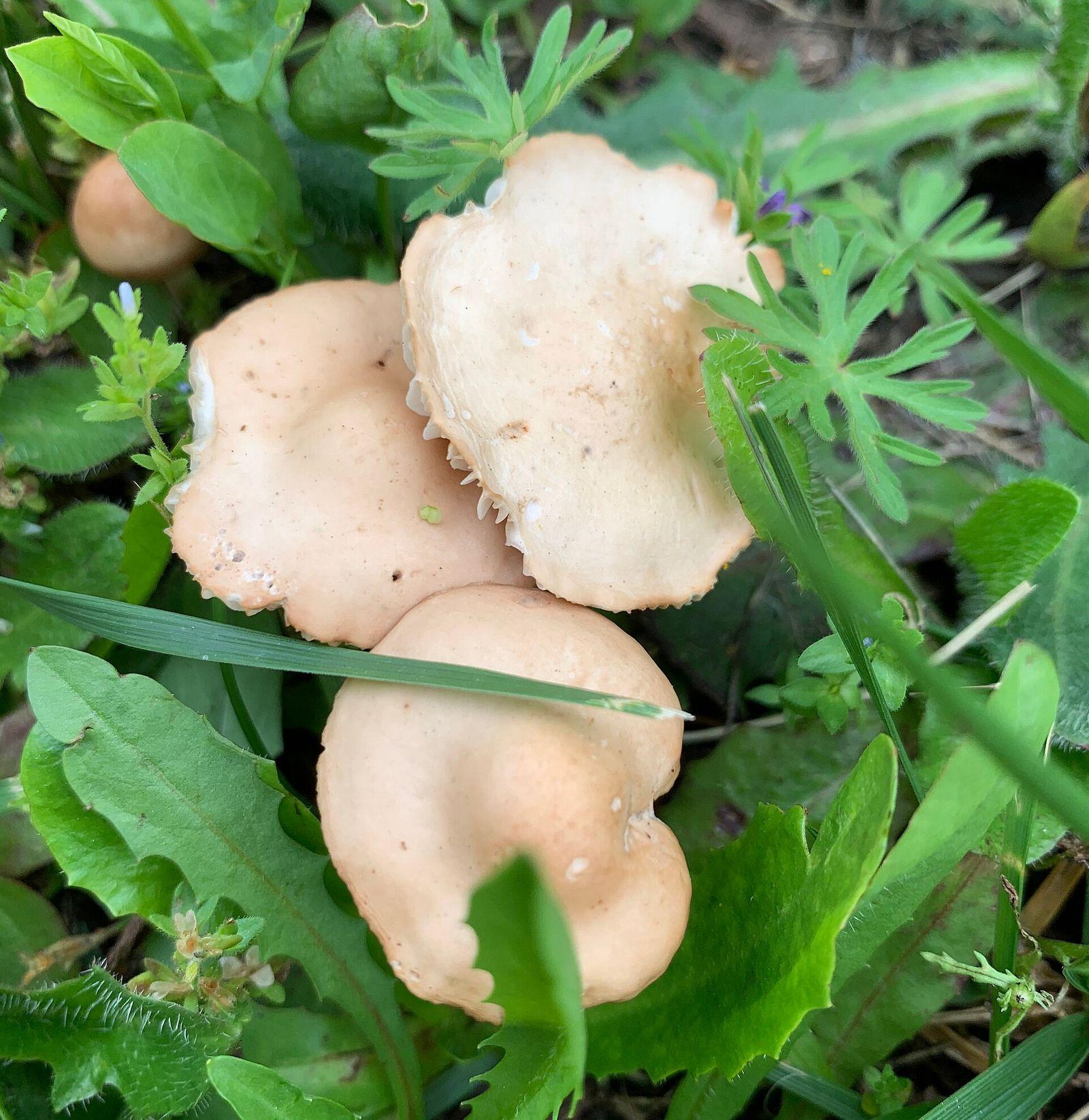
Fairy ring mushrooms have a smooth tan cap without scales, widely spaced gills attached to the stem, a tough stem and no ring zone. They grow in rings in grass.
Lepiota subincarnata
Also called lepiota josserandii.
The deadly dapperling is a small Lepiota with a pale cap covered in pinkish brown scales. It contains amatoxins, the same toxins as the death cap. It is one of several small lepiotas that turn up in lawns, gardens and woodland edges and are hard to tell apart.
Lepiota subincarnata
Photo coming
The tell
Small pale cap broken into concentric pinkish brown scales, white free gills, and a white spore print.
Field marks
Cap, underside and stem show in a photo. The spore print does not, and it is often the deciding check.
Where and when
Lookalikes
Each card says how to tell the two apart.
Marasmius oreades
Fairy ring mushrooms have a smooth tan cap without scales, widely spaced gills attached to the stem, a tough stem and no ring zone. They grow in rings in grass.
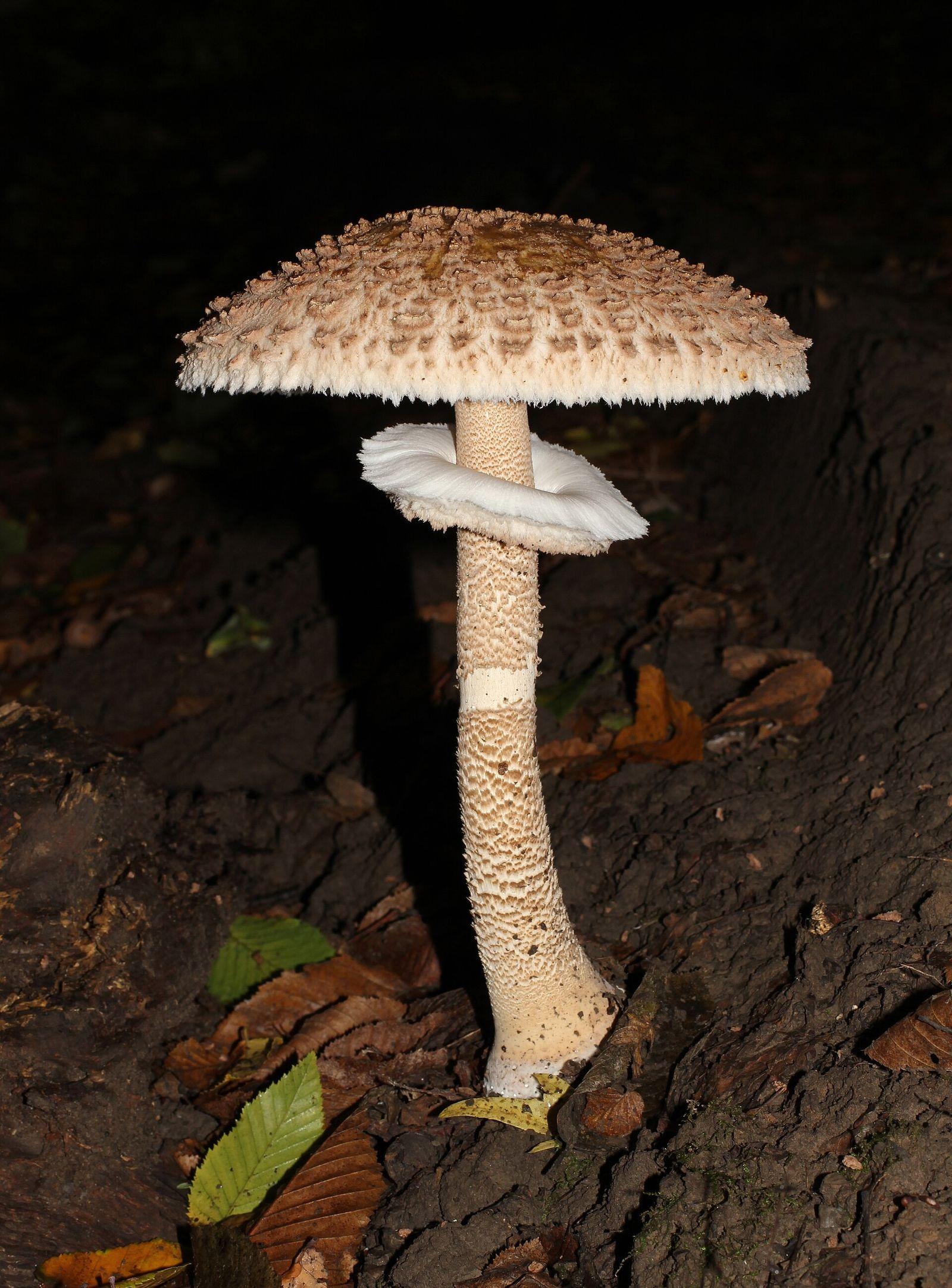
Macrolepiota procera
Parasols are much larger, with a tall snakeskin-patterned stem and a thick movable ring. Small lepiotas are rarely more than 2 inches across.
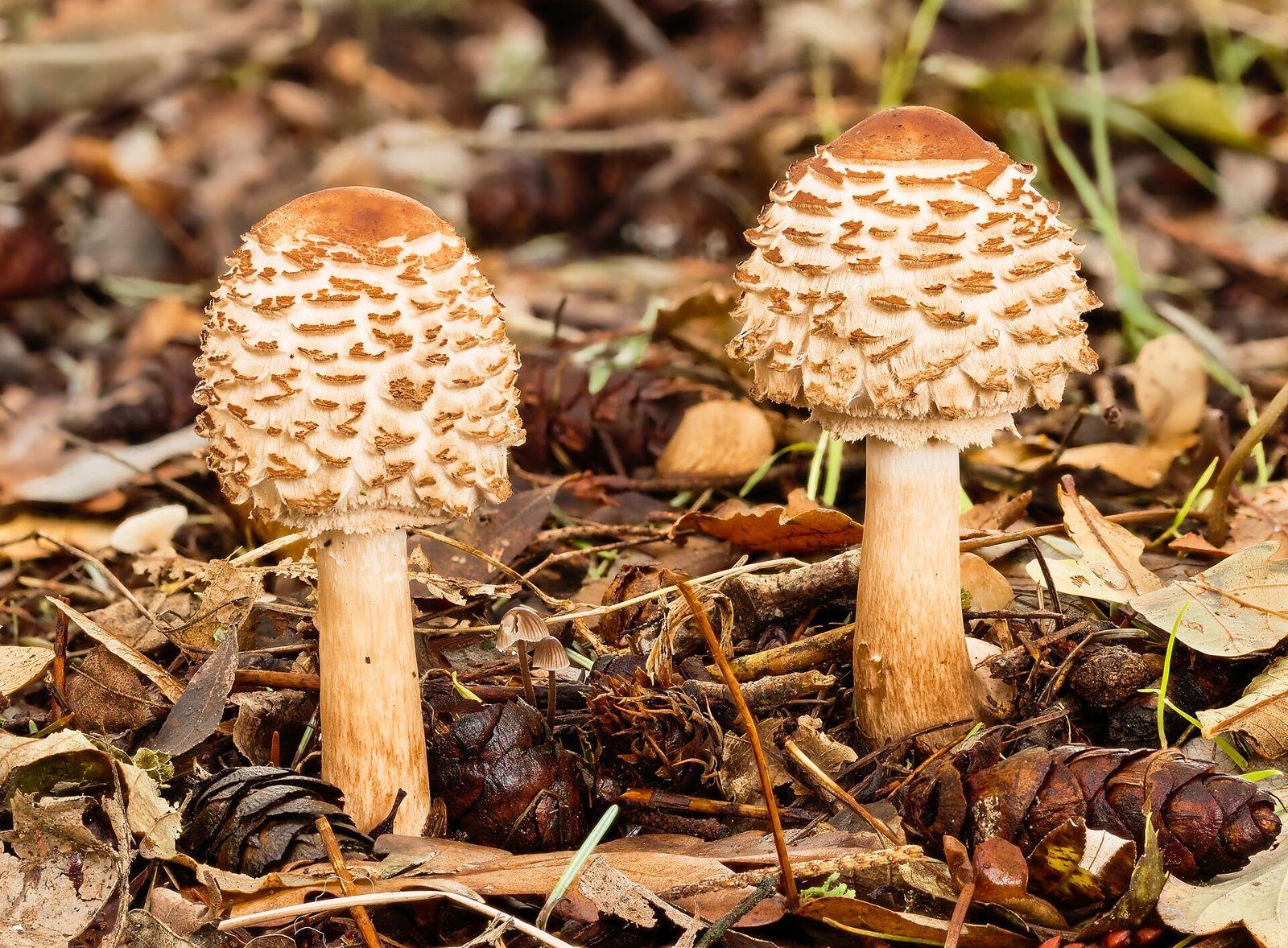
Chlorophyllum rhacodes
Shaggy parasols are much larger, with a thick double-edged ring and flesh that turns orange to reddish when cut.
Edibility
The deadly dapperling contains amatoxins, the same toxins found in the death cap. They shut down protein production in liver and kidney cells. Symptoms usually begin 6 to 24 hours after the meal with severe vomiting and diarrhea, followed by liver and kidney failure. Several small Lepiota species contain amatoxins; field guides treat the small scaly lepiotas as a deadly group.
This page states what field guides record. It is not advice to eat, taste or handle anything, and a photo cannot settle edibility. If someone has eaten a wild mushroom that may be toxic, call poison control (1-800-222-1222 in the US) right away, before symptoms start: the deadliest species act hours later.
FAQ
Yes, it is deadly. It contains amatoxins, the same toxins as the death cap, which destroy liver and kidney cells. Symptoms are delayed by several hours after eating.
It is a small mushroom with a pale cap covered in pinkish brown scales arranged in rings around a darker center. It has white gills, a scaly stem with a faint ring zone, and a white spore print.
Several small Lepiota species contain amatoxins, including this one. They are hard to separate from each other without a microscope, so field guides treat the small scaly lepiotas as deadly as a group.
Sources
Beaty Biodiversity Museum, University of British Columbia
MykoWeb, California Fungi
Index Fungorum
Waitlist
We will send one email when Mushrooms.id opens, and nothing else.
This opens your email app with the request written for you. Send it and we add you to the list. No email app? Write to hello@mushrooms.id with the subject “Add me to the Mushrooms.id waitlist”.