Green-Spored Parasol
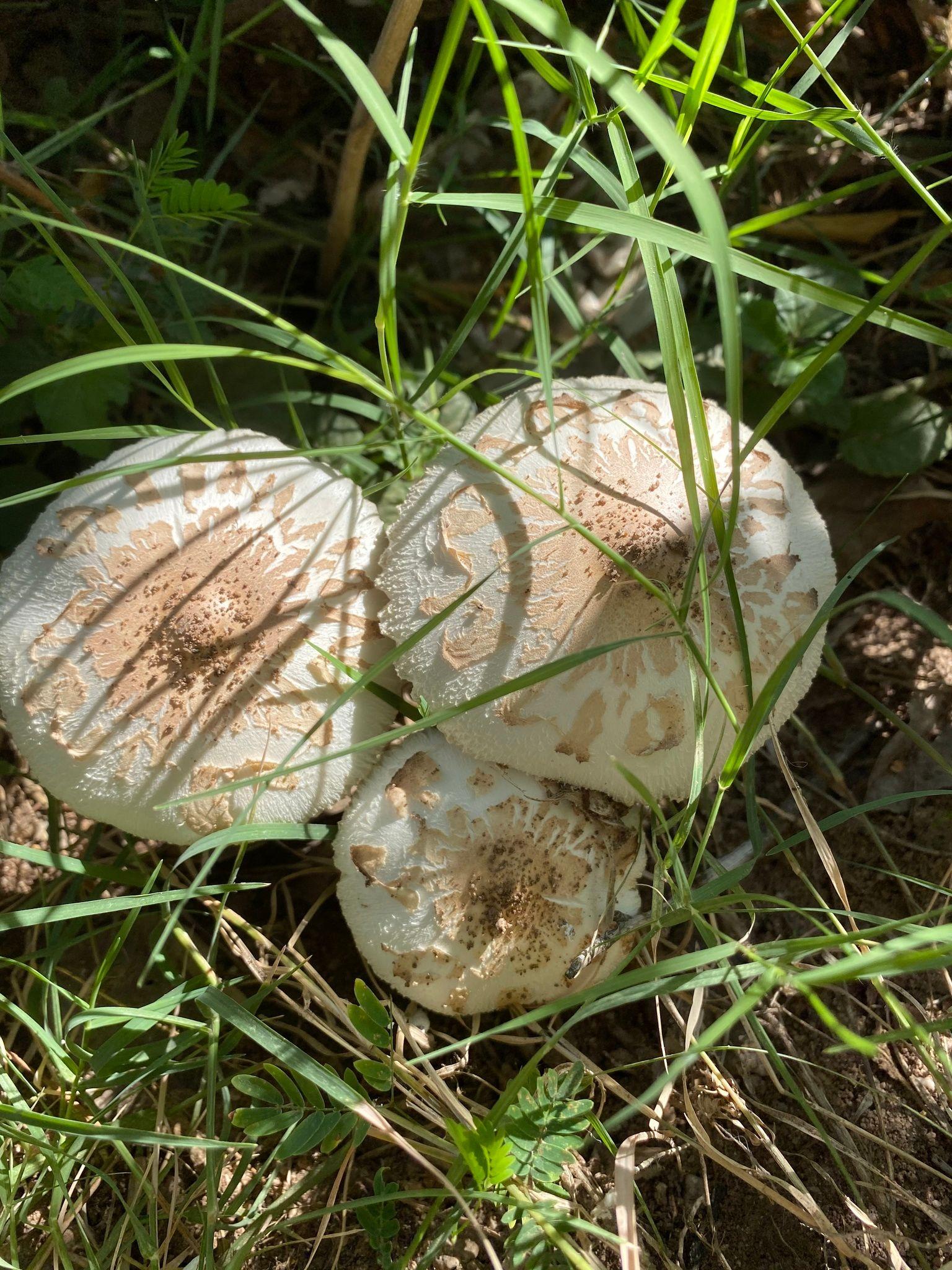
Chlorophyllum molybdites
The green-spored parasol has a smooth white stem without a snakeskin pattern, gills that turn gray-green, and a green spore print. It is the species most often named in North American poisoning reports.
Macrolepiota procera
Also called parasol, lepiota procera.
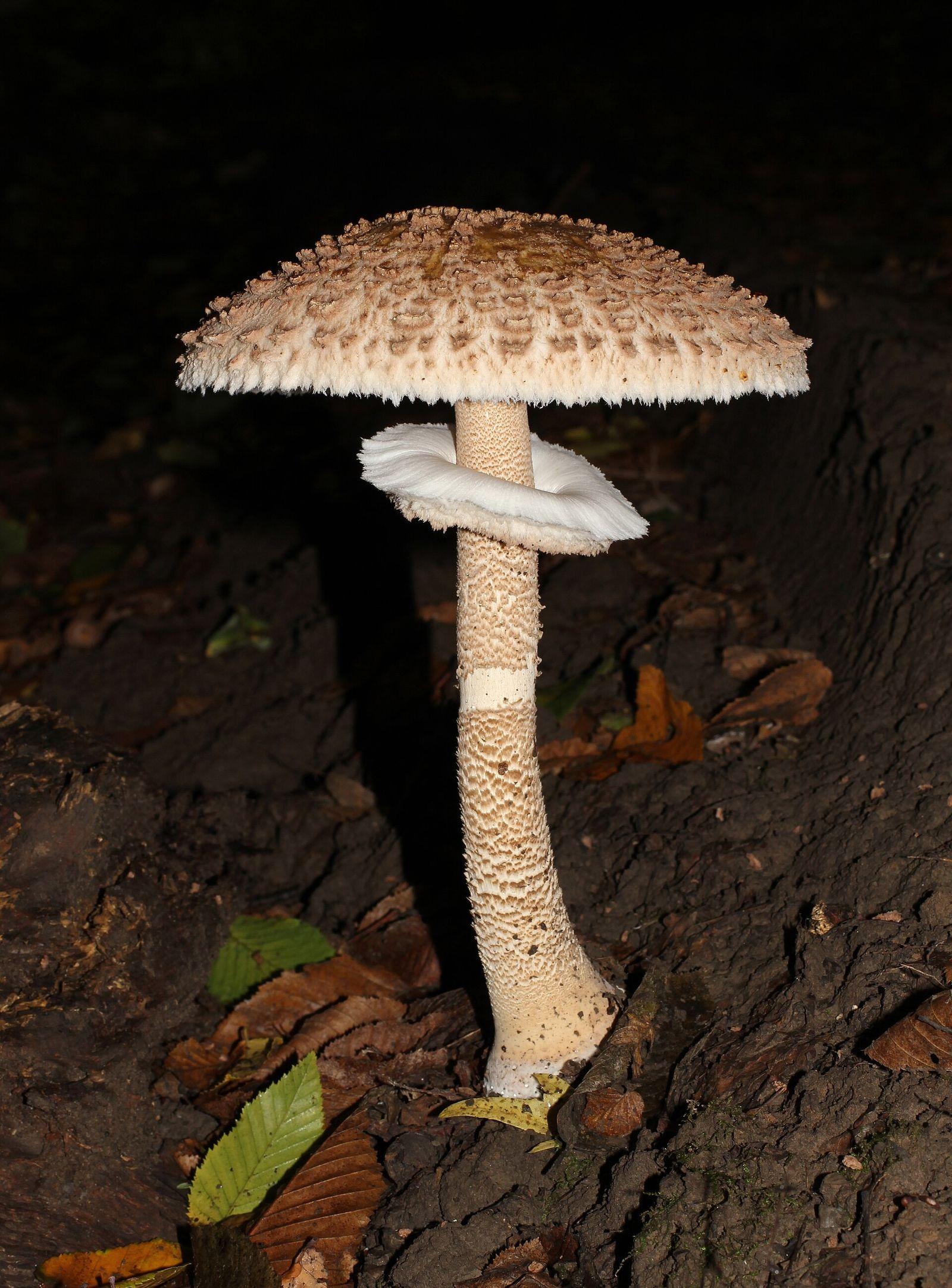
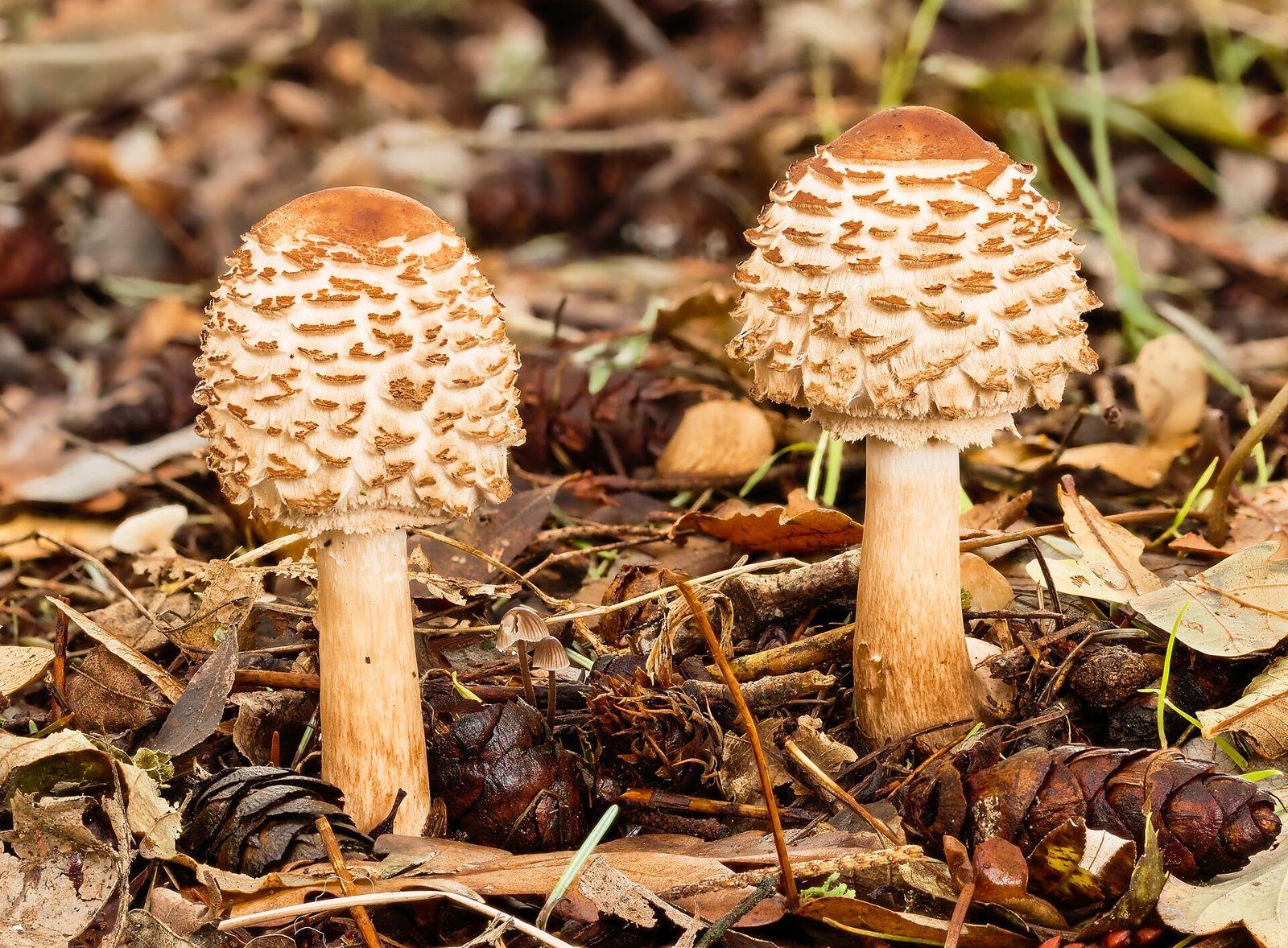
The parasol mushroom is a tall, slender mushroom with a broad brown-scaled cap and a snakeskin-patterned stem. It grows in open woods, pastures and field edges in summer and fall. Its most dangerous confusions are the green-spored parasol and the small deadly lepiotas.

The tell
Tall, slender stem with a brown snakeskin pattern, a broad scaly cap with a dark central bump, and a thick movable ring.
Field marks
Cap, underside and stem show in a photo. The spore print does not, and it is often the deciding check.
Where and when
Lookalikes
Each card says how to tell the two apart.

Chlorophyllum molybdites
The green-spored parasol has a smooth white stem without a snakeskin pattern, gills that turn gray-green, and a green spore print. It is the species most often named in North American poisoning reports.
Lepiota subincarnata
Photo coming
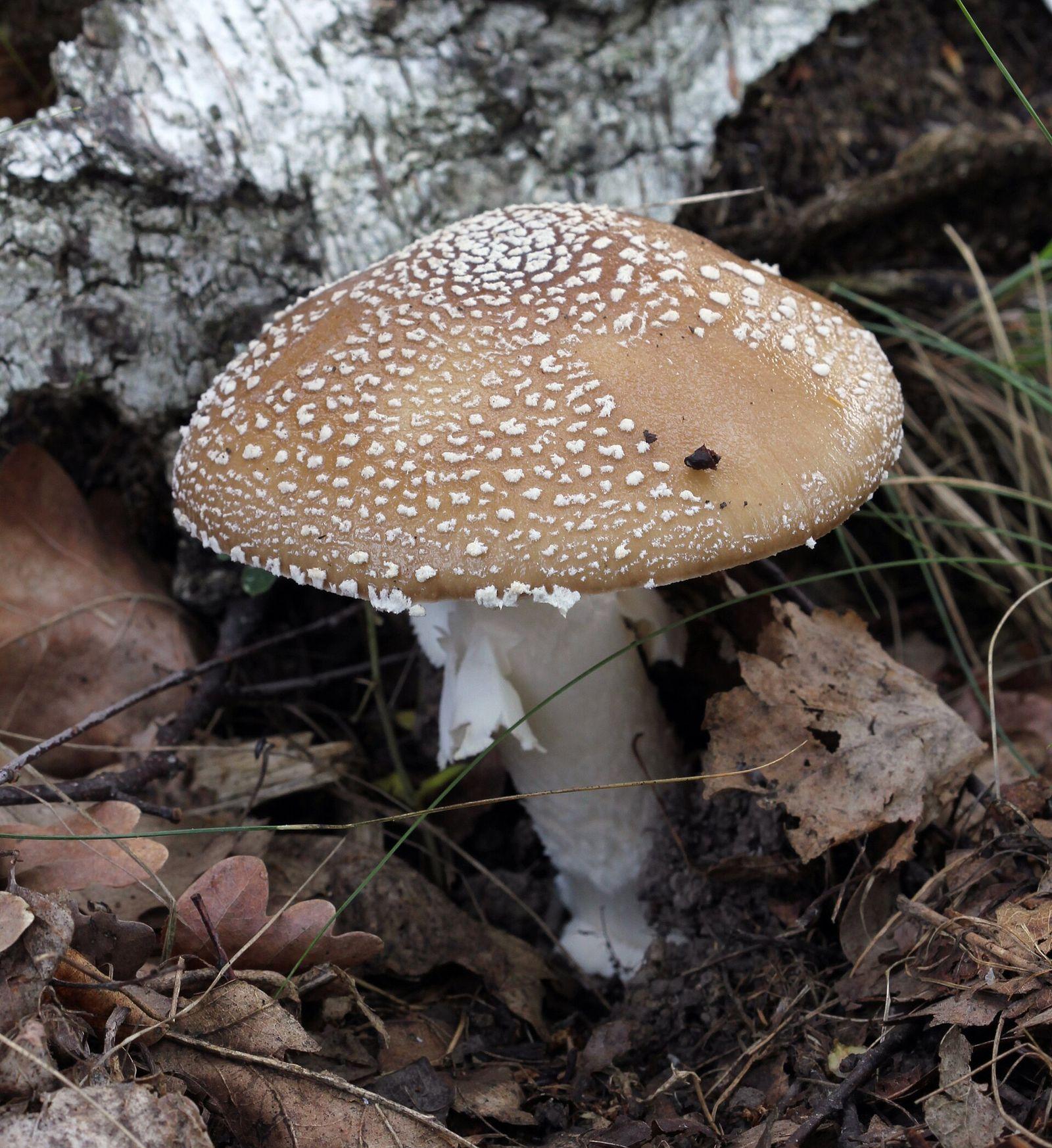
Lepiota subincarnata
Several small Lepiota species contain amatoxins. They are rarely more than 2 inches across and lack the parasol's tall snakeskin stem and thick movable ring.

Chlorophyllum rhacodes
The shaggy parasol has a smooth stem with no snakeskin pattern, coarser shaggy scales, and flesh that turns orange to reddish when cut.

Amanita pantherina
The panther cap has white warts on a brown cap, a fixed ring, and a bulb with a rolled collar at the base. It contains ibotenic acid and muscimol.
Edibility
Field guides list the parasol mushroom as edible and well regarded. They also note its dangerous lookalikes: the green-spored parasol, which causes severe gastrointestinal poisoning, and small Lepiota species that contain amatoxins. A white spore print, a snakeskin-patterned stem and a large size separate the parasol from both.
This page states what field guides record. It is not advice to eat, taste or handle anything, and a photo cannot settle edibility. If someone has eaten a wild mushroom that may be toxic, call poison control (1-800-222-1222 in the US) right away, before symptoms start: the deadliest species act hours later.
FAQ
Field guides list it as edible. Its lookalikes include the green-spored parasol, the most common cause of mushroom poisoning in North America, and small lepiotas that contain amatoxins.
The parasol has a tall stem with a brown snakeskin pattern, gills that stay white, and a white spore print. The green-spored parasol has a smooth white stem, gills that turn gray-green, and a green spore print.
In open woods, woodland edges, pastures and grassy clearings in eastern North America. They usually appear alone or scattered from summer into fall.
Sources
MushroomExpert.com
Missouri Department of Conservation
Index Fungorum
Waitlist
We will send one email when Mushrooms.id opens, and nothing else.
This opens your email app with the request written for you. Send it and we add you to the list. No email app? Write to hello@mushrooms.id with the subject “Add me to the Mushrooms.id waitlist”.