Edible
Oyster Mushroom
Pleurotus ostreatus
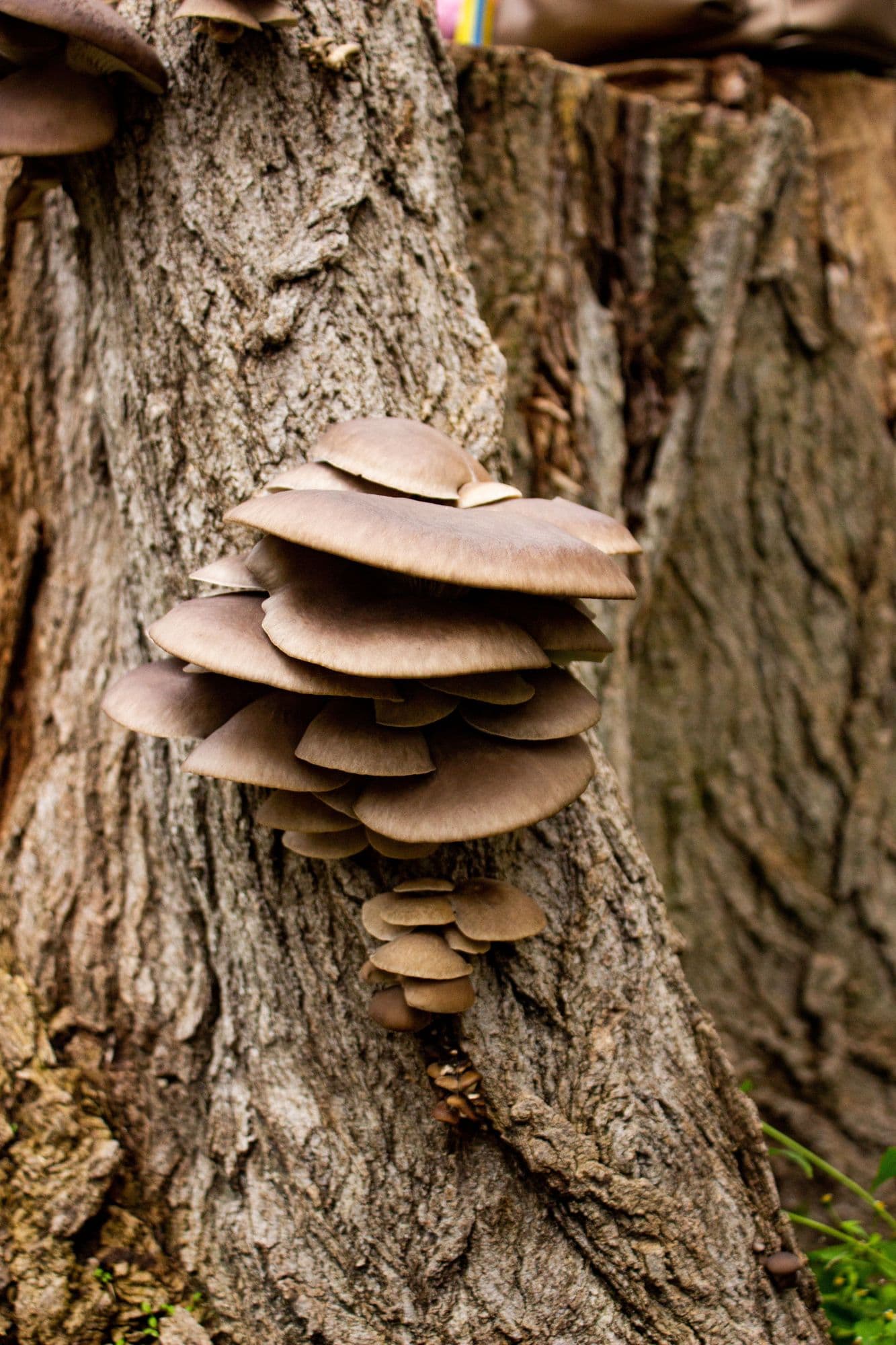
The common oyster grows in overlapping shelves on wood, with large caps and little or no stem.
Pleurotus eryngii
Also called king trumpet, french horn mushroom.
The king oyster is the largest oyster mushroom, known in North America as a cultivated grocery mushroom with a thick white stem and a small brown cap. In the wild it grows on the roots of sea holly and related plants in Mediterranean grasslands, and it is not native to North America.
The tell
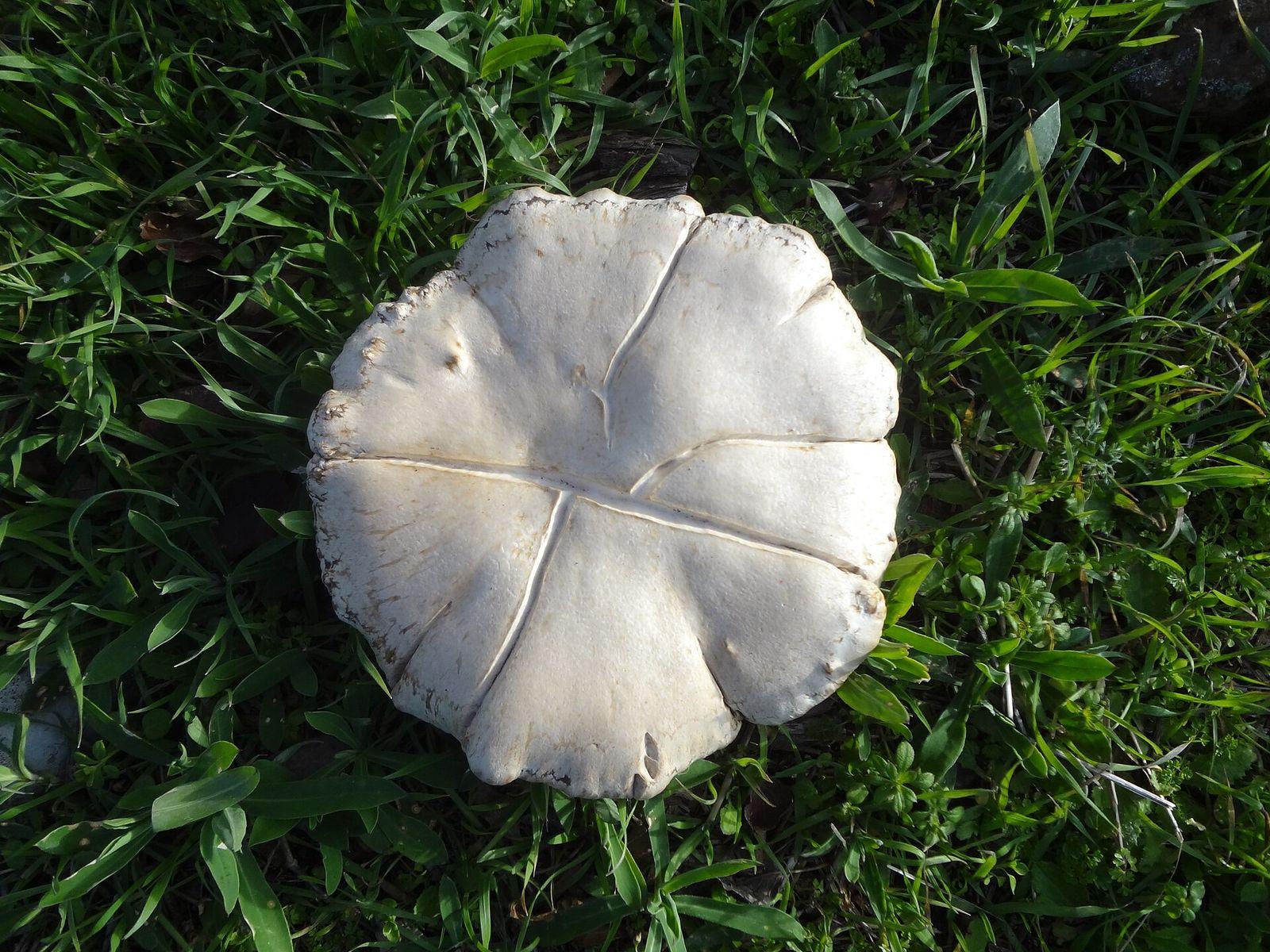
Thick white stem, much larger than its small brown cap, with gills running down the stem.
Field marks
Cap, underside and stem show in a photo. The spore print does not, and it is often the deciding check.
Where and when
Lookalikes
Each card says how to tell the two apart.
Pleurotus ostreatus
The common oyster grows in overlapping shelves on wood, with large caps and little or no stem.
Hypsizygus ulmarius
Photo coming
Hypsizygus ulmarius
Also has a distinct stem, but grows on hardwood trees, has a whitish cap, and its gills attach to the stem without running down it.
Edibility
The king oyster is grown commercially and sold as an edible mushroom across North America. North American field guides cover it little, because it is not a wild species here.
This page states what field guides record. It is not advice to eat, taste or handle anything, and a photo cannot settle edibility. If someone has eaten a wild mushroom that may be toxic, call poison control (1-800-222-1222 in the US) right away, before symptoms start: the deadliest species act hours later.
FAQ
Pleurotus eryngii, the largest species of oyster mushroom. In North American stores it is sold as a thick white stem with a small brown cap, and it is grown on sawdust and grain.
Standard North American field guides do not treat it as a wild species. It is native to Mediterranean Europe, North Africa and parts of Asia, where it grows on the roots of sea holly and related plants.
Both are Pleurotus species with gills that run down the stem. The king oyster has a thick, fleshy central stem and a small cap, while the common oyster grows in shelves on wood with large caps and little or no stem.
Sources
Naturalis Biodiversity Center
Italian Journal of Mycology
Index Fungorum
Waitlist
We will send one email when Mushrooms.id opens, and nothing else.
This opens your email app with the request written for you. Send it and we add you to the list. No email app? Write to hello@mushrooms.id with the subject “Add me to the Mushrooms.id waitlist”.