Edible
Oyster Mushroom
Pleurotus ostreatus
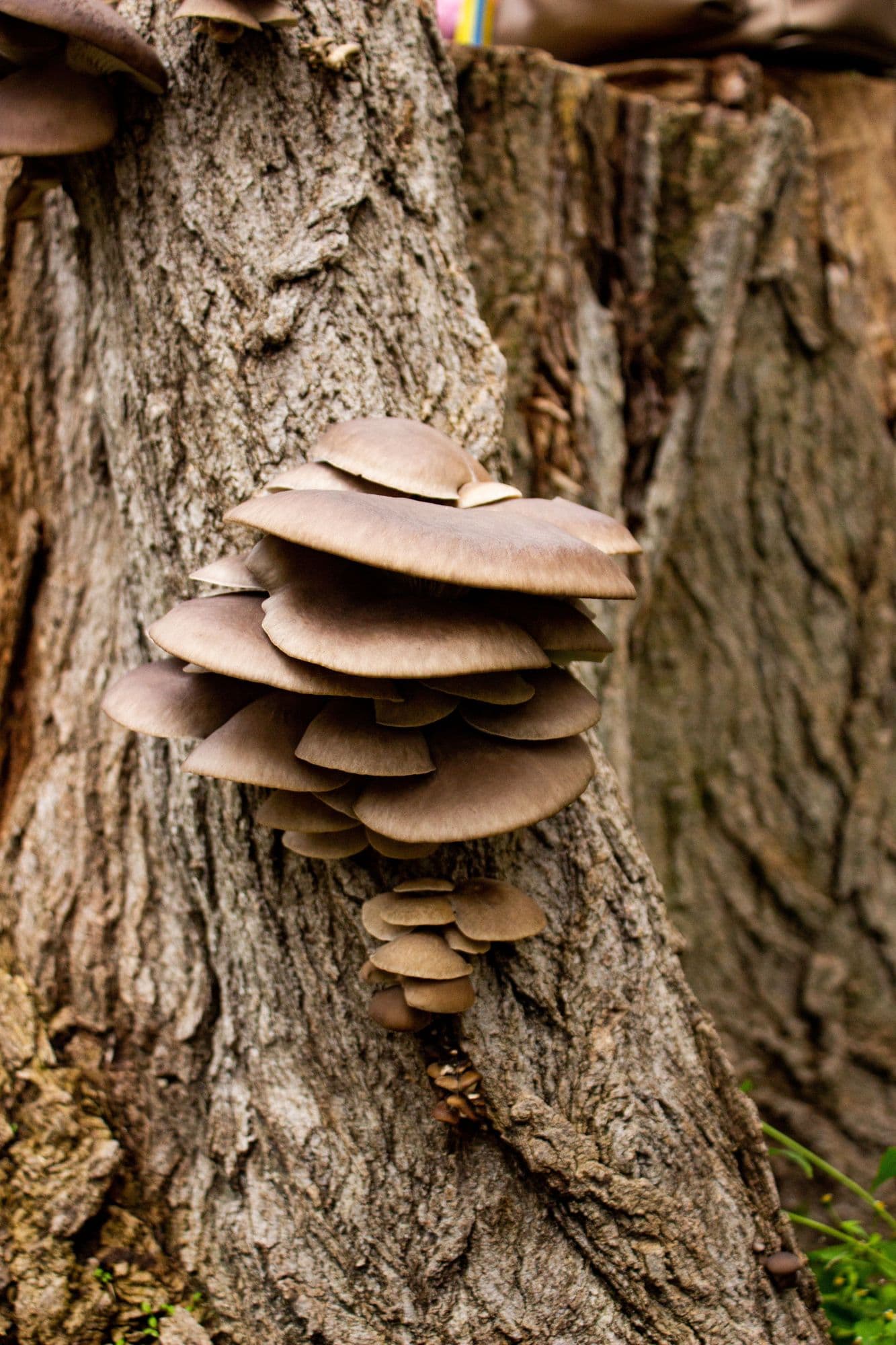
Oyster mushrooms grow in overlapping shelves with little or no stem, and their gills run down to the point of attachment.
Hypsizygus ulmarius
Also called elm leech.
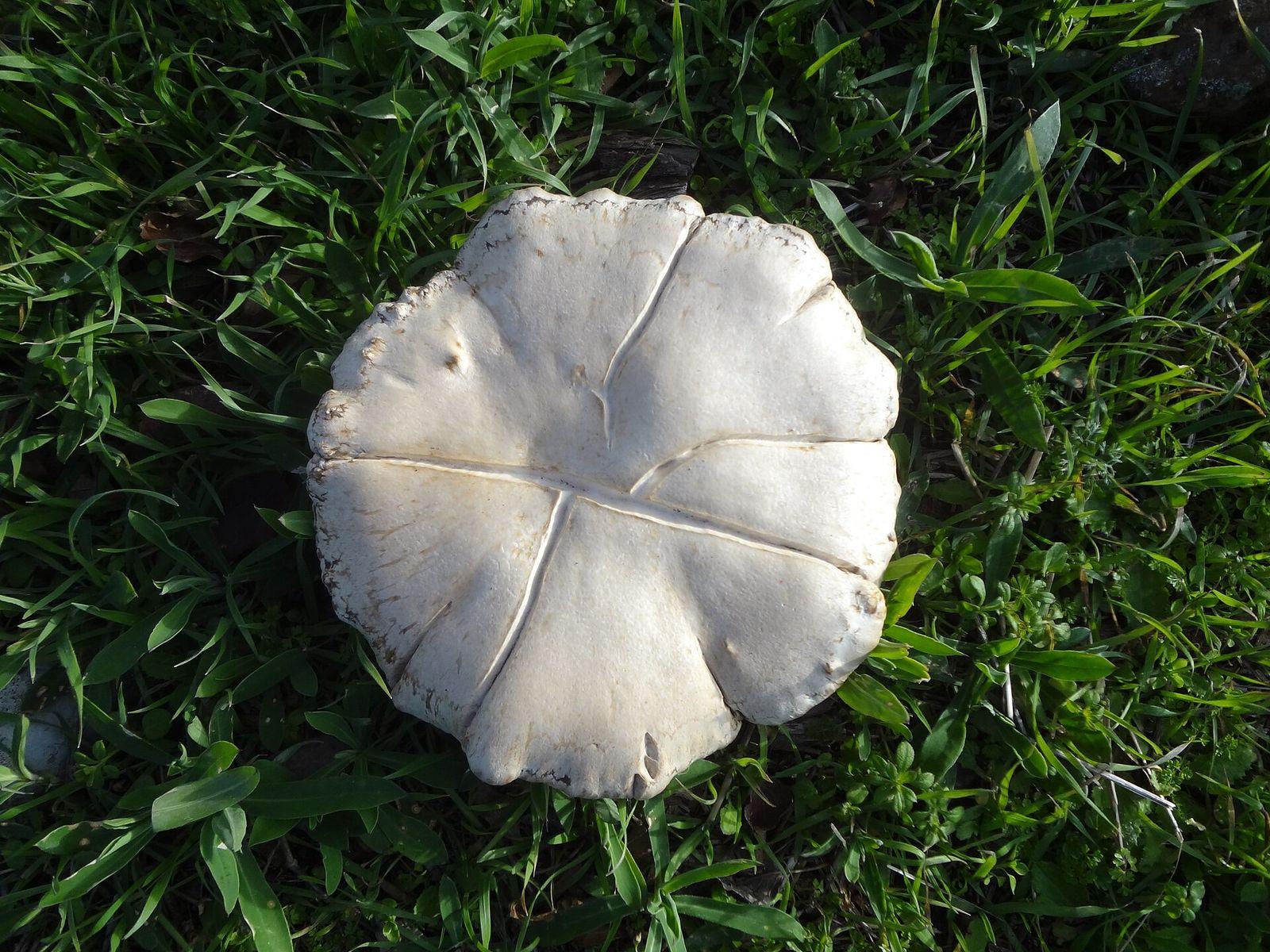
The elm oyster is a large, whitish to buff mushroom that grows from wounds on elms, box elders and other hardwoods, often high on the trunk, in fall. It resembles an oyster mushroom but has a real stem and gills that do not run down it.
Hypsizygus ulmarius
Photo coming
The tell
Large whitish cap with a distinct stem and gills that attach to it without running down.
Field marks
Cap, underside and stem show in a photo. The spore print does not, and it is often the deciding check.
Where and when
Lookalikes
Each card says how to tell the two apart.
Pleurotus ostreatus
Oyster mushrooms grow in overlapping shelves with little or no stem, and their gills run down to the point of attachment.
Has a cottony partial veil when young that leaves fragments on the cap edge, and its gills run down the stem.
Edibility
Field guides list the elm oyster as edible. A close relative, Hypsizygus tessulatus, is cultivated and sold as shimeji or beech mushroom.
This page states what field guides record. It is not advice to eat, taste or handle anything, and a photo cannot settle edibility. If someone has eaten a wild mushroom that may be toxic, call poison control (1-800-222-1222 in the US) right away, before symptoms start: the deadliest species act hours later.
FAQ
No. The elm oyster, Hypsizygus ulmarius, is in a different family from the true oyster mushrooms in the genus Pleurotus. It has a distinct stem and gills that attach to it without running down, while oyster mushrooms have little or no stem and gills that run down.
Field guides list it as edible. It is firmer than the true oyster mushroom, and a close relative is cultivated and sold as shimeji.
On wounds and dead wood of living or dead hardwoods, especially elm and box elder, often high on the trunk. They fruit from late summer into fall in forests, river bottoms, parks and on street trees.
Sources
MushroomExpert.com
Fungi Growing on Wood, Gary Emberger (MushroomExpert.com)
Index Fungorum
Waitlist
We will send one email when Mushrooms.id opens, and nothing else.
This opens your email app with the request written for you. Send it and we add you to the list. No email app? Write to hello@mushrooms.id with the subject “Add me to the Mushrooms.id waitlist”.