Toxic
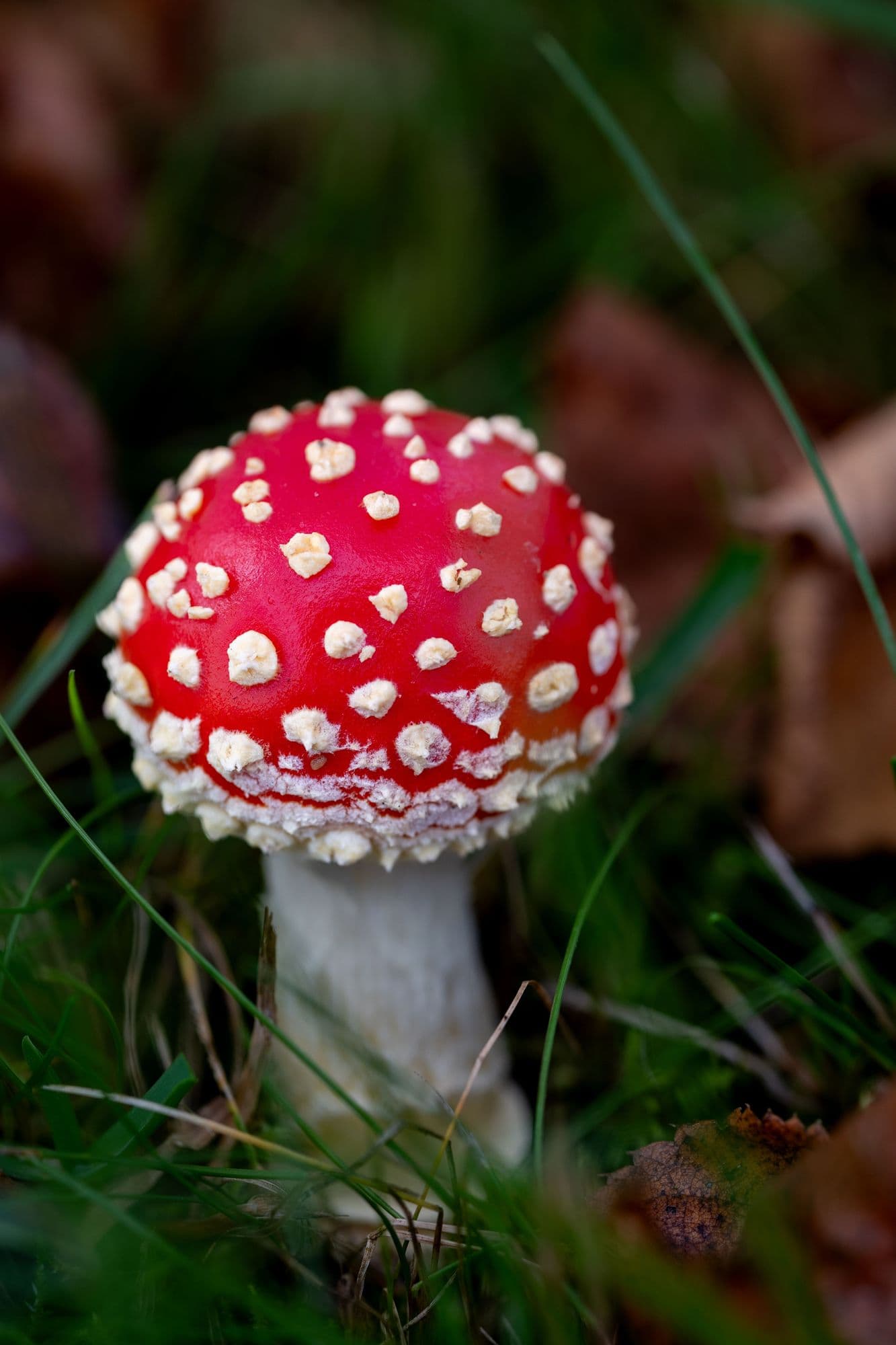
Fly Agaric
Amanita muscaria
Rain can wash the white warts off a red fly agaric, but it still has a ring on the stem, a bulb with cottony rings at the base, white gills and a white spore print.
Russula xerampelina
Also called shrimp mushroom, crab brittlegill.
The shrimp russula is a red, purple or brownish brittlegill named for its fishy, shellfish smell, which develops as it ages. Its white stem bruises yellow and then brown. It grows under conifers and hardwoods across North America and is one of the few Russulas field guides single out as edible.
Russula xerampelina
Photo coming
The tell
A red to purple Russula whose stem bruises yellow then brown and which smells of shrimp or crab with age.
Field marks
Cap, underside and stem show in a photo. The spore print does not, and it is often the deciding check.
Where and when
Lookalikes
Each card says how to tell the two apart.
Amanita muscaria
Rain can wash the white warts off a red fly agaric, but it still has a ring on the stem, a bulb with cottony rings at the base, white gills and a white spore print.
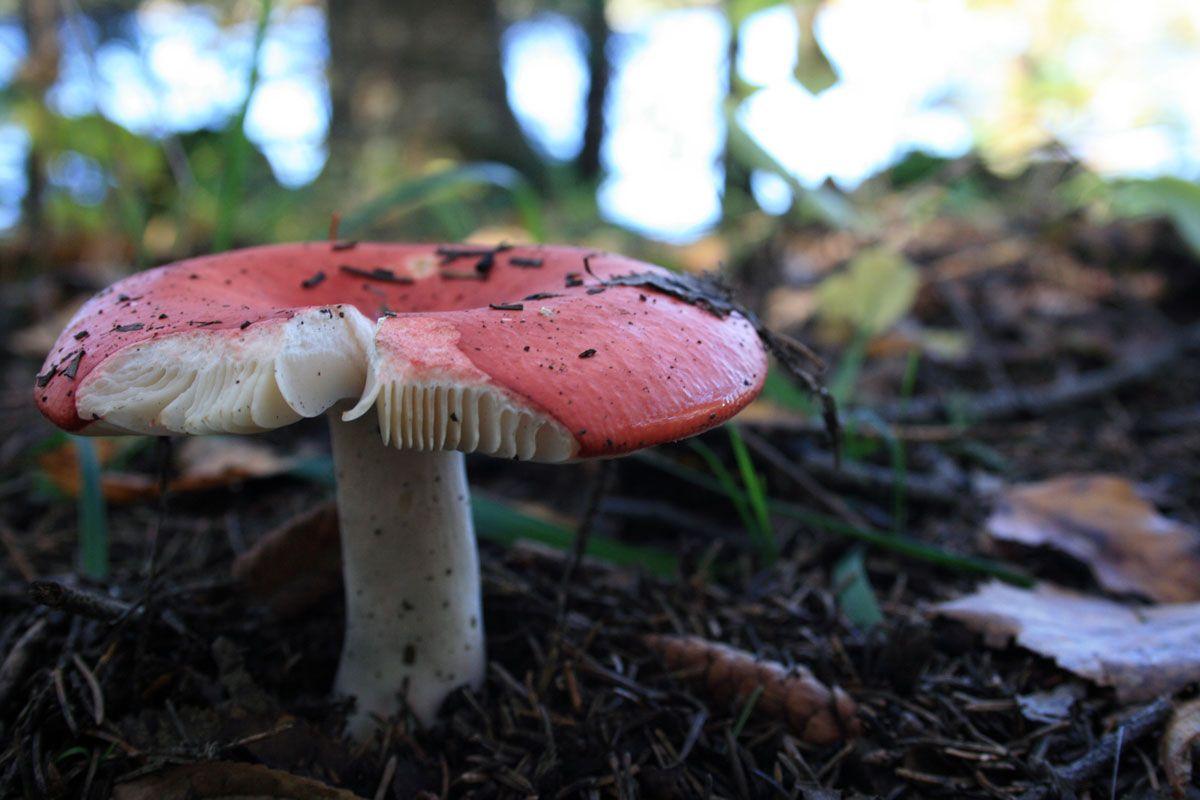
Russula emetica
Bright red with pure white gills and stem, a white spore print and a very peppery taste. Its stem does not bruise yellow or brown, and it has no fishy smell.
Many red Russulas look alike. Most lack the combination of a yellowish spore print, browning stem, shellfish smell and green reaction to iron salts.
Edibility
Field guides list the shrimp russula as edible and among the better Russulas. Its toxic confusions are red Russulas with a peppery, acrid taste, such as the sickener, which cause vomiting and diarrhea, and the fly agaric, which contains ibotenic acid and muscimol.
This page states what field guides record. It is not advice to eat, taste or handle anything, and a photo cannot settle edibility. If someone has eaten a wild mushroom that may be toxic, call poison control (1-800-222-1222 in the US) right away, before symptoms start: the deadliest species act hours later.
FAQ
As it ages, the mushroom develops a fishy, shellfish odor that field guides compare to shrimp or crab. Young specimens may smell faint, so the smell is used together with the browning stem.
It has a red to purple cap, a white stem that bruises yellow then brown, a mild taste, a cream to ochre spore print and a fishy smell with age. Iron salts turn its flesh green.
Field guides list it as edible. Red Russulas with a peppery taste, such as the sickener, are listed as poisonous, so it is separated from them by its browning stem and spore print color.
Sources
MushroomExpert.com
Beaty Biodiversity Museum, University of British Columbia
MykoWeb, California Fungi
Index Fungorum
Waitlist
We will send one email when Mushrooms.id opens, and nothing else.
This opens your email app with the request written for you. Send it and we add you to the list. No email app? Write to hello@mushrooms.id with the subject “Add me to the Mushrooms.id waitlist”.