Toxic
Fly Agaric
Amanita muscaria
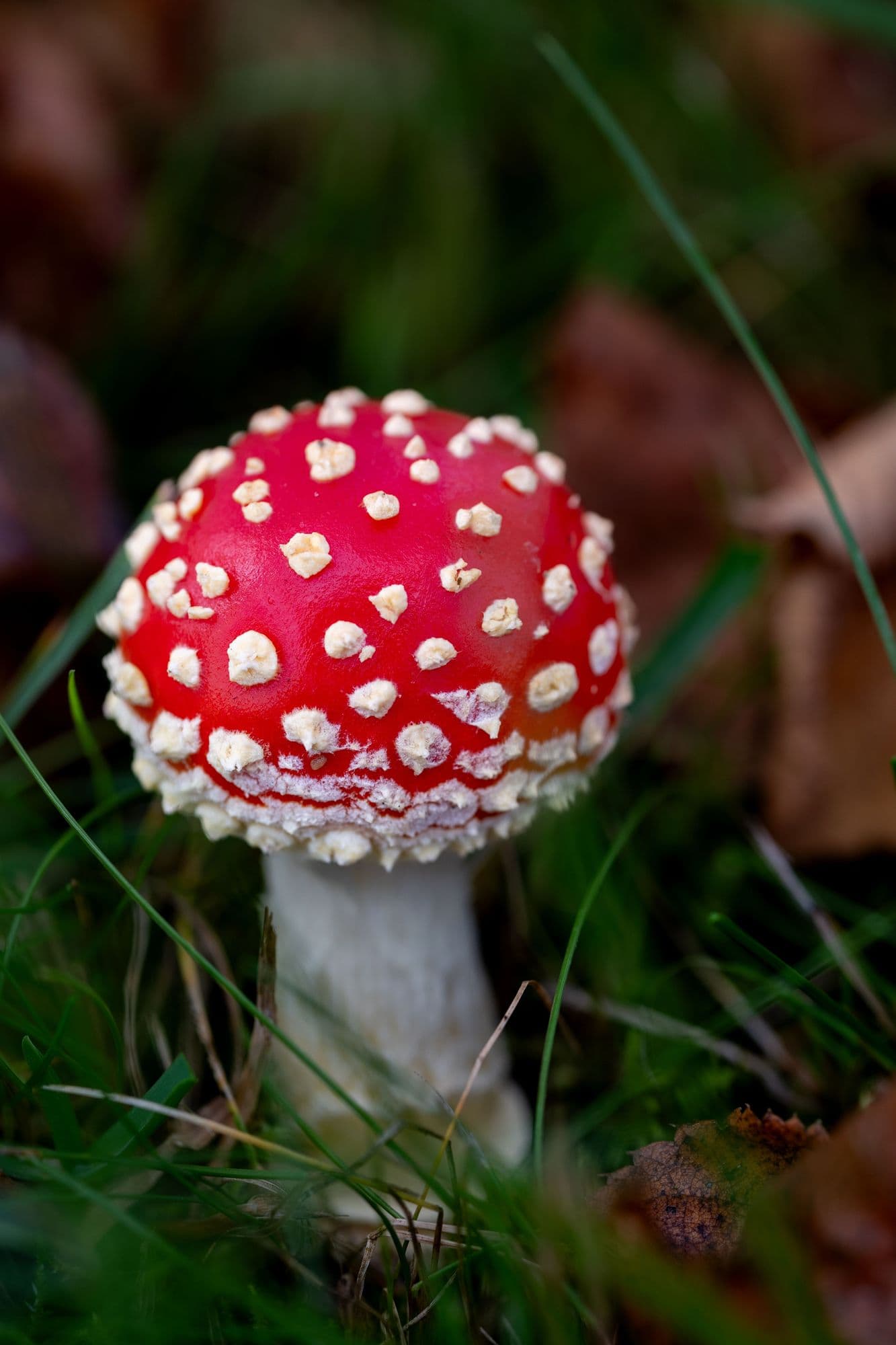
A red fly agaric that has lost its white warts still has a ring on the stem and a bulb with cottony rings at the base. The sickener has neither.
Russula emetica
Also called emetic russula, vomiting russula.
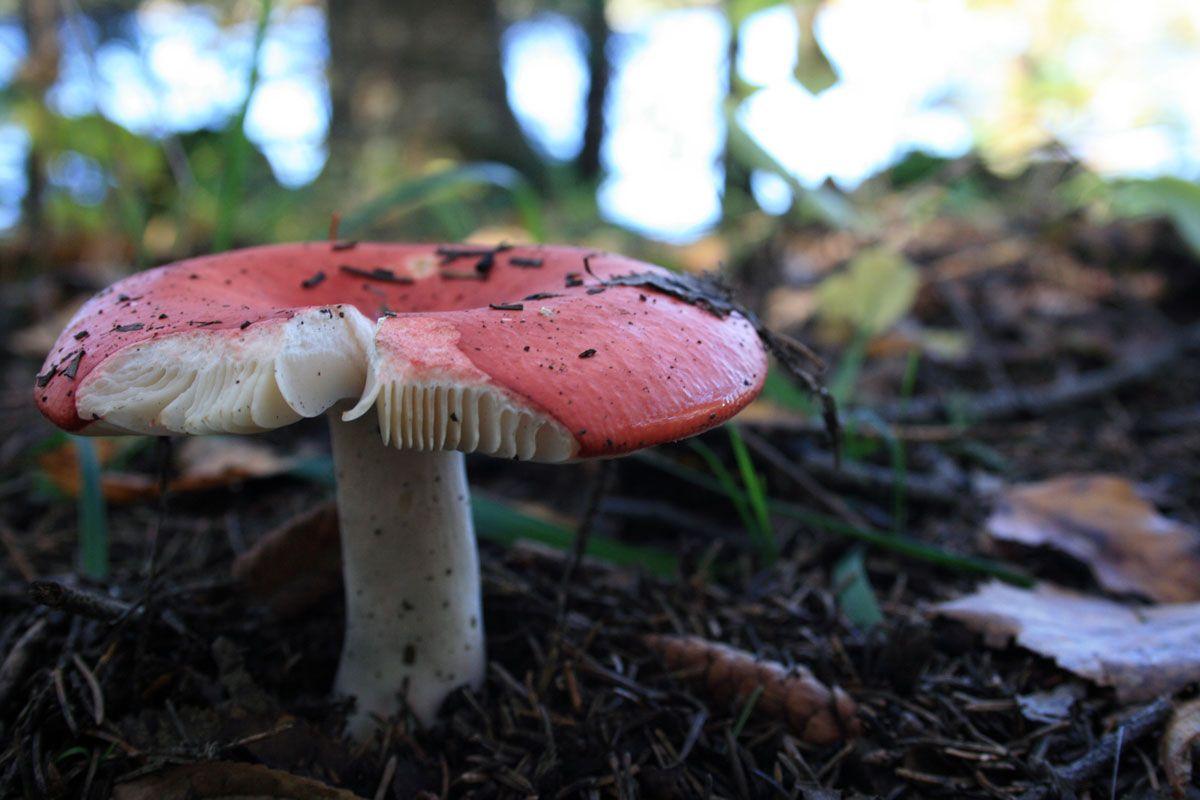
The sickener is a bright red brittlegill with snow-white gills and stem. Its name records what it does: it causes vomiting and diarrhea. It grows in moss and bogs under conifers, and it stands for a large group of similar red Russulas.
The tell
Bright scarlet cap over pure white gills and a pure white, brittle stem.
Field marks
Cap, underside and stem show in a photo. The spore print does not, and it is often the deciding check.
Where and when
Lookalikes
Each card says how to tell the two apart.
Amanita muscaria
A red fly agaric that has lost its white warts still has a ring on the stem and a bulb with cottony rings at the base. The sickener has neither.
Russula xerampelina
Photo coming
Russula xerampelina
Its stem bruises yellow then brown, its spore print is yellowish, its taste is mild, and it smells of shrimp with age.
Several red, white-gilled, peppery Russulas grow on wood or soil under hardwoods and conifers. Telling them apart takes microscopic features; they are treated alike in field guides.
Edibility
Field guides list the sickener as poisonous. Eaten raw or undercooked, it causes vomiting, diarrhea and abdominal cramps within a few hours. The irritant compounds behind its peppery taste are not fully characterized, and it is not known to cause lasting harm.
This page states what field guides record. It is not advice to eat, taste or handle anything, and a photo cannot settle edibility. If someone has eaten a wild mushroom that may be toxic, call poison control (1-800-222-1222 in the US) right away, before symptoms start: the deadliest species act hours later.
FAQ
Yes. Field guides list it as poisonous, and it causes vomiting, diarrhea and abdominal cramps. Its name and Latin epithet, emetica, both refer to vomiting.
A bright red, sticky cap on a pure white stem, with pure white gills and a white spore print. The flesh is brittle and snaps like chalk.
Both have red caps and white gills. The fly agaric has white warts on the cap, a ring on the stem and a bulb with cottony rings at the base; the sickener has a smooth cap, no ring and a plain stem base.
Sources
Missouri Department of Conservation
Beaty Biodiversity Museum, University of British Columbia
Index Fungorum
Waitlist
We will send one email when Mushrooms.id opens, and nothing else.
This opens your email app with the request written for you. Send it and we add you to the list. No email app? Write to hello@mushrooms.id with the subject “Add me to the Mushrooms.id waitlist”.