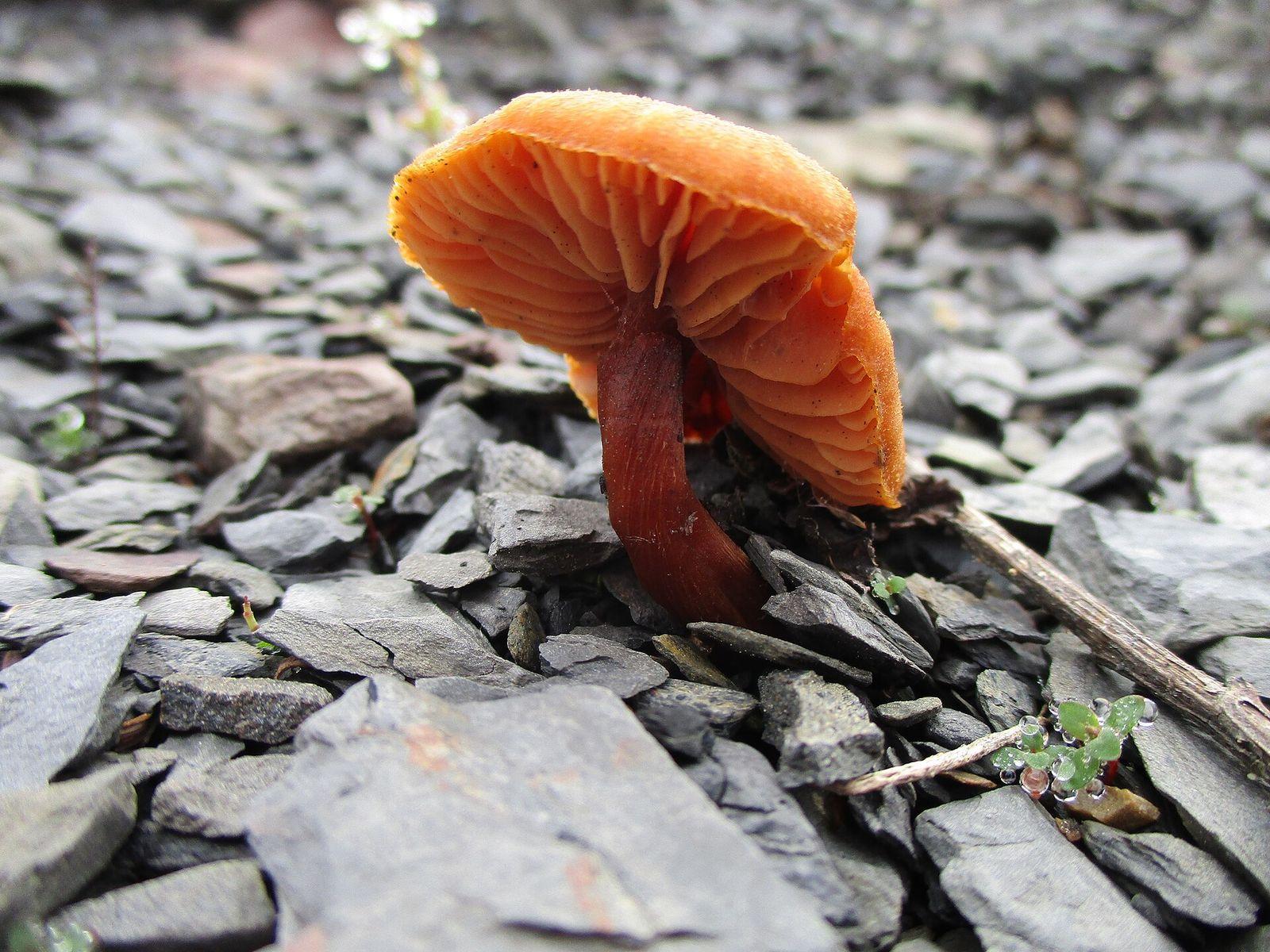
Deadly
Deadly Galerina
Galerina marginata
Galerina also grows on wood chips and buried wood, but it is much smaller, with a brown cap, a thin ring and a rusty brown spore print. It contains amatoxins.
Stropharia rugosoannulata
Also called king stropharia, garden giant, burgundy mushroom.
The wine cap is a large, wine-red mushroom of wood-chip mulch, garden beds and straw. It turns up on its own in landscaping and is also grown on purpose in home gardens. Big red-brown mushrooms in fresh mulch are usually this.
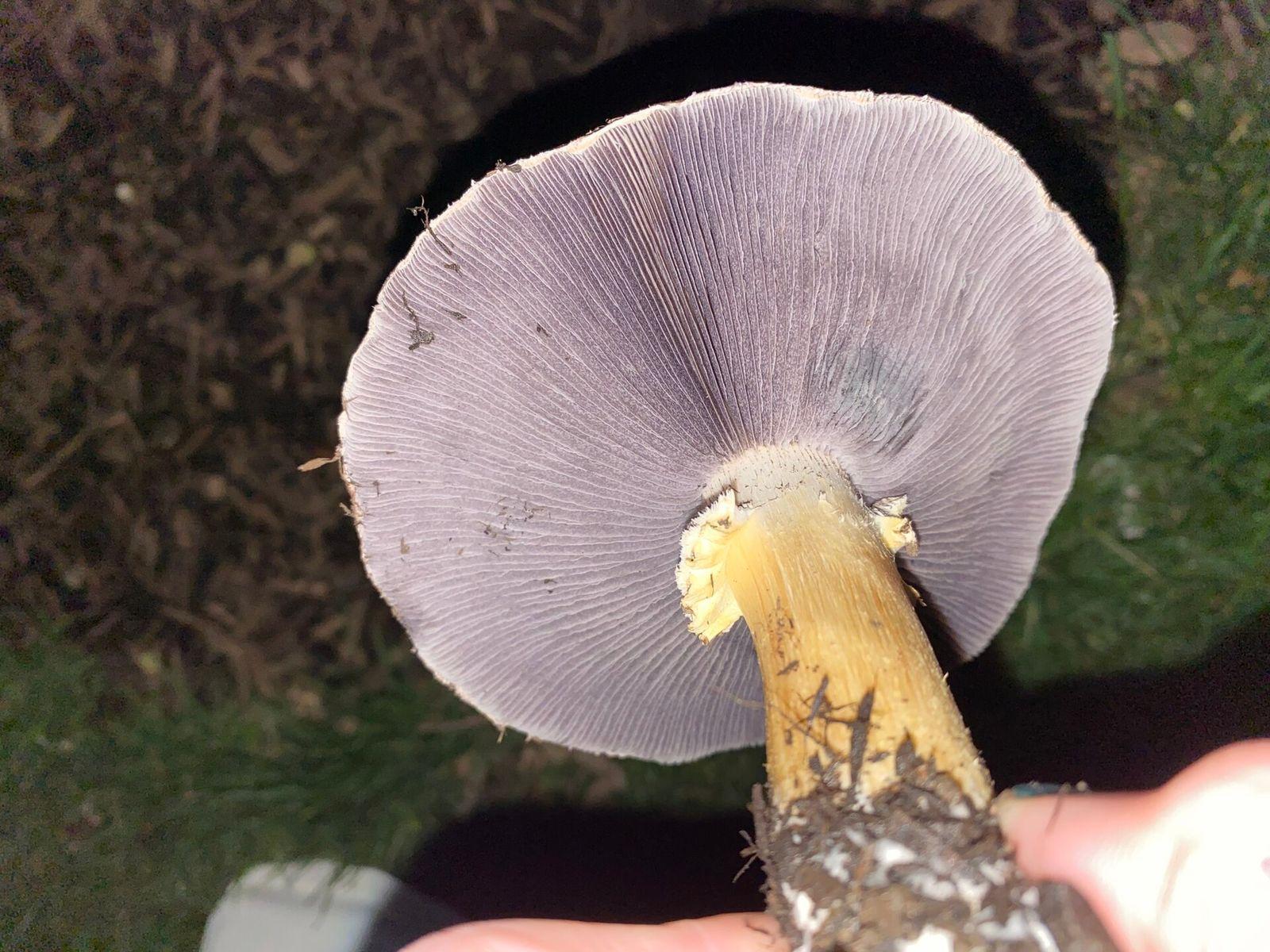
The tell
A wine-red cap over purple-gray gills, with a thick ring whose underside is split into claw-like segments.
Field marks
Cap, underside and stem show in a photo. The spore print does not, and it is often the deciding check.
Where and when
Lookalikes
Each card says how to tell the two apart.
Galerina marginata
Galerina also grows on wood chips and buried wood, but it is much smaller, with a brown cap, a thin ring and a rusty brown spore print. It contains amatoxins.
Agrocybe species also grow in mulch and gardens but have tan to yellowish caps, a thin ring, and a brown spore print rather than purple-black.
Agaricus bisporus
Photo coming
Agaricus bisporus
Agaricus species have free gills that go from pink to chocolate brown, a thinner ring without claw-like segments, and a chocolate brown spore print.
Edibility
Field guides list the wine cap as edible, and it is widely grown in home gardens on wood chips and straw. In mulch it can grow alongside other mushrooms, including deadly galerina, which is why field guides stress the purple-black spore print and segmented ring.
This page states what field guides record. It is not advice to eat, taste or handle anything, and a photo cannot settle edibility. If someone has eaten a wild mushroom that may be toxic, call poison control (1-800-222-1222 in the US) right away, before symptoms start: the deadliest species act hours later.
FAQ
Field guides list them as edible, and they are commonly grown in garden beds. They often share mulch with other mushrooms, so guides describe the purple-black spore print and the segmented ring as the key features.
Fresh wood-chip mulch feeds many wood-decaying fungi. The wine cap is one of the most common large ones, along with Agrocybe species, ink caps and sometimes small brown species such as Galerina.
A large mushroom with a wine-red to reddish-brown cap that fades to tan, gray to purple-black gills, a thick white stem, and a ring split underneath into claw-like segments. Its spore print is dark purple-brown.
Sources
MushroomExpert.com
Fungi Growing on Wood, Gary Emberger (MushroomExpert.com)
Index Fungorum
Waitlist
We will send one email when Mushrooms.id opens, and nothing else.
This opens your email app with the request written for you. Send it and we add you to the list. No email app? Write to hello@mushrooms.id with the subject “Add me to the Mushrooms.id waitlist”.