Deadly
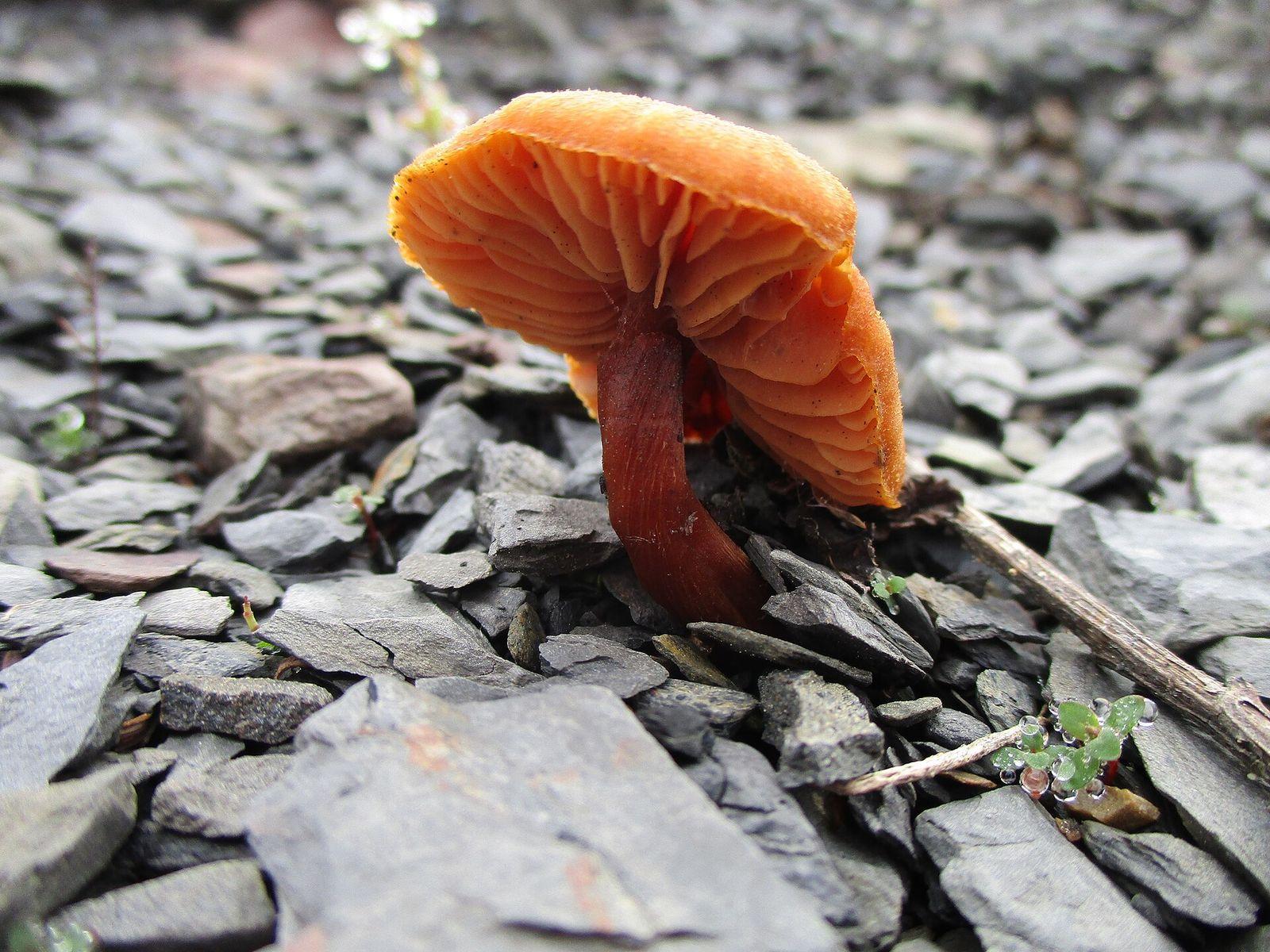
Deadly Galerina
Galerina marginata
Galerina can colonize hardwood logs, including those set up for mushroom growing. It is smaller and smoother, with a thin ring and a rusty brown spore print instead of white. It contains amatoxins.
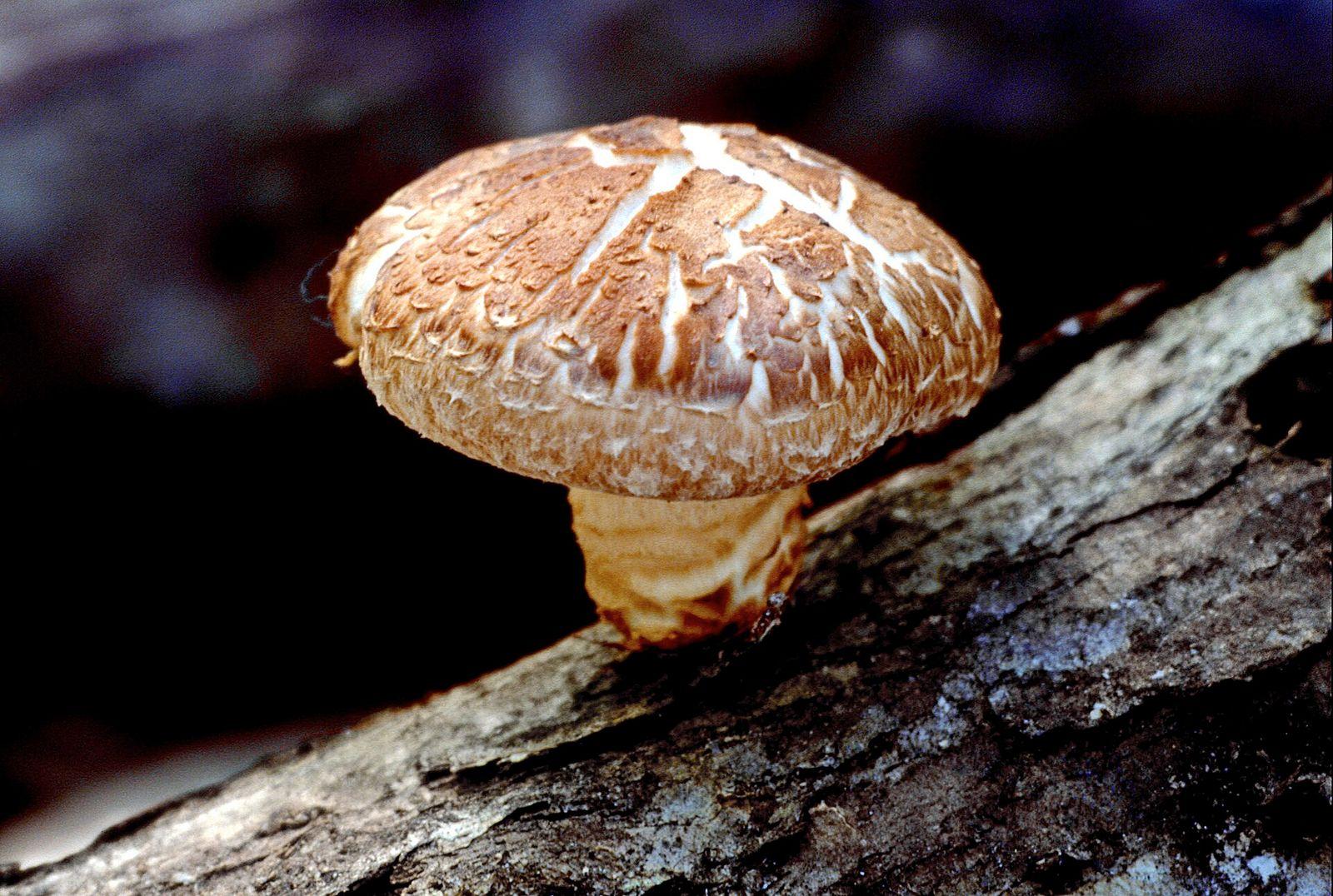
Lentinula edodes
Also called black forest mushroom, black mushroom.
Shiitake is a wood-rotting mushroom native to East Asia and one of the most widely cultivated mushrooms in the world. In North America it is not native and is found only where it is grown, on oak logs or sawdust blocks, indoors and in backyards.
The tell
A brown cap with whitish fibers at the edge, white gills with ragged edges, and a tough, fibrous stem.
Field marks
Cap, underside and stem show in a photo. The spore print does not, and it is often the deciding check.
Where and when
Lookalikes
Each card says how to tell the two apart.
Galerina marginata
Galerina can colonize hardwood logs, including those set up for mushroom growing. It is smaller and smoother, with a thin ring and a rusty brown spore print instead of white. It contains amatoxins.
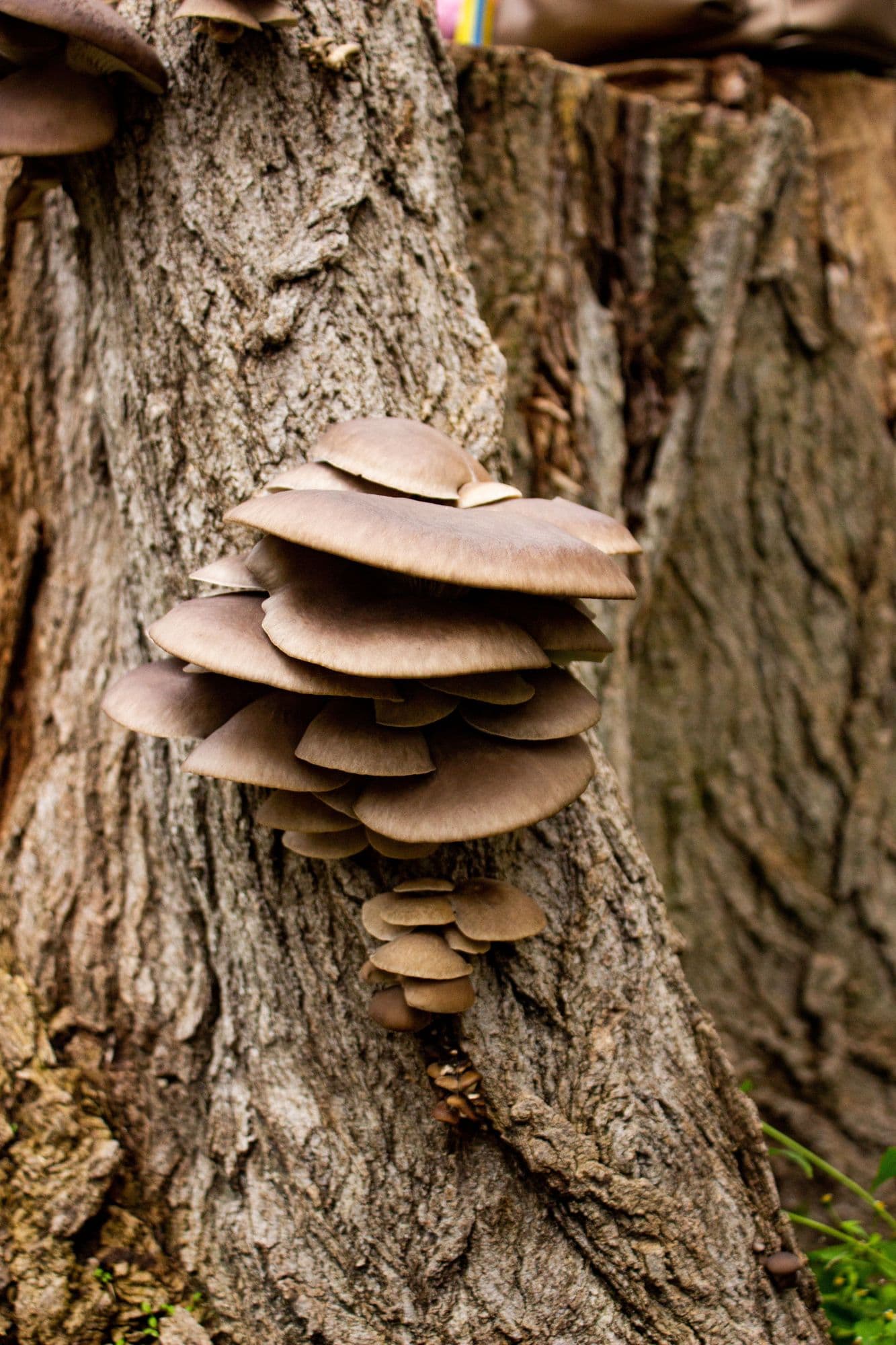
Pleurotus ostreatus
Oyster mushrooms grow in overlapping shelves with little or no stem, and their gills run down onto the stem. Shiitake has a distinct central or off-center stem and gills that end at it.
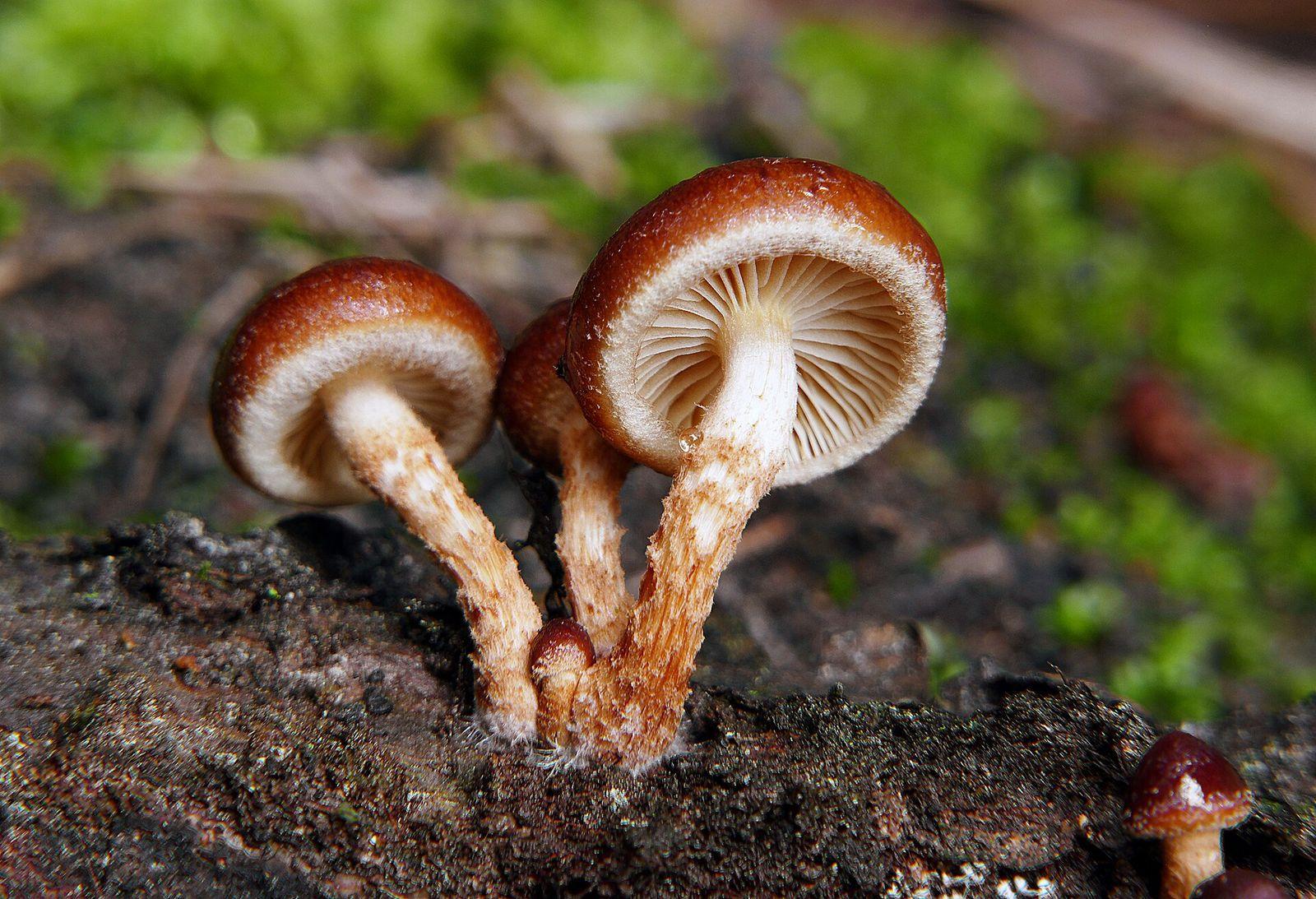
Hypholoma lateritium
Brick caps grow in dense clusters, have brick-red caps and leave a purple-brown spore print. Shiitake prints white.
Edibility
Shiitake is sold fresh and dried across North America and field guides list it as edible. A small number of people develop shiitake dermatitis, a streaky, whip-like rash that appears a day or two after eating raw or undercooked shiitake. The reaction is attributed to lentinan, a polysaccharide in the mushroom.
This page states what field guides record. It is not advice to eat, taste or handle anything, and a photo cannot settle edibility. If someone has eaten a wild mushroom that may be toxic, call poison control (1-800-222-1222 in the US) right away, before symptoms start: the deadliest species act hours later.
FAQ
No. Shiitake is native to East Asia. In North America it is found only where it is cultivated, on hardwood logs outdoors or on sawdust blocks indoors.
A rash of red, raised streaks that looks like whip marks, appearing one to two days after eating raw or undercooked shiitake. It affects a small number of people and is attributed to lentinan, a compound in the mushroom.
A tan to dark brown cap 2 to 4 inches across, often with whitish fibers near the edge, white gills with ragged edges, and a tough, fibrous stem. Its spore print is white.
Sources
Mississippi State University Extension
Mississippi State University Extension
Index Fungorum
Waitlist
We will send one email when Mushrooms.id opens, and nothing else.
This opens your email app with the request written for you. Send it and we add you to the list. No email app? Write to hello@mushrooms.id with the subject “Add me to the Mushrooms.id waitlist”.